admin
admin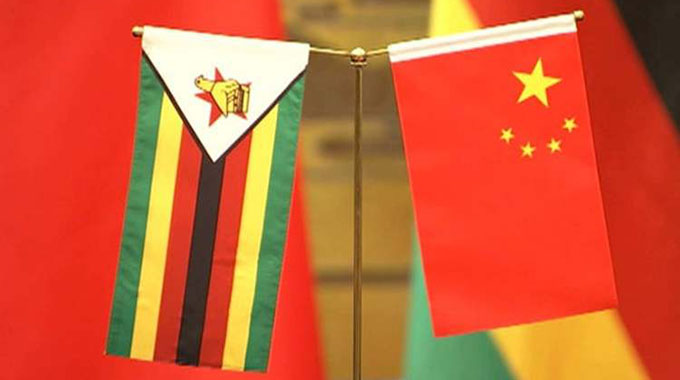
Special Correspondent
CHINA will on 1 October, 2019 commemorate the 70th anniversary of the founding of the People’s Republic of China (PRC) — which is also known as the National Day — amid pomp and fanfare as the country celebrates unmatched progress in modern day history.
Zimbabwean President Emmerson Mnangagwa and other world leaders are expected to send congratulatory messages to Chinese President Xi Jinping, who will deliver a message on this important day.
The day will be celebrated by Chinese nationals and friends throughout the world.
In Zimbabwe, a colourful and highly captivating National Day reception, punctuated by song and dance as well as a photo exhibition highlighting China-Zimbabwe bilateral relations and progress made by China over the period,was held on Wednesday, 25 September 2019 at the Chinese Embassy in Harare. It was attended by senior Government officials, service chiefs, diplomats, Chinese nationals, business people and friends of China.
The PRC was officially proclaimed by legendary Chinese Communist Party’s chairman Mao Zedong on 1 October, 1949, at Tiananmen Square in Beijing, at a time China was considered a poor and undeveloped country.
The event was marked by an impressive first public parade of the new People’s Liberation Army as well as the raising,for the first time, of the Five-star Red Flag.
What will be happening during the celebrations?
A number of high profile activities and events have been lined up to mark the 70th anniversary celebrations, which will reflect the remarkable path China has travelled since 1949 while highlighting its unrivalled and phenomenal achievements.
President Xi, who is also the chairman of the Central Military Commission, is expected to inspect the grand military parade at the historic Tiananmen Square, the venue where Mao proclaimed the republic and inspected the first parade.
The National Day gala, which will showcase a variety of performances and a fireworks display, will also be held at Tiananmen Square in the evening.
In addition, a ceremony to honour outstanding people who have contributed immensely to the well-being of the country will be held at the Great Hall of the People, next to Tiananmen Square.
The Medals of the Republic, Medals of Friendship and national titles of honour will be presented to outstanding figures and laureates with integrity and those who rendered outstanding meritorious services to build Chinese socialism and safeguard the country.
Foreigners who have made significant contributions to promoting socialist modernisation, advancing international communication and cooperation as well as safeguarding world peace; distinguished persons with outstanding contributions in their respective fields and those who have earned elevated reputations will also be honoured.
There will also be a garland presentation to the national heroes. This is an annual event where the country’s leaders and the public pay tribute to national heroes at the Monument to the People’s Heroes at Tiananmen Square.
It will be held on the Martyrs’ Day, on September 30.
A number of exhibitions highlighting the country’s achievements over the period are being held at the Beijing Exhibition Centre.
70 Years of Great Phenomenal growth
Statistics released by China’s National Bureau of Statistics highlight the record-breaking progress made by the country in the last 70 years.
From a poor country in 1949, China has transformed itself into a major economic powerhouse, a factory and a market for the world and an engine of global economic — thanks to the vision of successive Chinese leaders and the visionary leadership of the Chinese Communist Party (CPC).
With the outstanding economic progress China’s global status and influence have over the years soared in line with its global contribution.
Figures recently released by the National Bureau of Statistics highlight the remarkably economic progress made by China, now the second biggest economy in the world with a Gross Domestic Product of US$13,61 trillion.
To put the growth into context, in 1952, China’s GDP was US$30 billion meaning the growth since then represents a whopping 452,6 times increase.
In 1978, China’s GDP was ranked 11th in the world, but in 2010, it overtook Japan to become the second largest economy in the world.
With the massive progress in GDP growth, figures released by the National Bureau of Statistics also revealed that China has ranked first in its contribution to global economic growth since 2013.
China has thus become a major driver of the world economic growth.
According to the report, from 1961 to 1978, China’s average annual contribution to global economic growth was a mere 1.1 percent, but from 1979 to 2012, the average annual contribution rate was 15.9 percent, ranking second in the world.
From 2013 to 2018, the average annual figure climbed to 28.1 percent, ranking first globally.
In 2018 alone, the ratio of China’s contribution to global economic growth was 27.5 percent, which is 24.4 percent higher than in 1978.
It is therefore not a surprise as figures shown by figures from the State Council Information Office that China has held the largest foreign exchange reserves in the world for 13 consecutive years. In 1952 China had foreign reserves of US$108 million, but now holds US$3 trillion.
China’s output of more than 200 industrial goods also ranks first in the world.
To show the massive leap in production, statistics from the State Council Information Office shows that steel production has multiplied by 8 503 times from 1949 production figures, while cement increased by 3 344 times and raw coal production jumped by 114 times.
Why has the Chinese economy developed so fast?
There is no doubt that the strong and visionary leadership of successive Chinese leaders and the CPC have been a pedestal upon which success has been achieved.
Since its formation in 1921, and during its leadership of China from 1949 to today, the CPC has ensured that the country is well and lawfully governed while leaving no stone unturned in ensuring that the lives of ordinary people are uplifted.
Rapid development has been achieved through adopting socialism with Chinese characteristics. China has embraced socialism, but has moulded it with its needs, vision and circumstances to come up with a winning formula for growth and prosperity. At the 18th National Congress of CPC, the central committee of the party with President Xi at the helm continued to inspire the nation to scale greater heights and take on new challenges.
Through President Xi’s new era of socialism with Chinese characteristics theory, China is certain to continue on the growth trajectory, heralding a good future for the country. Part of the reason for growth is because China has opened up and allowed private businesses to thrive while also investing in research and development.
According to G. Bin Zhao, a senior economist at Pricewaterhouse Coopers China and head of China Strategic Research, opening up and investing in research and development has been key to China’s rise.
“Private companies have grown in importance in China’s economic development. Contrary to the Western portrayal of China as a socialist economy, many sectors have seen a significant decline in state ownership and this trend is expected to continue,” the academic said.
“China had almost no private enterprise in 1978, when it began its economic reforms, but by the end of 2018, private companies were contributing more than half of the national tax revenue, making up more than 60 percent of GDP, fixed asset investment, and outbound direct investment, and generating more than 80 percent of urban jobs.
“Last year, China’s R&D expenditure reached 2.18 per cent of GDP, or 1,97 trillion yuan (US$280 billion), exceeding that of the EU. According to the latest Global Innovation Index, published by World Intellectual Property Organisation, China’s R&D spending is the second largest in the world, and contributed to 31 percent of global spending in 2017.”
China has also made strides because of support from the international community including developing nations, among them Zimbabwe, which supported China’s bid in the United Nations.
In a globalised world, China’s development can thus not be separated from the rest of the world. The country’s policies to liberalise the economy and facilitation of trade and investment as well as other policies such as the Belt and Road Initiative only worked because of support from partners across the world.
Thriving foreign investment
Since China opened its economy to foreign investors under the reform and opening-up policy in the late 1970s, through the enforcement of the law on equity joint ventures, which laid the legal foundation for attracting foreign investors, foreign investment has grown tremendously.
Between 1983 to 1991, foreign direct investment in China went from US$920 million to US$$4,37 billion.
In 1992, a total of 48 764 foreign-invested enterprises were registered, surpassing the total amount for the previous 13 years as China established its socialist market economy.
From 1992 to 1997, FDI in China surged from US$11 billion to US$45,3 billion, growing at an average annual rate of 32.7 percent.
China entered the World Trade Organisation in 2001, enabling foreign business giants to set up wholly foreign-owned enterprises, equity joint ventures and contractual joint ventures in the country.
In 2018, FDI into China reached US$138,3 billion, 151 times that of 1983 and representing an average annual rate of 15.4 percent.
By the end of 2018, FDI inflow to China had ranked second in the world for two consecutive years and first among developing countries for 27 consecutive years.
Over 960 000 foreign-invested enterprises had been set up in China by the end of last year, with the accumulated foreign direct investment exceeding US$2,1 trillion.
Jobs and living standard
Naturally, as the economy expands and develops at a fast pace, there have been tremendous changes in the occupations and the living standards of the people in China.
When the People’s Republic of China was founded, the majority of the population worked as farmers. National Bureau of Statistics data shows that about 180 million people were employed, and only 8.3 percent of them worked in urban areas.
As of 2018, the country’s employed population had surged to 780 million, with over 56 percent working in cities.
In 1952, China’s primary industry was contributing 50.5 percent to GDP, while the secondary industry was contributing 20.8 percent and tertiary 28.7 percent.
The scenario has, however, totally changed as China made giant economic strides. National Bureau of Statistics figures show that as of 2018, primary data was contributing 7.2 percent to GDP, secondary industry 40.7 percent and tertiary industry 52.2 percent.
China has seen constant improvement in its employment structure, with new jobs emerging as the economy evolves.
While there was no standard classification for jobs in 1949, an official reference book on occupations was released in 1999 and updated in 2015, with 526 manufacturing jobs such as open-hearth steelmaker becoming obsolete, while some 81 new service-related professions such as courier were included.
To keep pace with economic and technological development, China added 13 new professions to the occupation dictionary in April, featuring a series of high-tech occupations including artificial intelligence technicians, Internet of Things technicians, cloud computing technicians, electronic sports specialists and unmanned aerial vehicle pilots.
With the economic improvement, the standard of living for Chinese people has also improved dramatically, especially in health care, education and housing.
The average life expectancy, which was only 35 when the People’s Republic was established, has improved to 77.
The infant mortality rate has dropped from 200 per thousand to 6.1 per thousand in the same period.
What Does the future hold?
China is facing complex challenges including the uncertainties of the China-US trade frictions and foreign sponsored unrest in Hong Kong while growth has slowed down over the years.
In a recent interview with a Russian News Agency, Premier Li Keqiang was optimistic that the challenges will be overcome.
“China’s economy also faces certain downward pressure due to the slowing global growth and rising protectionism and unilateralism. Yet China’s economy has tremendous resilience, potential and flexibility,” Li said.
“First, the huge domestic market will unleash continued demand to drive growth. China is both a ‘world factory’ and a ‘world market’. Its consumer spending is upgrading at a faster pace, and there is massive investment demand in infrastructure development and technological transformation of enterprises. The expanding domestic demand has become a strong underpinning for China’s economy in withstanding external shocks.
“Second, deepening reform and opening-up will further energise the economy. China is making great efforts to advance market-oriented reform and expand opening-up, with a focus on fostering a more enabling and market-based business environment governed by a sound legal framework. There are over 110 million market entities in China and more than 19 000 businesses get registered every day on average. The passion among the hundreds of millions of Chinese people for career advances and entrepreneurial success provides an inexhaustible driving force for development.”
Li said despite a slowing growth rate the authorities were happy with the prevailing rate.
“In today’s complex international environment, it is no mean feat for China to sustain a medium-high growth of above 6 percent on top of such a large base. This growth speed is among the highest in the major economies,” the premier said.
“Despite a slower growth and increased fiscal constraints in recent years, government spending in meeting essential livelihood needs has kept expanding, delivering continued improvement in people’s lives.”
Li said government had also enhanced social security and accelerated the development of social undertakings involving education, medical care, aged care, culture and sports.
Despite the challenges it faces, China’s achievements and fast speed of development cannot be ignored.
Its achievements in the face of adversity should inspire other developing countries, like Zimbabwe, which has many challenges to scale greater heights.
Zimbabwe should also draw experiences from China as it embarks on essential reforms which are key to the second republic’s well-being.



 Online Reporter