Online Reporter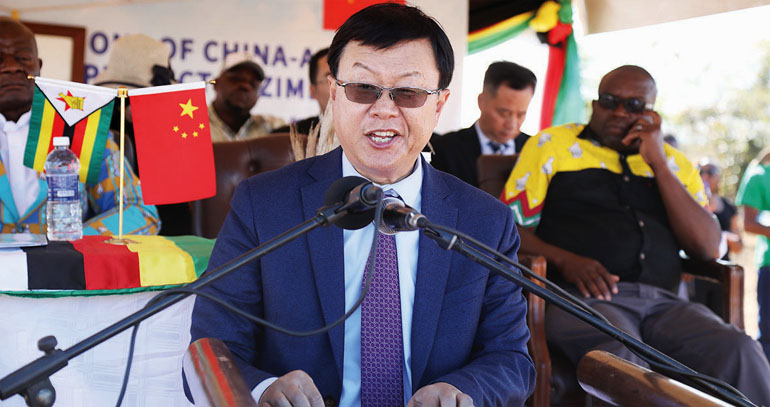
Lovemore Kadzura
Post Reporter
CHINA has signalled its readiness to import sesame seed from Zimbabwe — a development expected to boost local production, strengthen rural incomes, and generate much-needed foreign currency for the nation.
During a recent visit to Manicaland Province, Chinese Ambassador to Zimbabwe, Ambassador Zhou Ding, announced that his country has expanded access for Zimbabwean agricultural products.
Through bilateral trade protocols, China is already importing tobacco, avocados, citrus fruits, dried chillies, and macadamia nuts. Sesame now joins this growing list, offering new opportunities for farmers.
The crop has quickly gained popularity, particularly in districts such as Chipinge, Chimanimani, and Buhera, where smallholder farmers have embraced sesame as a profitable alternative. Yet challenges remain. A lack of coordinated marketing structures has left many growers vulnerable to clandestine contracts with Mozambican traders.
These middlemen smuggle sesame across the border, re-exporting it to Asian markets, while local farmers receive only a fraction of the potential earnings.
Agricultural experts argue that formalising marketing channels and strengthening farmer cooperatives will be key to maximising the benefits of China’s demand. With proper organisation, Zimbabwe could transform sesame into a flagship export crop, ensuring farmers capture fair value, while the nation secures vital foreign currency inflows.
“Starting from May 2026, China has implemented its zero-tariff treatment for all products imported from 53 African countries, Zimbabwe included. This policy will substantially expand access for Zimbabwean products to the vast Chinese market, promote local industrial growth and create more jobs and income opportunities for Zimbabwe. This is fantastic news for farmers and manufacturers in Manicaland. Yesterday, (last Thursday), I had the pleasure of visiting several orchards. I learnt that Manicaland is a key production base for tobacco, and Chimanimani and Chipinge produce high-value horticultural produce, such as avocados, citrus and macadamia nuts. China is the largest buyer of Zimbabwean tobacco and macadamia nuts.
“Last year, nearly half of Zimbabwe’s tobacco output was exported to China, valued at US$800 million. We also imported over 5 000 tonnes of macadamia nuts worth US$12 million. Zimbabwe’s citrus fruits, blueberries and dried chillies have also gained entry into the Chinese market. Manicaland’s sesame seed is also expected to be exported to China in the near future. China’s vast market is bringing greater income prospects for farmers in Manicaland and across Zimbabwe,” said Ambassador Zhou, adding that the Chinese government has collaborated with Zimbabwe, and introduced a grass species that is used in mushroom farming and making livestock feed, while agriculture experts from his country have set up demonstration centres to train local farmers on good agronomy.
“To boost Zimbabwe’s agricultural resilience and support its poverty reduction efforts, we have launched the Juncao Technical Assistance Project, which has introduced a fast-growing, high-yielding grass that can be used to cultivate edible mushrooms, produce high-protein animal feed and help restore the ecological environment in Zimbabwe. Chinese agricultural team has also set up Agricultural Cooperation Demonstration Villages, offering practical, hands-on training in crop cultivation, vegetable farming, poultry breeding and irrigation management. We are also partnering with various UN agencies to advance sustainable soil management and water resource planning in Zimbabwe, lending a helping hand to those in rural communities who have suffered from repeated droughts in recent years. Moreover, we will soon upgrade nine irrigation schemes with Chinese grant funding before the end of this year,” said Ambassador Zhou.
According to recent data, sesame seed production in the 2025/2026 season was 15 600 metric tonnes from 29 252 hectares.
Mashonaland Central Province leads at 14 328ha, Masvingo Province is second with 9 965ha, and Manicaland Province is third with 4 441ha.