Kuda Bwititi in BEIJING
Zimpapers Politics Hub
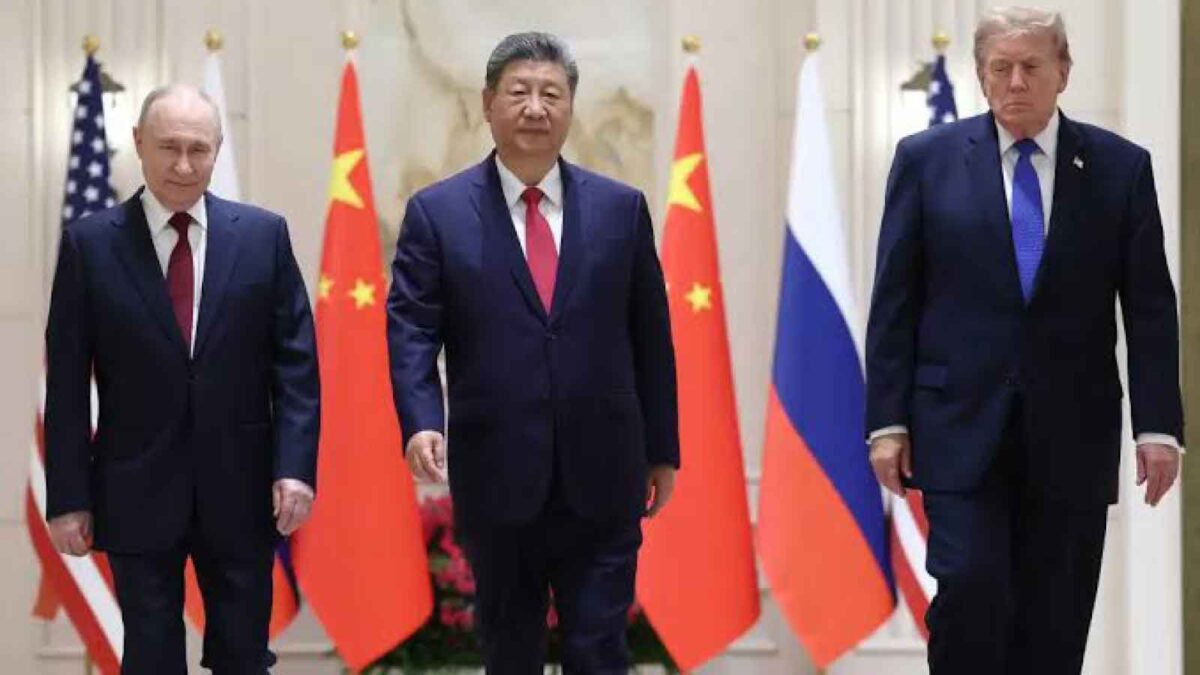
THE unprecedented meeting of Chinese President Xi Jinping, Russian President Vladimir Putin and US President Donald Trump in Shenzhen last week marked a significant moment in international relations, coming amid heightened geopolitical tensions, regional conflicts and economic rivalries threatening global stability.
Bringing together the leaders of three major powers and permanent members of the United Nations Security Council, the summit carries implications beyond diplomatic symbolism.
It presented an opportunity to reassess major-power relations at a time when the international system is increasingly characterised by mistrust, competing strategic interests and uncertainty over global governance.
President Xi captured the essence of the talks by stating that peace among major countries brings stability, whereas rivalry creates chaos. His remarks reflected Beijing’s longstanding position that relations should be defined by cooperation, mutual respect and the management of differences rather than zero-sum competition.
Because the three nations wield vast influence over international security, trade, energy, technology and multilateral institutions, any deterioration in their ties risks destabilising the global system.
Significance of major-power cooperation
President Xi’s assertion that positive interaction among major countries is “not optional, but a must” underscores the reality of global interdependence.
Economic disruptions, military confrontations and trade disputes among the largest powers directly impact developing nations through inflation, commodity price volatility, shifting investment flows and restricted market access.
For African nations, including Zimbabwe, stability among major powers is vital given their reliance on international trade and development cooperation.
Confrontational geopolitics often pressures smaller states to navigate competing interests, limiting their autonomy in pursuing national development priorities.
The Shenzhen summit served as a reminder that international relations must accommodate the legitimate interests of all nations, regardless of their economic or political standing, rather than reducing the world to competing spheres of influence.
Dialogue amid geopolitical rivalry
The summit demonstrated that strategic rivalry need not preclude communication.
Sino-US relations remain strained over trade, technology, security and Taiwan, while Russia’s ties with the West are fractured over the Ukraine conflict and European security.
Against this backdrop, the establishment of institutional mechanisms for Sino-US economic engagement, including the proposed Boards of Trade and Investment, highlights the value of maintaining communication channels.
Given the central role of China and the United States in global manufacturing, finance and supply chains, preventing disputes from escalating into broader economic confrontation is critical for global businesses and developing economies.
Ukraine and the search for peace
The Ukraine conflict remains a primary threat to global security, energy markets and food supplies. The summit’s focus on negotiations reinforces the view that military confrontation alone cannot yield a sustainable settlement.
China has consistently advocated a political resolution through dialogue with all relevant parties.
President Putin’s statement that safeguarding international peace is a shared responsibility, alongside President Trump’s emphasis on dialogue, signals a recognition that resolving major conflicts requires sustained diplomatic engagement and compromise.
Implications for global governance
Cooperation among China, Russia and the United States carries weight for the future of multilateralism. As permanent UN Security Council members, their ability to find common ground could strengthen the body’s capacity to respond to international crises and reinforce collective problem-solving.
The talks could also advance efforts to reform international institutions to reflect the growing economic influence of the Global South.
Zimbabwe and other developing nations have consistently advocated multilateralism, respect for national sovereignty, non-interference and peaceful dispute resolution — principles echoed in the summit’s emphasis on peaceful coexistence.
Opportunities for Zimbabwe and the Global South
Improved relations among the three powers could foster a more predictable global economic environment, expanding opportunities for trade, investment, technology transfer and development financing. Zimbabwe’s economic interests—particularly in mining, agriculture, energy and infrastructure—are closely tied to global market stability.
Furthermore, the summit reinforced the value of pursuing an independent foreign policy grounded in national interests.
For the Global South, the core takeaway is that international partnerships should be built on shared economic interests rather than political alignment, preserving the freedom of African states to cooperate across geopolitical divides as demand grows for critical minerals, energy and infrastructure development.