

 Online Reporter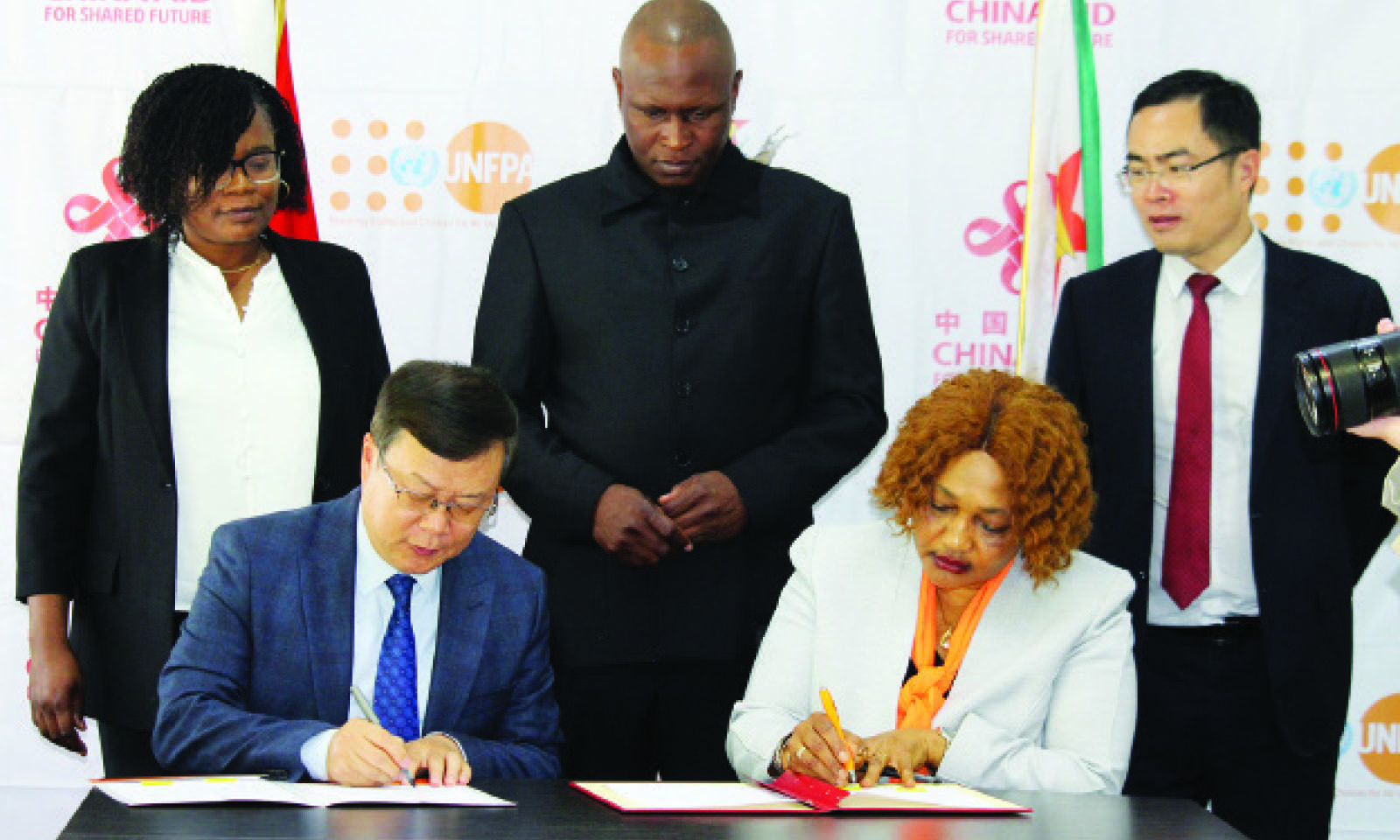
Remember Deketeke
Herald Correspondent
THE Health Assistance Project for Women and Girls in Zimbabwe affected by Tropical Cyclone Idai in March 2019 has been successfully completed, marking a significant milestone in strengthening maternal and neonatal care in the two affected districts of Chipinge and Chimanimani.
The project, led by the United Nations Population Fund (UNFPA) and supported by the China South-South C-operation Assistance Fund (SSCAF), was officially concluded yesterday at a ceremony attended by senior Government officials, UN representatives, and diplomats.
Chinese Ambassador to Zimbabwe Mr Zhou Ding hailed the initiative as a testament to the power of international cooperation.
“This project has delivered real, lasting change where it is needed most,” he said.
“By equipping healthcare professionals with essential skills and creating safer conditions for childbirth, we have saved lives, strengthened families, and empowered communities.”
Implemented in the wake of Tropical Cyclone Idai, which devastated eastern Zimbabwe in 2019, the project provided over 60 000 emergency obstetric and neonatal care services, refurbished three maternity waiting homes, and trained nearly 300 health workers.
These interventions have significantly complemented Zimbabwe’s efforts to reduce maternal mortality.
Ambassador Zhou emphasised China’s long-standing partnership with Zimbabwe in the health sector, dating back to the 1980s.
“Some of the key contributions include the deployment of 22 Chinese medical teams, the construction of critical health facilities such as Chinhoyi Provincial Hospital, and the provision of 17 million Covid-19 vaccine doses during the pandemic,” he said.
UNFPA Country Representative Mrs Miranda Tabifor praised the tripartite collaboration between China, UN agencies, and the Zimbabwean Government.
“This project is a shining example of how collective action can rebuild lives and restore hope,” she said.
The initiative aligns with the UN Sustainable Development Goals, China’s Global Development Initiative, and Zimbabwe’s Vision 2030, reinforcing a shared commitment to universal health access.
Deputy Minister of Health and Child Care Dr Sleiman Kwidini expressed gratitude for the support.
“The project has not only restored health services, but also dignity to the most vulnerable in our society,” he said.



