Online Reporter
Bongani Ndlovu in Beijing, China
A senior Chinese film executive has urged Zimbabwe to become more culturally confident and take greater control of how its story is told to the world through film and television productions, while also outlining practical steps for filmmakers seeking cooperation with China’s film industry.
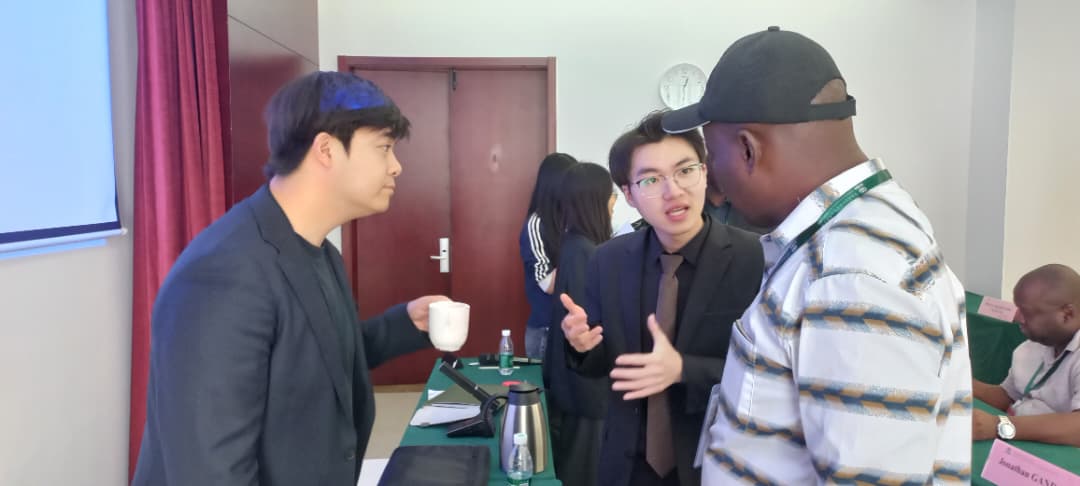
The remarks were made during the Seminar for Media Professionals for Zimbabwe in Beijing, China, organised by the Academy for International Business Officials, which operates under the Ministry of Commerce of the People’s Republic of China.

Speaking during a question and answer session of the topic, “Sino-Foreign Film and Television Exchange and Mutual Learning in the Convergence Media Era,” Director of Foreign Affairs at China Film Group Mr Jiayang Sangzhu said Africa and Zimbabwe were often portrayed negatively in Western films through stereotypes centred on conflict, political instability and violence.
Mr Sangzhu, a former actor and one of the top faces in the China movie industry, said such portrayals did not reflect the realities of modern Zimbabwe and Africa.
“For China, we mainly know Zimbabwe and Africa from the lens of US movies,” he said.
“In their stories and movies, they talk about political regime change, military conflict, tribes, robbery and terrorism. I think that is not true about the current Africa. That is not true about the current Zimbabwe.”
He said Zimbabwe needed to project its own identity and developmental progress through authentic storytelling.
“The thing is that Zimbabwe needs to be more culturally confident and tell the world and tell China about what it has changed and what it has advanced forward,” said Mr Sangzhu.
He said Zimbabwean filmmakers and creatives had an opportunity to reshape international perceptions by producing films that reflected the country’s real image, culture, achievements and aspirations.
“We need to show the world about our real image and the legitimate image,” he said.
Mr Sangzhu warned against allowing foreign film industries to dominate African narratives while using African countries merely as shooting locations.
“To simply follow the path where foreign teams come to shoot movies on your land and then decide what content they produce is not right,” he said.
“In their movies, they stigmatise your image. They have distorted your legitimate image into a wrong one, into a stereotyped one.”
Mr Sangzhu also outlined several practical entry points for Zimbabwean filmmakers and production houses seeking cooperation with China’s film sector.
He said filmmakers could begin by directly engaging institutions such as the China Film Group, which can facilitate communication with senior departments and relevant production units.
He added that Zimbabwean filmmakers could also work through the Chinese Embassy in Zimbabwe, which serves as a formal diplomatic channel for reporting proposals, projects and cooperation interests to Chinese cultural and media authorities.
In addition, he encouraged continuous networking and sustained communication between Zimbabwean producers and Chinese media stakeholders to allow for evaluation of film projects in terms of cultural and communication value.
According to him, Chinese partners are prioritising cultural exchange and mutual understanding in the early stages of cooperation, rather than immediate commercial returns.
He said Zimbabwean films submitted for collaboration would be assessed for their cultural relevance and potential to enhance people-to-people understanding between the two countries.
Mr Sangzhu said while the Chinese market remains relatively limited in exposure to Zimbabwean and African films, there is willingness to introduce such content even where immediate financial returns are minimal, in order to build a foundation for long-term cooperation.
He said this foundation would eventually lead to structured co-productions and broader implementation projects between Zimbabwe and China in the film and television sector.
Mr Sangzhu also expressed interest in Zimbabwe’s sports and music sectors, saying these could serve as important cultural bridges between Chinese and Zimbabwean audiences.


 Bongani Moyo