Online Reporter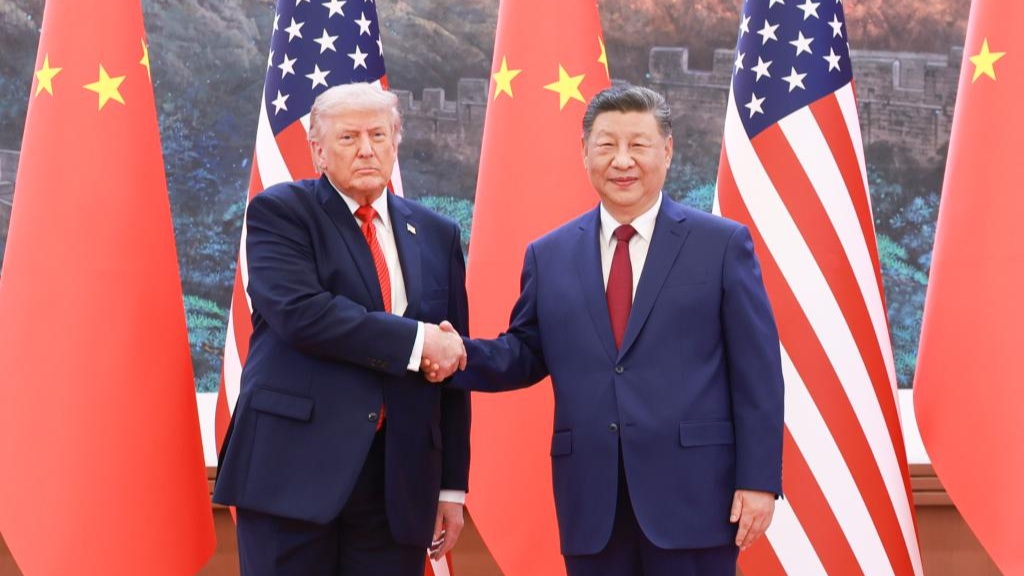
Saxon Zvina
The emerging framework defining China‑US ties around strategic stability, respect, fairness and reciprocity carries significance well beyond bilateral capitals. For Africa and the wider Global South, its highest potential value is not any discrete bilateral agreement between the world’s two largest economies.
It is the prospect of building a more predictable global environment, where developing nations pursue their economic and strategic priorities without continuously absorbing collateral damage from great‑power competition.
This framework does not mark the end of China‑US competition, nor erase their fundamental disagreements. Its practical importance lies elsewhere: preventing competition from hardening into open confrontation and stopping divergences from unleashing systemic global instability. For Africa, this distinction can prove transformative.
Stability as a Tangible Economic Asset
Head‑of‑state diplomacy has become a core mechanism for steering China‑US relations. As Chinese Foreign Affairs Minister Wang Yi has observed, high‑level engagement between national leaders sustains strategic communication through critical moments. The emerging model — cooperation as the mainstay, calibrated competition, containable differences and a peace‑oriented outlook — offers an alternative template for major‑power relations.
For African economies, predictability is no abstract diplomatic virtue; it represents hard economic value. Factories demand dependable markets; mining operations require long‑horizon investment; infrastructure projects call for decades‑long planning. Exporters need reliable market access, while importers count on stable shipping lanes, energy supplies and price signals.
When China‑US tensions escalate into tariff wars, tech restrictions or financial volatility, shocks do not stay contained bilaterally. They ripple through global supply chains and land on African producers and consumers. Strategic stability therefore delivers something Africa urgently needs: valuable breathing space for national planning.
From Forced Alignment Toward Strategic Autonomy
A second major benefit is geopolitical.
African states ought never to face pressure to choose between China and the United States purely because bilateral relations deteriorate. African countries hold legitimate interests in cooperating with China on infrastructure, industrialisation, trade and technology. They equally maintain meaningful interests in partnerships with the United States, Europe, India, Gulf states and other global actors. A more stable China‑US landscape makes such diversified international engagement far more feasible.
When great‑power rivalry turns confrontational, smaller states face coercive pressures to align on issues spanning telecommunications, artificial intelligence, security frameworks and multilateral institutions. When major powers instead manage divergences, developing countries gain expanded diplomatic room.
This is not neutrality for neutrality’s sake. It is strategic autonomy: cooperating with different external partners guided by domestic development priorities rather than geopolitical duress.
Technology Sovereignty: Africa’s Next Strategic Frontier
Technology may ultimately deliver the most consequential set of stakes.
Artificial intelligence, semiconductors, digital infrastructure and advanced manufacturing increasingly determine which nations capture value within the global economy. Should China‑US rivalry produce entirely segregated technological ecosystems, African states risk remaining mere consumers governed by standards, infrastructure and intellectual property controlled offshore. This would reproduce old patterns of dependency in digital‑era form.
Africa must therefore push to move from technology consumption toward endogenous technological capacity. Ongoing China‑US technology and AI dialogues should open avenues for developing countries to advocate for affordable access, open standards, skills development, joint research, local‑language applications, data sovereignty and genuine technology transfer.
The objective cannot be limited to importing cutting‑edge foreign technology. It must ensure African societies can develop, adapt, operate and ultimately originate technology locally.
Great‑Power Restraint as a Development Dividend
Security dimensions carry comparable weight.
China and the United States retain serious divergences across trade, technology and regional‑security questions. The strategic‑stability framework will not resolve those disputes outright. Its merit rests on building functional mechanisms to manage disagreements.
This matters for Africa and the Global South because geopolitical crises generate worldwide economic spillover. Major‑power confrontation can disrupt maritime commerce, inflate energy costs, roil financial markets and divert investment away from developing economies. Nations thousands of kilometres from the original dispute become unintended casualties of escalation.
Sustained diplomatic, military and institutional communication lowers risks stemming from strategic miscalculation. Africa does not require China and the United States to reach full consensus on every file. It requires them to disagree without destabilising global economic and security architectures.
Global Principles of Respect, Fairness and Reciprocity
Embedding respect, fairness and reciprocity within the new China‑US relational framework sends broader global signals.
Respect translates into acknowledgement of national sovereignty and diverse development pathways. Fairness means addressing disagreements via negotiation rather than permanent zero‑sum contest. Reciprocity rejects inherent claims of superiority by any major‑power actor.
Consistent policy follow‑through on these principles remains an open question for future implementation. For the Global South, however, they highlight a timeless core question: can international relations evolve from a system treating developing nations primarily as objects of great‑power strategy toward one where they genuinely participate in shaping global rules? Africa must insist on the latter.
Seize the Opportunity — But Build Domestic Capacity
Even so, strategic stability cannot substitute for an African development strategy.
Neither China nor the United States can deliver African industrialisation on Africa’s behalf. Geopolitical accommodation alone will not close continental infrastructure gaps, resolve energy constraints, remedy skill shortages or lift manufacturing capacity. That responsibility rests firmly with African actors.
Periods of enhanced global stability should be deployed to accelerate implementation of the African Continental Free Trade Area, construct regional value chains, scale power‑generation capacity, pursue domestic processing of critical minerals, upgrade digital infrastructure and build technological and human capital. Africa must convert geopolitical breathing room into tangible economic power.
That constitutes the central lesson emerging from the evolving China‑US framework. The critical question is not whether outside powers will define Africa’s future. It is whether Africa will muster sufficient economic strength, technological competence and diplomatic self‑confidence to define its own destiny. Strategic stability creates space. Africa must turn that space into power.
About the Author:
Saxon Zvina is a Zimbabwe‑based political‑economic commentator. His writing focuses on African strategic autonomy, global‑south development, Africa‑China‑US geopolitics and decolonising international policy debates.