admin
admin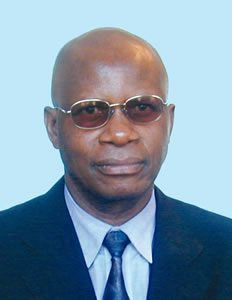
Minister of Justice and Legal Affairs, Cde Patrick Chinamasa has said.
Responding to questions from Midlands State University Faculty of Law students on Friday soon after presenting a public lecture, Cde Chinamasa said Zimbabwe’s colonisers were pushing for the devolution of power through the new proposed constitution as a means of weakening the country before embarking on plans to reverse the land reform programme.
“The major challenge that we face as we seek to consolidate our independence is that of interference by Western countries. So determined are they to protect the ownership of land by their kith and kin.
They as a result have unashamedly resorted to all forms of pressure and propaganda against the country. Sanctions have been imposed and officials have travel bans imposed on them. Western countries do not want us to develop. They want us to continue providing them with raw materials.
Zanu-PF as a revolutionary party says NO to devolution of power. It is the people of Zimbabwe who said this first. They want a unitary State. They don’t want a federal system, which weakens a country. What people want is decentralisation of processes or services in a manner that does not compromise services. To devolution, which is a step towards federalism, it’s an emphatic NO,” he said.
On whether the new constitution would “trim” President Mugabe’s executive powers, Cde Chinamasa said the constitution was not about President Mugabe but how any President, current or future, should execute his duties as mandated by the Constitution.
“President Mugabe does not draw his power, confidence or oratory skills from the constitution. When he addresses the UN, he speaks about Africa and how the West are undermining and threatening developing nations, is that from the constitution? Such power as exhibited by the President is drawn from many years of the struggle, which dates back to the 1950s. Do not be misled by the West, which wants you to have weak presidents.
The present situation demands that we have a strong President because we need to make up for lost time. I personally believe that the President should have executive powers for him to carry out his mandated duties. We only started developing in 1980 and one of our major success stories has been the building of a pool of human resources that is second to none in Africa.
“We are a small nation of about 14 million or so people and a budget of $2 billion but our voice is more powerful than some of the so-called powerful nations. People from most African countries wish President Mugabe was their President,” he said.
The topic of the public lecture was: “Constitution making processes in Zimbabwe since Independence: Prospects and Challenges”.
Minister Chinamasa said the Global Political Agreement recognised that the Constitution of Zimbabwe made at the Lancaster House Conference was primarily to transfer political power from the colonial authority to the people of Zimbabwe.
He said previous efforts to come up with a new constitution in 2000 hit a brick wall mainly because of the land issue resisted by the predominantly white bench.
“The political interests at Lancaster House ensured that a land system, which protected white ownership, was preserved in the Constitution. In April 1991, Amendment No.11 came into force allowing for the extension of compulsory acquisition to productive farms. At the opening of the 1991 Legal year, Chief Justice Gubbay criticised the amendment as destroying the foundation or structure of the Constitution and questioned the competence of Parliament to pass such an amendment,” said Minister Chinamasa.
He said by 2000, Government was of the firm view that the time was ripe for the country to break away from Lancaster House through the adoption of a new constitution.
The Minister said it was, however, encouraging that the MDC was now of the same view that the land reform could not be reversed.
“Any efforts to reverse the land reform won’t be acceptable to us as Zanu-PF. Even MDC now understands that. This is why we say our constitution is people driven because we try to cater for the land issue as a way of empowering our people,” he said.
Minister Chinamasa said COPAC enjoyed inter-party consensus but has been facing funding challenges which have caused delays.
He said COPAC has since been forced to reduce the number of participants at the second stakeholders conference to 1 100 compared to 4 000 participants at the first conference.
Minister Chinamasa said the Constitution was a document of great importance and no amount of force could impose it on the people.
Zanu-PF as a revolutionary party, said Cde Chinamasa, was not going to rubber stamp anyone’s views without scrutinising the draft constitution document thoroughly.
“Our first meeting on going through the draft constitution lasted nine hours of uninterrupted business. Some other parties quickly rubber stamped the document but Zanu-PF went through the document thoroughly because we know and appreciate the importance of the Constitution to a country. The suggestion from some quarters that the Sadc facilitator can impose the draft constitution on the country, is with due respect, nonsensical. I am sure that we all understand that unless there is consensus on the draft constitution, there can be no referendum. I am confident that the majority will vote in favour of the draft constitution in the referendum thus paving way for the presentation of the Constitution Bill before Parliament and its adoption hopefully before the end of the year,” he said.
In his public lecture, Minister Chinamasa chronicled the country’s pre-colonial, colonial and postcolonial constitutions, highlighting how local Zimbabweans were treated or viewed under the successive settler regimes.
He said constitution-making could not be divorced from politics, thus Zimbabweans should have an appreciation of their country’s politics from colonial times to this day to come up with a lasting Constitution.


 Online Reporter