


 Andrew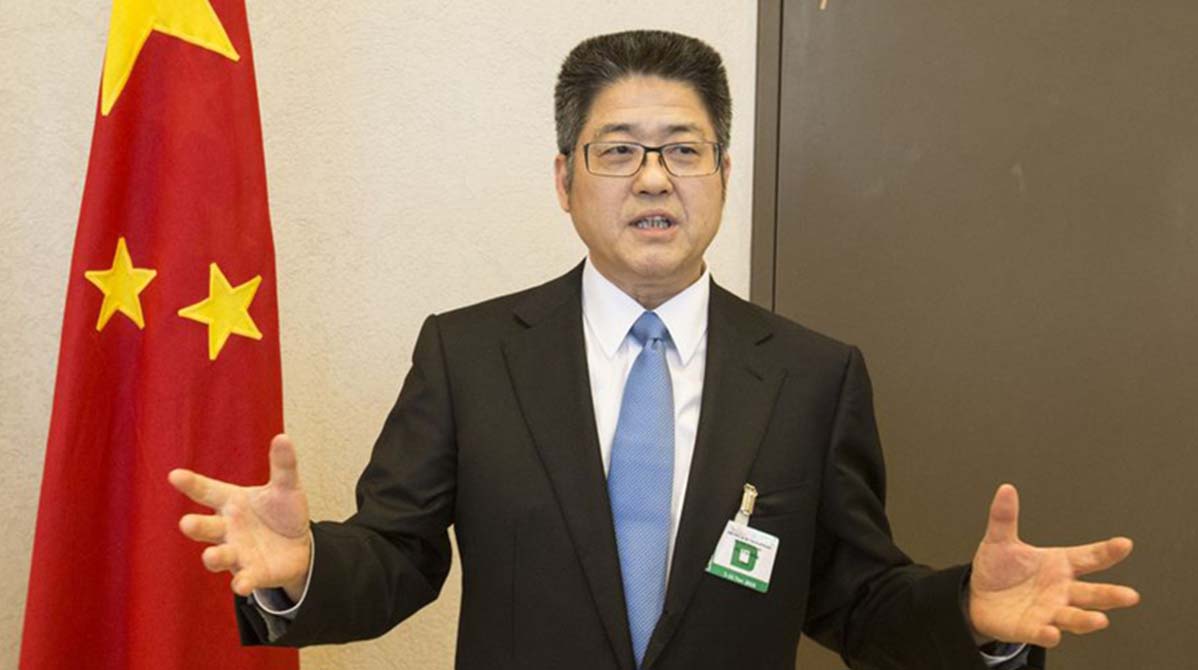
Kuda Bwititi
News Editor
CHINA has maintained a principled and consistent stance against the use of sanctions by powerful nations as a way of resolving global issues while calling for less combative measures to resolve crisis situations around the world.
Beijing’s resolute stance against sanctions on Zimbabwe, which have lasted two decades, is a microcosm of its broader policy and attitude toward unilateral actions in global affairs.
Interestingly, China itself has been a subject of threats of sanctions by the US.
Ironically, the US has exponentially increased the use of sanctions – also known as coercive measures – tenfold between 2001 and 2021, according to the Department of Treasury, raising widespread concern about this kind of bullying.
As this article shall demonstrate, China’s opposition to sanctions reflects a deeper philosophical grounding in Beijing, particularly under President Xi Jinping’s leadership, which advocates multilateral cooperation and a globally-shared future.
Indeed, China’s own policies and blueprints – including the new Global Development Initiative – underline cooperation, inclusiveness, and “people at the centre and front”.
In the ongoing conflict in Eastern Europe, China has again taken lead in condemning the West for imposing unilateral sanctions against Russia following the military conflict with Ukraine which has stretched over a month.
China’s principled and consistent fight against sanctions.
China has always maintained a firm, principled and consistent stance against the imposition of illegal sanctions on sovereign and independent states in many global questions.
In the ongoing tensions in Europe, Chinese deputy Foreign Minister Mr Le Yucheng recently said that sanctions imposed by Western nations on Russia over Ukraine were increasingly ‘outrageous’ and tantamount to escalating the war.
Beijing further opposed the economic embargo imposed on Russia, arguing that the sanctions are rather unilateral and not authorised by the UN Security Council.
Speaking before the UN Security Council, Chinese Ambassador to the UN Mr Zhang Jun firmly asserted China’s position of non-interference and called all member nations to find other peaceful ways to resolve the conflict.
“China adheres to an independent foreign policy and has always determined our position on relevant issues in a responsible manner. On Ukraine, China has always insisted that the sovereignty and territorial integrity of all countries should be respected, that the purpose and principles of the UN Charter should be upheld, that the legitimate security concerns of all countries should be taken seriously, and that all efforts conducive to the peaceful resolution of the crisis should be supported.”
Recently, another top Chinese diplomat, Mr Wang Wenbin clarified China’s position and opposition to sanctions imposed by Western countries.
“In recent years, African countries have been calling on the U.S and other Western countries and organisations to lift unilateral sanctions on Zimbabwe as soon as possible. I stated this position previously and Africa’s call for justice has our unreserved support,” said Mr Wang.
In 2021, China ratified its rejection of US coercive measures against Venezuela, while early this year, China’s foreign minister Mr Wang Yi assured Iran of China’s support as well against political manipulation and unilateral sanctions imposed on the country by the U.S.
There is a lot of evidence that points out how China has been a torchbearer in the battle against foreign interference, sanctions, and US hegemony all over the world and in many global questions.
China has always been vocal in denouncing unilateral sanctions, not only when its foreign policy or interests have been threatened but also in the defence of other weaker countries in the developing world.
Why is China’s position justified?
China’s firm stance and position against the unilateral imposition of sanctions has always been an open book.
The Asian Giant rather believes that sanctions do not offer any solutions to solve global complexities but rather they exacerbate the state of affairs in many global questions.
Sanctions are a divisive issue among many Zimbabweans and they have derailed the country’s economy since 2003.
Despite claims by the US that the sanctions target specific individuals and institutions in Zimbabwe, they missed their target by a mile.
Recently, Zimbabwe’s Finance and Economic Development Minister Professor Mthuli Ncube claimed that the country has so far lost US$42 billion because of sanctions, an amount that is more than double the size of our economy.
Millions of people have since left the country in search of greener pastures because industries have shut, hospitals are dilapidated and the country’s currency continues to be affected as a result of the crippling sanctions.
Since Zimbabwe’s fallout with the West, Harare adopted the Look East policy which has seen China becoming the country’s biggest investor, investing billions of dollars across many sectors of the economy.
Venezuela, once the largest economic power in Latin America, was left in a dire situation with its economy rapidly dwindling since 2014. This resulted in a further strain on services, rising poverty levels, and a depleted workforce leading to a US$30 billion potential loss in revenue.
The severe sanctions imposed on Russia for its military operation in Ukraine have not just affected Moscow but the whole world including Zimbabwe.
Currently, many African countries are grappling with higher food and energy prices as a result of the sanctions imposed on Russia.
The ripple effect of using sanctions as a form of coercion to a larger extent affects mainly ordinary people.
Fundamentals of China’s diplomacy.
China’s diplomacy in Africa and elsewhere is formally driven by its non-interventionist policy.
Unlike the US, China’s foreign diplomacy framework is entrenched in maintaining a non-hostile external environment in order to focus on domestic priorities whereas the US attempts to suppress any power perceived as a threat to its foreign policy.
It is this non-interference that aligned China with many African countries by respecting their sovereignty and allowing them the opportunity to resolve their own internal disputes.
It’s on record that the US invaded or fought in 84 of the 193 countries recognised by the UN and has been militarily involved with 191 of 193.
These are staggering figures and evidence of how the US, directly and indirectly, infringes on the internal and external affairs of other states.
China’s framework, such as the Belt and Road Initiative (BRI) and the Global Development Initiative (GDI) are very good examples of how inclusive global development strategies want to connect China with the rest of the world.
Even before the BRI was officially unrolled in 2013, China was making major strides into Africa’s urban development sphere and as a central player in the modernisation push on the continent.
These initiatives by China, are resolutely built upon mutual cooperation, sovereign equality, shared values, non-discrimination, and non-coercion.


 Online Reporter