daniel chigunwe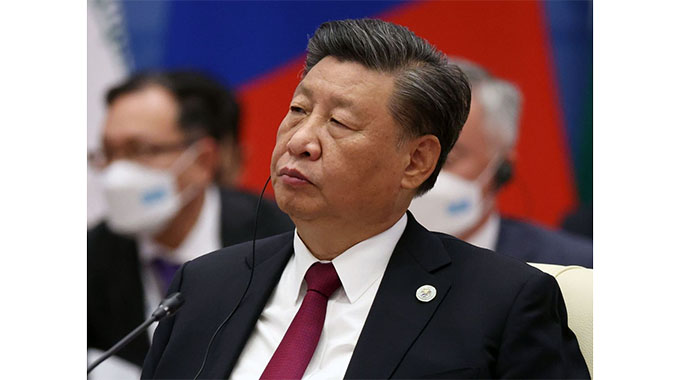
JOHANNESBURG. – Inspired by China’s development over the decades, more and more African countries are seeking to follow the development paths that suit their own domestic conditions.
At the China-Africa Leaders’ Dialogue held in South Africa’s Johannesburg in late August, Chinese President Xi Jinping once again encouraged African countries to find the path that suits Africa best.
“The African people have the most say on which path suits Africa best. Advancing modernization through integration is the independent choice made by African countries and people,” Xi said.
Despite being rich in resources and boasting a large population and a vast market, Africa has remained the world’s poorest continent.
“Obviously, by default, in almost every country in Africa, our conversations are Western-led or Western-engineered. But because the information flow is very easy now, people could really appreciate different voices and new perspectives,” said Paul Frimpong, executive director of the Africa-China Centre for Policy and Advisory, a Ghana-based think tank.
Tichaona Zindoga, founder and director of the think tank Ruzivo Media and Resource Center in Zimbabwe, said that Western-oriented approaches have not served post-independent Africa well.
“The design and structure of the colonial economy was suited to fit into a Western model and to serve only a few people who were the capitalist class of that time, and that model also predicated largely on the international finance that was coming from Western countries, the development that was coming from Western countries as well as the banking itself,” he said.
Melaku Mulualem, senior international relations and diplomacy researcher at Ethiopia’s Institute of Strategic Affairs, said African countries have begun to explore the localization of development paths suitable for their own conditions.
China’s path to peaceful development is particularly worthy of learning from for the African continent, which shares a similar history with China, but still faces chaos and upheavals in some regions, Frimpong said.
“This is the kind of insight that I get from the Chinese modernization,” he said.
“I had a chance to witness how democracy was delivered in China’s town halls, how the people’s opinions are being channeled to the leaders, how they present it and discuss, and a decision is taken, and then it goes back to the people about what has happened. I think that is the kind of conversation that we want to have in here,” said Frimpong.
Benjamin Akuffo, acting editor of The Insight, a Ghanaian newspaper, praised the Chinese modernization drive, saying it will not only provide the African continent with an optional path to follow, but also help propel Africa’s industrialization process and alleviate extreme poverty to achieve a self-determined development.
African countries need to expand industrialization, promote infrastructure development and trade networks and invest in human capital like China did, said Mulualem.
Official data showed that China has been Africa’s largest trading partner for 14 consecutive years. The China-Africa cooperation has expanded from traditional trade and engineering to emerging areas such as digital technology, green development, aerospace and finance.
Over the years, Chinese companies have actively participated with Africa in the construction of digital infrastructure on the continent and promoted the rapid development of e-commerce, mobile payment, media and entertainment industries, which have played an important role in promoting the economic and social development and improving people’s livelihood.
At the dialogue in Johannesburg, Xi announced that China will launch the Initiative on Supporting Africa’s Industrialization, the Plan for China Supporting Africa’s Agricultural Modernization and the Plan for China-Africa Cooperation on Talent Development, which were warmly welcomed by African leaders.
In terms of cooperation in talent development, China will train 500 principals and high-caliber teachers of vocational colleges every year, and 10,000 technical personnel with both Chinese language and vocational skills for Africa, and will also invite 20,000 government officials and technicians of African countries to participate in workshops and seminars. – Xinhua


 Online Reporter