


 Online Reporter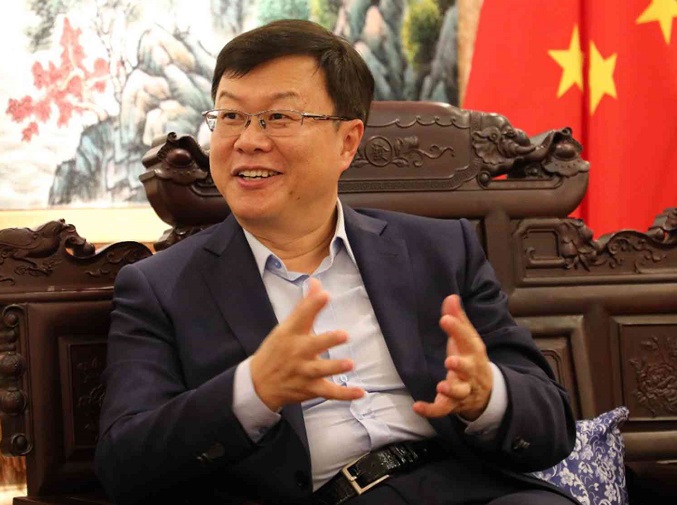
On June 13, China announced that it would expand zero-tariff treatment to all 53 African countries with which it maintains diplomatic ties, including Zimbabwe. Zimpapers’ Politics, Foreign Affairs and Opinions Editor Kuda Bwititi spoke with Chinese Ambassador to Zimbabwe Mr Zhou Ding to unpack the benefits of this development to Zimbabwe, and related issues.
***************
Q: China recently introduced a zero-tariff policy for African countries. Please tell us more about this.
A: His Excellency, Chinese President Xi Jinping, declared that China would implement a policy of zero-tariff treatment for 100 percent of products for 53 African countries with which China maintains diplomatic relations.
This came after China granted zero-tariff treatment on 100 percent of product categories to all least developed countries with which it has diplomatic ties, including 33 African countries initially, starting from December 1, 2024. China’s zero-tariff policy underscores the Chinese government’s firm commitment to African development.
Through unilaterally forgoing tariff revenues, China demonstrates its fraternal bond with African nations, prioritising shared prosperity over economic gains.
Q: How will this initiative benefit Zimbabwe’s economy, and which key sectors are poised to see the most significant growth as a result?
A: This concessionary initiative will bring multiple benefits to Zimbabwe. Firstly, we anticipate this policy to boost Zimbabwe’s exports to China.
The implementation of the zero-tariff policy for African countries represents a concessionary effort by the Chinese government, which will help Zimbabwe expand export volume to China by enhancing the price advantage and competitiveness of Zimbabwean products in the vast Chinese market.
Secondly, this move is expected to drive economic growth in Zimbabwe. The tariff-free access will spur domestic production, supporting Zimbabwe’s value addition goals and job creation needs.
For example, Zimbabwe has already started exporting citrus and macadamia nuts to the Chinese market, with avocados, blueberries and other agricultural products in line. The tariff-free policy is likely to further increase the output of these products.
Additionally, as noted by the Zimbabwe Leather Development Council, the leather industry is also well-positioned to capitalise on China’s robust demand for artisanal leather goods, such as handbags, belts and shoes.
Q: Now that the zero-tariff policy is in place, what would be your advice to Zimbabwe on how the country can make the most out of this?
A: We anticipate that Zimbabwe will make full use of China’s zero-tariff policy to advance its economic progress and Vision 2030 agenda. To fully harness and maximise this opportunity, Zimbabwe could further optimise its investment and business environment, strive to enhance its production and supply chain capabilities, and boost the output of high-quality, competitive and export-ready products.
In this context, perhaps Zimbabwe could further leverage trade platforms like the China International Import Expo (CIIE) and the China-Africa Economic and Trade Expo (CAETE), which offer valuable opportunities to showcase Zimbabwean products, build strategic partnerships and attract buyers and investors from across China.
Q: What support are you prepared to offer Zimbabwe so that it can tap into the full potential presented by this zero-tariff policy?
A: We will continue to consult and work with relevant Zimbabwean Government agencies, provide knowledge-sharing opportunities and technical support to Government officials and business operators to enhance Zimbabwe’s export capacity in key sectors like agriculture and manufacturing.
Q: Zimbabwe and China continue to be partners under the Forum on China-Africa Cooperation (FOCAC) and the Belt and Road Initiative (BRI). How will cooperation under these two fronts be further enriched under the new zero-tariff policy?
A: China’s zero-tariff policy is, in a tangible manner, delivering on the “trade prosperity” pledge of the BRI and FOCAC.
By eliminating tariffs, it promotes smoother trade flows, fostering economic growth and mutual benefit.
Also, this zero-tariff policy supports African countries in enhancing the value addition and beneficiation of their products. It does so by strengthening production-to-export value chains.
For Zimbabwe, this is of particular significance, for the country’s National Development Strategy 1 places great emphasis on value addition and beneficiation, and the zero-tariff policy, if fully utilised, will provide a strong additional impetus.
We believe that it will effectively assist Zimbabwe in achieving these objectives, which are also integral to its Vision 2030.
Q: How does the zero-tariff policy boost South-South cooperation?
A: It would be fair to say the zero-tariff policy sets a new benchmark for South-South cooperation. This initiative marks a historic milestone. It is the first instance where a major economy offers 100 percent duty-free access to such a large number of nations.
For 53 African countries, this represents pure non-reciprocal support — unburdened by conditions. It is a meaningful move aiming at levelling the development playing field.
This zero-tariff policy demonstrates China’s commitment to pursuing shared prosperity and respecting African nations’ development aspirations.
It also underscores China’s consistent endeavour to strengthen fair and equitable South-South cooperation. In an era characterised by the rise of protectionism and unilateralism, China’s policy decisions highlight its role as a proactive advocate of inclusive international cooperation.
Q: What strategic role can Zimbabwe play in strengthening China-Africa relations, and what opportunities does this present for the country?
A: Zimbabwe is making huge progress in its economic transformation and has become one of the most attractive investment destinations.
During His Excellency President Mnangagwa’s State Visit to China in 2024, 17 landmark cooperation documents were signed between us.
The two Heads of State endorsed the “five-star ironclad” multi-dimensional cooperation framework spanning political coordination, trade integration, security cooperation, people-to-people exchange and global governance alignment.
Building on this momentum, Zimbabwe will leverage China’s zero-tariff policy to advance its Vision 2030 development agenda and make substantial contributions to building an even stronger high-level China-Africa community with a shared future.



 Online Reporter
 Bongani Ndlovu