Online Reporter
The record US$4,4 billion in bilateral trade between Zimbabwe and China in 2025 is a powerful indication of the growing importance of the Asian country’s partnerships and a reminder of the opportunities that still lie ahead.
This leaves no doubt that Chinese investments have become one of the most influential drivers of Zimbabwe’s economic transformation over the past two decades, with major impacts now visible across mining, power generation, agriculture, mechanisation, infrastructure development, steel production and value addition.
From billion-dollar lithium projects to the revival of the iron and steel industry, Chinese capital has increasingly positioned itself at the centre of Zimbabwe’s industrialisation agenda.
While debates around foreign investment continue, the scale of economic activity generated by Chinese companies has significantly altered Zimbabwe’s production landscape, particularly in sectors that had suffered years of underinvestment.
One of the most visible impacts has been in the mining sector, where Chinese investors have poured billions of dollars into lithium, gold, chrome, coal and granite extraction projects.
Zimbabwe has rapidly emerged as one of the world’s strategic lithium producers largely due to Chinese investment in mines such as the Arcadia Lithium Project, Bikita Minerals, Sabi Star Lithium Mine and Kamativi Lithium Project.
Employment and roads
At the Arcadia Lithium Project, owned by Zhejiang Huayou Cobalt through Prospect Lithium Zimbabwe, investment in processing infrastructure has transformed Zimbabwe from merely exporting raw ore to participating in value-added lithium production.
Since acquiring Arcadia Lithium Mine, Zhejiang Huayou has invested hundreds of millions of dollars into mining infrastructure and local economic activities.
Company officials said the project deliberately prioritised local contractors and Zimbabwean suppliers.
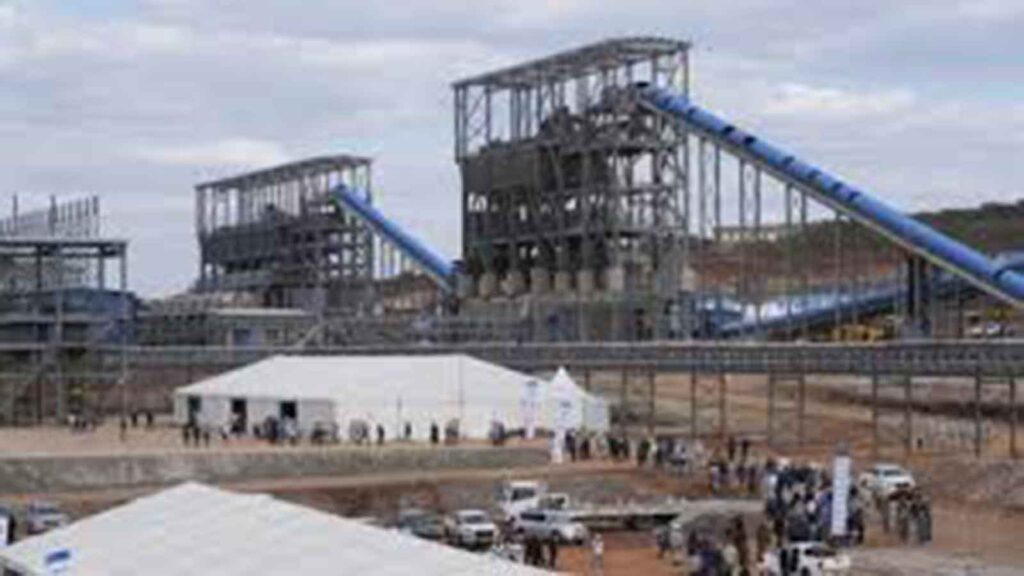
Arcadia Lithium Mine processing plant.
According to the company: “Our contractors are locally registered companies,” while local firms were engaged for electrical works, security services, feasibility studies and logistics.
The Arcadia project has also become a major employer in Goromonzi, with officials indicating that nearly 1 000 jobs would be created directly and indirectly through the project.
Zhejiang Huayou vice-president, Mr George Fang, said the mine had already generated significant export earnings for Zimbabwe after commissioning its processing plant.
“We have exported close to 30 000 metric tons,” he said, adding that the exports had generated about US$40 million in revenue and that “our contractors are locally registered companies.”
Arcadia Lithium’s community initiatives in Goromonzi have increasingly gained international recognition.
In 2025, the company’s Goromonzi Community Development Project was recognised in China for innovation in social impact and community engagement.
The recognition highlighted the company’s attempt to integrate mining activities with broader community welfare programmes.
The mining firm has constructed three classroom blocks and two staff houses at Vhuta Primary School, a semi-detached teachers’ house at Belmont Primary School, in addition to donations of furniture and stationery at five other schools.
Goromonzi district development coordinator, Ms Prisca Dube, applauded Arcadia Lithium Mine for its benevolence, which has promoted economic development while reducing criminal activities in the district.
“For economic development we need road networks and bridges that are good and what this company is doing is a good example of it because the bridges and new roads connect members of the community to the service centre, we have farmers who need to transport their produce to the market,” she said.
Schools, clinics. electricity, boreholes
Similarly, China’s Sinomine Resource Group transformed Bikita Minerals into one of Africa’s largest lithium processing centres following a massive capital injection exceeding US$200 million.
The investment revitalised operations, increased exports and created employment opportunities, while strengthening Zimbabwe’s ambitions of becoming a lithium beneficiation hub.
President Mnangagwa described the Bikita investment as crucial for industrial growth and beneficiation, saying it would stimulate “growth of value chain linkages in the manufacturing industry.”
Local development initiatives linked to the mine have included road rehabilitation, increased electricity connectivity, drilling of boreholes and support for schools and clinics.
The mine has also become one of the major employers in Masvingo Province, directly supporting thousands of families through wages and local procurement systems.
One of the flagship projects was the construction of a modern US$1 million clinic in Bikita District.
The clinic was officially commissioned by government officials who praised the mine’s contribution to public health services.
Bikita Minerals managing director Xuedong Gong said: “We invested over US$1 million in the construction and procurement requirements for the clinic.”
The facility includes advanced medical infrastructure such as consultation rooms, maternity wards, operation theatres, casualty wards and diagnostic sections.
In rural districts where access to quality healthcare remains difficult, the project has become one of the most visible examples of mining-led social investment.
The company has also intensified water provision programmes across Masvingo Province.
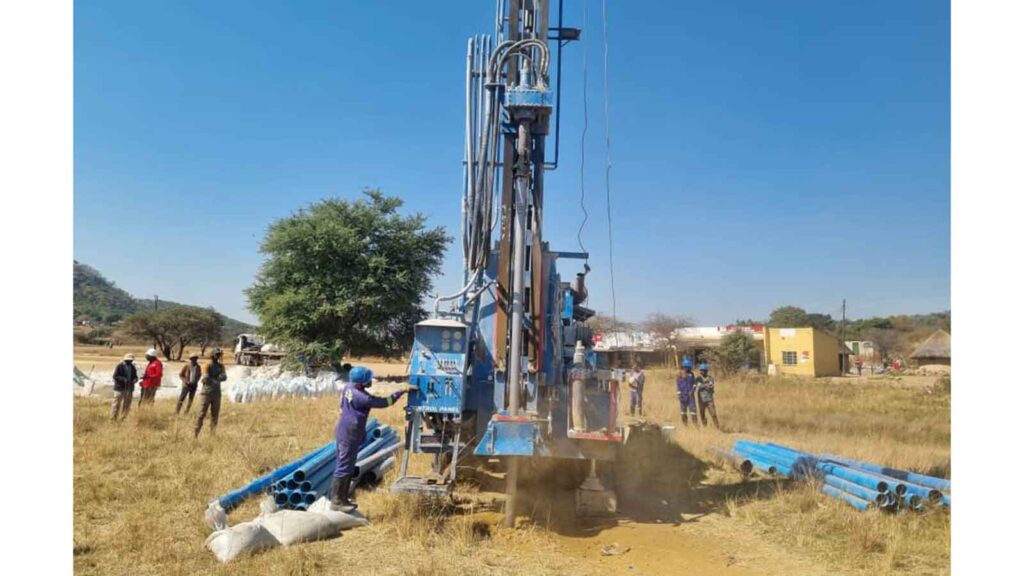
Bikita Minerals initiated extensive borehole drilling campaigns in Bikita West, Masvingo North and Masvingo West to reduce walking distances to water sources in drought-prone communities.
Mine manager, Mr David Mwanza, explained that the company’s objective was “to improve livelihoods in marginalised communities through income-generating projects and access to water.”
According to the company, several of the boreholes are solar powered, allowing villagers to access sustainable clean water, while also supporting nutritional gardens and small-scale agricultural projects.
Villagers interviewed in Masvingo said the company had done more to improve water access in a few years than previous operators had managed over decades.
Bikita Minerals has further extended its social investment into education through a school feeding programme benefiting nearly 8 000 pupils from schools in Bikita and Gutu districts.
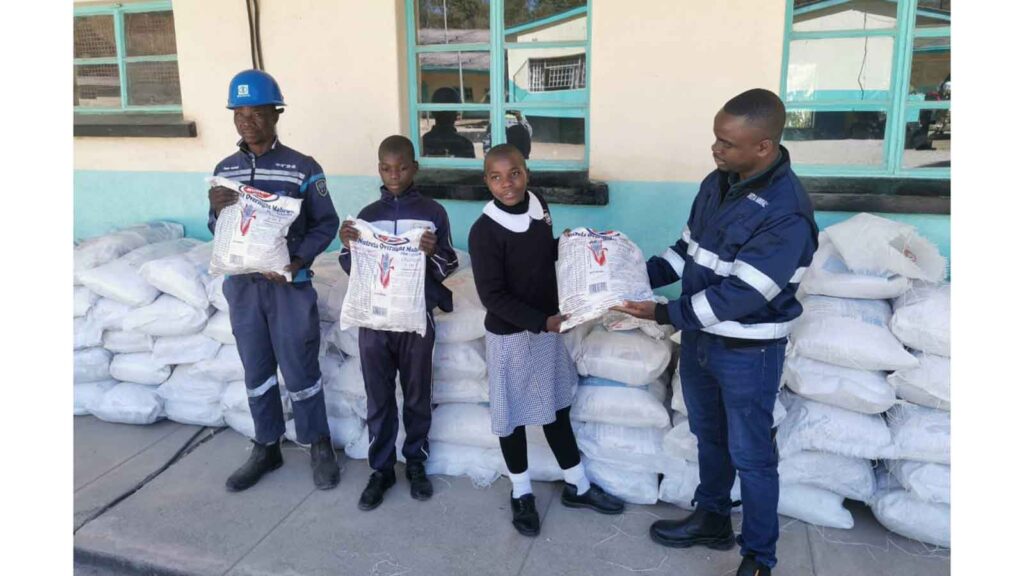
The programme has been running continuously for several years, supplying mealie-meal and other food requirements to vulnerable learners.
For nearly 10 000 school learners across Bikita District, what started in 2022 as a modest supplementary feeding initiative has grown into a far-reaching programme that is changing lives across the district.
Bikita Minerals recently reaffirmed its commitment to local development by distributing 14 000 kilogrammes of mahewu to 17 primary schools during the second term of 2026.
This year, the programme expanded further with the inclusion of Hozvi Primary School, bringing support to even more vulnerable children.
For many learners, the programme has become a dependable source of nourishment in a world where daily meals cannot always be taken for granted.
Few people have witnessed the impact more closely than Bikita Minerals Primary School headmaster, Mr Tsikirai Mudekunye.
Watching learners finish their lunchtime cups before running off to play, he reflects on how much has changed since the programme began.
“Before this initiative, many of our children would come to school on empty stomachs,” he said.
“They would sit in class, but their minds were elsewhere, thinking about food, about hunger. Now, I see them smile. I see them engage. I see them hope. That hope is priceless.”
Bikita Minerals public relations officer, Mr Tinomuda Chakanyuka, described the programme as a reflection of the company’s commitment to sustainable community development.
“The mahewu distribution initiative stands as a testament to Bikita Minerals’ philosophy of sustainable community investment, focusing on the foundational pillars of health and education to foster long-term development,” he said.
According to Mr Chakanyuka, feedback from schools has consistently pointed to the programme’s positive impact, including better attendance, improved nutrition and increased energy levels among learners. It has also provided much-needed support to children from disadvantaged backgrounds.
The benefits, however, extend well beyond the lunch break.
Teachers have reported noticeable improvements in classroom participation and concentration, with learners showing greater enthusiasm for their studies. Children who once struggled to stay focused are now taking a more active role in lessons, while absenteeism has also declined.
Bikita Minerals has also assisted families with medical expenses and emergency healthcare support under its CSR framework.
Housing development, transport services
Dinson Iron and Steel Company, which is developing the massive steel plant in Manhize under Tsingshan Holding Group, has positioned itself as one of the most transformative industrial projects in Zimbabwe’s modern economic history.
While much attention has focused on the multi-billion-dollar steel plant itself, communities around Mvuma and Chirumhanzu have benefited from road rehabilitation, electricity expansion, housing development and local employment opportunities linked to the project.
The Manhize project has stimulated growth of small businesses, transport services, construction enterprises and local supply chains in Midlands Province.
Local villagers have increasingly found employment opportunities ranging from construction to logistics and support services.
The Chinese-backed project is already feeding the local market and is expected to produce millions of tonnes of steel annually for export.
The project is strategically important because Zimbabwe previously relied heavily on imported steel after the collapse of the Zimbabwe Iron and Steel Company (ZISCO).
The Manhize plant is expected to restore domestic steel production, while supporting downstream industries such as construction, engineering, vehicle manufacturing and infrastructure development.
Thousands of Zimbabweans are already benefiting directly and indirectly from construction and support services linked to the project.
Chinese investments in the lithium sector have also spread to Buhera through the Sabi Star Lithium Mine operated by Chengxin Lithium Group via Max Mind Investments.
The project, valued at approximately US$130 million, has been presented as a catalyst for economic revival in Manicaland Province.
The mine has created employment opportunities for youths and stimulated growth of local commerce in surrounding business centres.
Community roads servicing the mine have also undergone rehabilitation, improving transport access for villagers and traders.
Renewed economic activity
Another major Chinese-linked project is the Kamativi Lithium Project associated with Chinese-backed investors.
The revival of the formerly dormant Kamativi mine has generated renewed economic activity in Matabeleland North, including infrastructure rehabilitation and employment opportunities.
The project is widely viewed as important for reviving an area that had suffered economic decline following the closure of historical mining operations.
The reopening of Kamativi Mine has revived local businesses, accommodation facilities and transport services.
Community assistance projects
Outside lithium, Chinese companies operating in Zimbabwe’s granite mining sector have also undertaken community programmes in areas such as Mutoko, Mount Darwin and Uzumba-Maramba-Pfungwe.
Several companies have assisted with road maintenance, school construction, borehole drilling and clinic support in remote districts where public infrastructure had deteriorated over many years.
Chinese investment has also played a central role in Zimbabwe’s energy sector, particularly in power generation projects aimed at addressing electricity shortages that have historically constrained industrial productivity.
One of the landmark projects has been the expansion of Hwange Thermal Power Station by Sinohydro Corporation.
The Hwange Units 7 and 8 expansion project added 600 megawatts to Zimbabwe’s national grid, representing one of the largest power infrastructure projects undertaken since independence.
The project significantly improved electricity supply stability for industries, mines and households while reducing dependence on electricity imports.
Government officials have repeatedly described the Hwange expansion as critical to Zimbabwe’s industrial recovery strategy.
Chinese companies have also supported renewable energy initiatives, including solar power projects being developed across Zimbabwe.
Increased electricity generation is viewed as fundamental to supporting mining operations, manufacturing industries and agricultural irrigation schemes.
Chinese investments have had profound effects on agricultural mechanisation in Zimbabwe.
Agricultural mechanisation
Through bilateral cooperation agreements between Harare and Beijing, Zimbabwe has received agricultural machinery including tractors, combine harvesters, irrigation equipment and processing machinery aimed at improving productivity among farmers.
Chinese-supported mechanisation programmes have become particularly important in the government’s rural agricultural transformation initiatives.
Mechanisation has helped reduce reliance on manual farming, while improving efficiency in land preparation, harvesting and irrigation systems.
Chinese companies and technical experts have also assisted in agricultural training programmes focusing on irrigation technology, seed production and modern farming methods.
These programmes have contributed toward improved productivity in sectors such as tobacco, maize and horticulture.
In tobacco farming, Chinese contractor companies such as Tian Ze Tobacco Company have become major financiers of smallholder agriculture.
Thousands of Zimbabwean farmers receive agricultural inputs, technical training and guaranteed markets through contract farming systems supported by Chinese firms.
The impact of these arrangements has been substantial in rural communities where many farmers previously lacked access to finance and modern farming inputs.
Tobacco production has continued to grow partly because of these financing arrangements, helping Zimbabwe maintain its position as one of Africa’s leading tobacco producers.
Capital inflows in communities
Economists increasingly argue that the broader contribution of Chinese investment extends beyond direct capital inflows to community development, infrastructure rehabilitation, employment creation, education support and health-related interventions.
Evidence from several Chinese-owned companies operating in Zimbabwe shows that they are implementing Corporate Social Responsibility (CSR) programmes aimed at improving livelihoods in host communities.
Government officials have consistently highlighted the role of the projects in opening rural economies to investment and infrastructure growth.
Chinese firms have increasingly aligned themselves with Zimbabwe’s development agenda, particularly the government’s vision of value addition and beneficiation.
Zimbabwe Miners Federation president, Ms Henrietta Rushwaya, recently said Chinese-operated lithium projects had transformed Zimbabwe into “the most dynamic lithium hub outside Asia.”
What is increasingly evident is that Chinese companies are no longer operating merely as extraction entities.
Across mining, manufacturing and agriculture, many are investing in roads, schools, clinics, electricity, water systems, employment and local procurement.
Creating opportunities
In the economically marginalised districts, these investments are reshaping local economies and creating opportunities that previously did not exist.
The broader picture emerging from Zimbabwe’s engagement with Chinese investors is, therefore, more complex than the often one-sided narrative of exploitation.
There is substantial evidence that many Chinese companies operating in Zimbabwe are implementing social responsibility programmes that are contributing to infrastructure development, employment creation and community welfare.
Beyond the headline investments and large-scale mining operations, several Chinese companies operating in Zimbabwe have increasingly embedded community development into their long-term business strategies.
The firms have now positioned themselves as long-term development partners involved in infrastructure provision, education support, water access, healthcare and employment creation.
The Chinese firms are making deliberate efforts to contribute toward social and economic development in host communities.
As Zimbabwe continues positioning itself as a destination for industrialisation and mineral beneficiation, the social responsibility programmes being undertaken by Chinese companies are increasingly becoming part of the broader development story.
Across lithium, steel, granite, agriculture and manufacturing sectors, these investments are reshaping communities through practical interventions that touch directly on people’s everyday lives.