

 admin
admin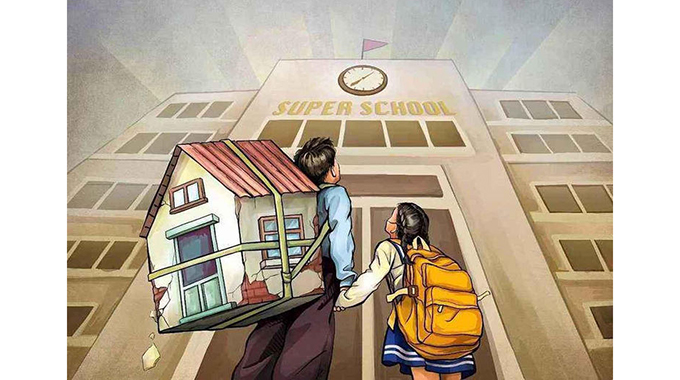
Ms G
Over 2 300 years ago, a Chinese single mother was living with her only son. Near their home was a cemetery, where her son enjoyed playing funeral games like he saw happening everyday.
This got her worried and she decided to move next to a market. But soon, she found her son began to act like the butcherers and picked up some dishonest tricks from the peddlers.
The mother thought to herself, “This is not the place for my son either.” This time, she chose a lecture hall where scholars and students would discuss Confucius’ teachings.
Seeing her son develop an interest in classical works and imitating the good manners of the intellectuals, she was content. Her son did not fail her expectations.
He grew up to be one of the leading philosophers China has ever known; his name, Mencius, is often mentioned in the same breath as Confucius.
This is a very well known story in China, often cited as evidence of how Chinese families value education.
History has a tendency to repeat itself. Today, Chinese mothers, especially in big cities, are still following the footsteps of Mencius’ mother, moving for the sake of their children, only this time not for the good influence of a neighbourhood, but for something very real — an admission ticket to a good school.
In 1986, China passed the Compulsory Education Law, which entitled all children to nine years of compulsory education (six years of primary schooling and three years of secondary schooling).
But access to education was uneven. With local governments being the leading source of funding, schools in less affluent areas often struggle to pay for excellent teachers, instruction materials and facilities.
While these establishments found it difficult to admit enough students, the more privileged ones were picking their candidates through entrance exams and by demanding sponsorship fees.
To bridge the gap, in February 2014, the Chinese education authorities introduced the school district system, which allows students to attend the schools in their neighbourhood without passing examinations. The only requirement is that family must have real estate property and hukou in the district.
This policy was designed to give various schools more equal access to competitive candidates; but it pushed the housing prices in the districts of elite school to staggering heights.
Once a 10 square meter-apartment was sold for 4,5 million RMB (about 700 000 USD). And the race for property in a good district does not start when your child turns six, but years earlier, as many schools demand its candidates be registered in the district at least two or three years ahead of the enrolment.
So it is a common sight to see newly weds and pregnant couples following real estate agents in the back alleys of Beijing looking for a tiny, shabby apartment older than themselves that could drain the savings of themselves and their parents but promises a head start for their unborn child.
I decided on the topic for this week because I have just spent an anxious week trying to enter my boy to a good primary school this coming September.
As an atypical Chinese “tiger mom”, I have not been paying much attention to the schools in my district and never thought about borrowing millions of yuan from the bank to live in what looks to me like a pile of garbage bricks.
But as the enrolment date gets closer and my knowledge about the strengths and weaknesses of different schools tremendously increase, I cannot stay in my silo any longer. The anxiety that grips hundreds of thousands of mothers every year in Beijing finds its way into my mind.
My best friend and roommate from university, who has a three-year-old at home, is also studying the policies with a dedication I did not see when she was preparing for her graduation thesis.
Living on different continents, we would constantly exchange information on Wechat and laugh at ourselves as being the Modern-Mother-Meng, hopping between apartments for an uncertain future.
Until greater development brings about good educational services for all, Chinese mothers will not quit the race for an ideal apartment that guarantees their kids a seat in the best of the schools.
Wish me luck.



 Online Reporter