admin
admin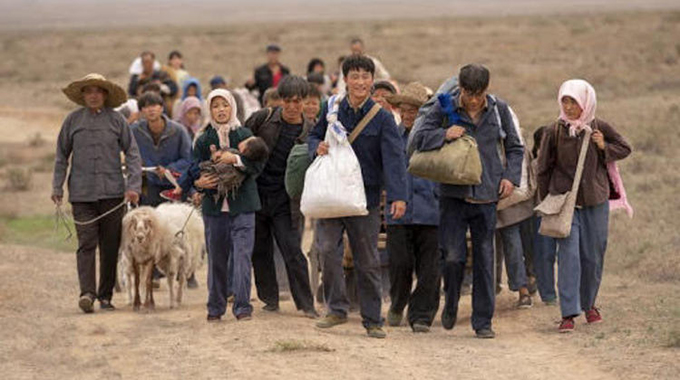
Ms G
Lately, I have been following the talk about Chilonga evictions on social media. It first caught my eye with the #boycottdendairy hashtag, because I am a huge fan of Zimbabwean dairy products.
I’ve got to admit the milk here tastes richer than most of the products I tried back in China. My grocery trips are never complete without a carton of Zimbabwean milk.
But it was only a year after being in the country that I learnt Zimbabwe cannot not meet all of its domestic dairy demand. It’s a shame the wonderful sweetness is not produced in larger quantities for the country and the region.
The controversy and emotions surrounding the lucerne grass growing scheme is running very high.
I don’t want to pretend to understand all the ethnic, environmental, or societal complexities. But the it reminds me of a Chinese TV drama, “Minning Town,” I have been watching in recent weeks.
It is based on true events that happened in a poor village in north-west China in the 1990s and recounts how the villagers lifted themselves out of extreme poverty.
At the beginning of the story, villagers were being persuaded by local government officials to permanently move away from their mountainous village, a region the United Nations in 1972 called “one of the least suitable areas for human habitation in the world”, hundreds of kilometres north to a big plain on the edge of a desert.
This was after a number of poverty-alleviation schemes that did not involve resettlement had already failed.
There was simply no way out for the villagers to stay where they were. All they had to eat were potatoes. Trousers were such a luxury that there was usually one pair in a family, saved for whoever goes out on errands during the day.
But the new location did not look inviting either. The land of milk and honey they were promised was still a virgin tract of land plagued by mosquitoes and sandstorms.
Everything had to start from scratch. Understandably, despite being trapped in hopeless poverty back in the old place, the villagers were loath to leave their ancestral home.
Just like in the case of Chilonga, the debate was filled with intense emotions. The village official responsible for carrying out the settlement plan was accused of sacrificing the villagers’ interests for his own political ambitions.
Even his own little brother angrily shouted at him for being “selfish” and “caring only about his own promotion”. If they had access to social media, I imagine there would be quite some hashtags.
To break the impasse, the old village chief stepped up to volunteer for the relocation programme. He believed as a member of the Chinese Communist Party he needed to lead by example. Some of the big families followed suit.
Still others watched in hesitation and distrust.
In the new location, named Minning Town, these early settlers fought hard against the elements.
They were also supported by government policies. Minning Town was paired up with Fujian, a richer province in the eastern coastal regions.
Poverty was tackled in two ways. One is to introduce agricultural techniques from Fujian to grow mushrooms in Minning. The other was to send young villagers away to modern factories in Fujian to earn salaries and learn skills.
None of the schemes was without troubles at all. There was no shortage of setbacks, resistance, anger, and suspicion.
But the officials and some of the more resilient and hard-working villagers stuck to it. Talking was cheap.
The fruits of their hard labour did most of the convincing work. More and more villagers signed up for the relocation and saw real improvement in their living standards.
To convince someone to leave his or her ancestral home and old way of life is extremely difficult.
The pros and cons must be weighed carefully. If long-term benefits can be expected, we must learn to accept and deal with the short-term pains.
Nothing valuable in this world comes as freebies.


 Online Reporter