Online Reporter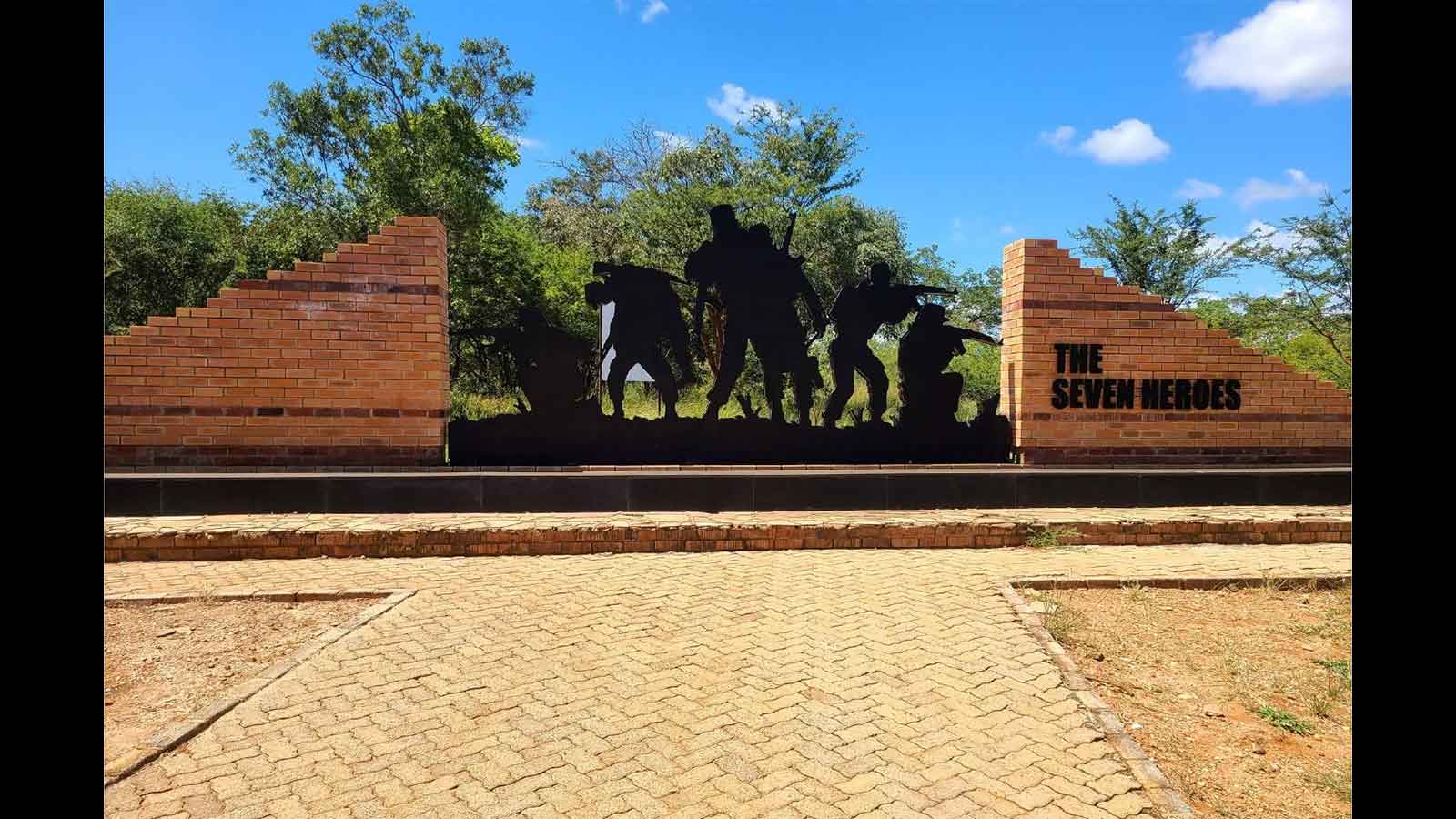
Gibson Mhaka-Zimpapers Politics Hub
THE decision by Zanu PF to hold its 23rd Annual National People’s Conference at Chinhoyi University of Technology in Mashonaland West Province from October 12-17, carries significance that goes beyond the choice of a convenient venue.
Chinhoyi occupies a distinctive place in Zimbabwe’s liberation history.
It is the place where, on April 28, 1966, seven young nationalist fighters confronted Rhodesian security forces in what became known as the Battle of Chinhoyi, an encounter widely remembered as one of the defining early episodes of the armed liberation struggle.
More than six decades later, the ruling party is returning to Chinhoyi for a conference whose central message is firmly focused on the present and the future: “From Resolutions to Results: Consolidating Economic Development and Deepening Economic Empowerment Towards Vision 2030.”
That juxtaposition provides an important lens through which to understand the significance of the venue.
The Chinhoyi Seven, Cdes David Guzuzu, Arthur Maramba, Christopher Chatambudza, Simon Chingozho Nyandoro, Godfrey Manyerenyere, Godwin Dube and Chubby Savanhu, have remained enduring symbols of sacrifice in Zimbabwe’s liberation narrative.
Having undergone military training before entering the then Rhodesia from Zambia, the seven represented an emerging phase of resistance to colonial rule.
Their confrontation with Rhodesian forces demonstrated that the nationalist struggle had entered a new and more dangerous phase.
The battle ended with the deaths of the seven fighters, but its historical significance extended far beyond the battlefield.
For Zanu PF, whose political history is rooted in the liberation movement, Chinhoyi therefore, carries powerful historical symbolism.
The venue places the party’s contemporary political programme against the backdrop of a struggle in which thousands of Zimbabweans ultimately paid the ultimate price for majority rule. This is where the choice of Chinhoyi becomes particularly interesting.
A national conference is not merely an administrative gathering. It is a forum where the party reviews its programmes, evaluates the implementation of previous resolutions and establishes priorities for the period ahead.
This year, delegates will review the implementation of Government programmes based on party policies and assess progress on previous resolutions as the party seeks to accelerate the attainment of Vision 2030.
Consequently, the historical symbolism of Chinhoyi can be viewed alongside the conference’s emphasis on results.
The Chinhoyi Seven fought against a system they believed denied Zimbabweans political and economic rights. The contemporary political challenge, as articulated by the ruling party, is framed differently: how to translate political independence into sustainable economic development and broader economic empowerment.
That distinction is important.
The liberation struggle achieved political independence in 1980, but the post-Independence development question has remained how to ensure that independence is accompanied by tangible improvements in the lives and livelihoods of Zimbabweans.
This year’s conference theme speaks directly to that challenge.
“From Resolutions to Results” suggests an emphasis on implementation rather than simply adopting new resolutions.
It places the spotlight on what has been achieved, what remains outstanding and what needs to be done differently to accelerate the attainment of the country’s development objectives.
The second part of the theme, “Consolidating Economic Development and Deepening Economic Empowerment Towards Vision 2030,” further shifts the conversation from the historical achievement of independence to the economic opportunities that independence is expected to create.
In this sense, Chinhoyi provides a bridge between two periods of the country’s history.
The first is the liberation struggle, when the central question was political freedom.
The second is the present development phase, where the emphasis is increasingly on economic transformation, industrialisation, investment, infrastructure development, employment creation and empowerment.
The symbolism is, therefore, not simply about remembering the Chinhoyi Seven.
It is also about asking what their sacrifice means for subsequent generations.
The seven young men did not live to see an independent Zimbabwe. Their generation fought under extremely difficult circumstances, with limited resources and overwhelming military odds.
Their story is a reminder that national development is built over generations and that political milestones are often preceded by sacrifices whose full benefits are realised by those who come later.
Chinhoyi, therefore, provides a natural setting for a political party that traces its origins to the liberation struggle to reflect on the distance travelled since 1966.
The history of the Chinhoyi Seven should also be understood within the broader liberation narrative.
The Battle of Chinhoyi was one episode in a much wider struggle that spread across the country.
From the eastern highlands to the southern and western parts of the country, communities became involved in different ways.
Some provided food and shelter to freedom fighters. Others treated the wounded, carried messages, supplied intelligence or endured reprisals from colonial security forces.
Women played particularly important roles as combatants, supporters, couriers and organisers, while traditional leaders and ordinary villagers were drawn into the conflict.
The Chinhoyi story is, therefore, not simply the story of seven men.
It is a window into a national experience that ultimately culminated in independence.
That wider context gives additional meaning to the presence of party delegates in Chinhoyi.
The conference will bring together representatives from across the country to deliberate on the party’s direction at a time when the focus is increasingly on the implementation of development programmes.
The historical setting serves as a reminder that the political structures of independent Zimbabwe emerged from a much longer national journey.
At the same time, the choice of Chinhoyi University of Technology adds another dimension.
The conference is being held at an institution associated with higher education, technology, skills development and innovation, all of which are central to discussions about Zimbabwe’s economic transformation.
This creates an interesting contrast with the historical battlefield. The weapons of 1966 were rifles and ammunition.
The tools required for today’s economic transformation include knowledge, technology, skilled human capital, industrial capacity, innovation and investment.
The battlefield of the liberation struggle has therefore, given way to a different arena: the pursuit of economic development.
This does not diminish the historical significance of the Chinhoyi Seven.
Rather, it raises a question about the meaning of independence across generations.
If the liberation struggle was about creating the political conditions for Zimbabweans to determine their own future, the contemporary development agenda is about using that political space to build a productive and prosperous economy.
This is also where the conference’s emphasis on economic empowerment becomes significant. Economic empowerment has been a recurring feature of post-independence political discourse, particularly regarding increasing Zimbabwean participation in productive sectors of the economy.
The challenge lies in moving from policy declarations to measurable outcomes.
That is precisely what the phrase “From Resolutions to Results” places at the centre of the 2026 conference.
The conference is consequently likely to attract attention not only for the resolutions it adopts, but also for how delegates assess the implementation of previous commitments.
The choice of Chinhoyi can thus be viewed as a reminder that history is meaningful when it informs the present.
The Chinhoyi Seven are remembered because they acted at a decisive moment in the country’s history.
Their story continues to occupy a place in Zimbabwe’s national consciousness because their sacrifice became part of a much larger historical process.
For today’s political leadership, the equivalent test is not military confrontation but delivery.
It is the ability to translate policy into programmes, programmes into projects and projects into tangible improvements in people’s lives.
This is particularly relevant to Vision 2030, the national aspiration of transforming Zimbabwe into an upper-middle-income economy by 2030.
Whatever the political debates surrounding the development agenda, the practical question remains one of implementation: whether policies and resolutions can translate into productive investment, infrastructure development, industrial growth, job creation and improved livelihoods.
That is why the Chinhoyi venue offers more than historical symbolism for the conference.
It provides a setting in which the past and present can be placed side by side.
The Chinhoyi Seven represent the sacrifices that helped open the path to political independence.
The conference theme represents the contemporary emphasis on converting that political independence into economic development and empowerment.
Between the two lies the responsibility of successive generations.
There is also a broader lesson in the Chinhoyi story. The liberation struggle was not won through a single battle. The Battle of Chinhoyi became historically important because it formed part of a sustained struggle that required organisation, sacrifice, perseverance and commitment over many years.
The same principle applies to national development.
Vision 2030 cannot be achieved through declarations alone. It requires sustained implementation, institutional co-ordination, investment, skills development and accountability for results. The 2026 conference, therefore, comes at an important point in the country’s development trajectory.
Delegates will have the opportunity to examine the implementation of Government programmes, assess previous resolutions and identify areas requiring greater attention.
The historical setting adds another layer to that exercise.
Chinhoyi reminds delegates that every generation inherits responsibilities from those who came before it.
For the generation of the Chinhoyi Seven, that responsibility was to challenge colonial rule.
For the present generation, the task is framed around building and strengthening an independent economy capable of creating opportunities for its citizens.
That is ultimately the deeper significance of holding the 23rd Zanu PF Annual National People’s Conference in Chinhoyi.
It brings the history of the liberation struggle into conversation with the country’s contemporary development agenda.
The rifles of 1966 belong to history. The economic challenges of 2026 belong to the present.
But the underlying question remains remarkably similar: What must Zimbabweans do with the opportunities created by the sacrifices of the past?
The answer will not be found in history alone.
It will be measured in results.
And that makes the conference theme, “From Resolutions to Results,” particularly fitting for a gathering being held in a city permanently associated with one of the earliest defining moments of Zimbabwe’s armed liberation struggle.