

 Online Reporter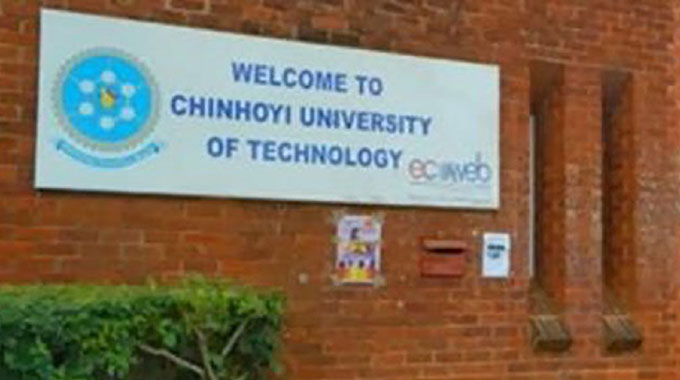
Mashonaland West Bureau
THE Chinhoyi University of Technology (CUT) has acquired nearly 12 hectares of land to develop housing units for its 900 academic and non-academic staff, in a move aimed at improving employee welfare and retaining skilled professionals.
Since its transformation from a technical college to a full-fledged university in the early 2000s, CUT has faced a persistent shortage of staff accommodation.
The institution’s existing housing facilities — originally designed for a much smaller workforce — have been unable to meet growing demand, forcing many employees to live off-campus.
This has posed challenges in building a cohesive and integrated academic community.
During a visit to CUT on Wednesday last week, Minister of Higher and Tertiary Education, Innovation, Science and Technology Development Ambassador Frederick Shava was briefed on the development by Vice Chancellor Professor David Simbi.
Prof Simbi outlined the university’s vision to construct university-owned residences that offer comfortable and secure living conditions for staff.
He also highlighted plans to engage a range of partners in the construction of the housing units.
Minister Shava applauded CUT for its proactive response to the housing crisis.
“The acquisition of 11,8 hectares of land for staff residences is a significant step towards enhancing faculty welfare, fostering institutional loyalty and improving overall productivity,” he said.
In addition to staff accommodation, the university has also partnered with a private entity to enhance student housing.
This collaboration has led to the development of Chinhoyi Heights, a 300-bed facility that is helping to ease pressure on student housing and improve living conditions for the university’s growing student body.
The minister also revealed Government plans to support CUT with the installation of a solar power plant atop its newly commissioned, state-of-the-art US$4 million administration block.
The solar project, he said, will help address frequent power outages and ensure a stable energy supply to sustain the university’s operations.
As part of his tour, Minister Shava visited several other key projects at the university, including the Innovation Hub, Agro-Industrial Park and the Gemplasm and Embryo Transfer Unit.
He urged CUT to commercialise products from its Innovation Hub — such as bottled water, detergents and confectionery items — to generate revenue and enhance its impact on the surrounding community.



