malvernmugadzikwa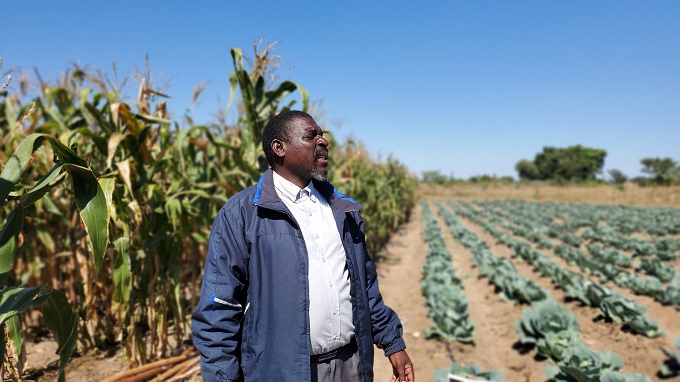
Theseus Shambare
Amid rural schools being projected as grappling with poor infrastructure, teacher shortages and poor academic performance, Chinorumba High School in Zaka, Masvingo, is showing it is possible to shed these tags.
The 2023 Zimbabwe School Examinations Council (ZIMSEC) results seemed to reinforce this troubling reality, with some schools in rural areas recording zero percent pass rates.
Yet, Chinorumba reveals a remarkable success story for a rural school, one driven by the Government’s targeted initiatives to uplift education in the country’s remote areas.
Through a combination of strategic infrastructure investments, innovative teaching programmes and robust community engagement, this once-struggling school has been transformed into a beacon of academic excellence.

In a district with 45 schools, Chinorumba High School proudly claims the title of the best high school, a testament to its unwavering commitment to academic success.
One of the school’s most extraordinary achievements lies in its consistent 100 percent pass rate in Advanced Level examinations.
While many schools struggle to attain such exceptional results, Chinorumba High School has made it a habit of surpassing expectations every year.
In the 2023 examinations, the school witnessed an impressive feat, as 22 students achieved a remarkable score of 9 points and above.

The school’s success story does not end there.
Two students went beyond and etched their names into the annals of Chinorumba High School’s history.
Setting a new record, these exceptional individuals secured an astounding 19 points in their Advanced Level examinations – an accomplishment that even urban learners would find enviable.
One of the students excelled in science subjects, while the other showcased brilliance in arts subjects.

A visit to the school unravels the secret behind its resounding success.
While good results have been a tradition, the school head, Mr Nixon Benyu told The Sunday Mail Online that the recent success was deeply rooted in the Government’s multi-faceted approach to rural development.
The school benefited from the Presidential School Business Unit (SBU) roll-out, which has served as a catalyst for the recorded achievements.
In July last year, President Mnangagwa launched a one-hectare SBU at the school equipped with a solar-powered borehole, a drip irrigation system and two fish ponds stocked with 2 000 tilapia fingerlings.
“This was a turning point for our school. These innovative Government initiatives have paved way for a sustainable source of income for the school, enabling it to invest in vital education resources,” said Mr Benyu.
“One outcome of this initiative is access to potable water, a basic necessity that is often taken for granted.”
With a reliable water supply, he said, the school had been able to create a thriving garden that provides nutritious produce for the students and the surrounding communities.
“The school’s garden yields high-quality green mealies, cabbages and tomatoes, thereby enhancing the nutritional well-being of the students and fostering a deeper understanding of agricultural practices,” said Mr Benyu.
“The income generated from the business unit has had a transformative effect on the school. It has allowed us to purchase stationery, computers and other essentials to ensure that students have the necessary tools for their educational journey.”
Mr Benyu said before the establishment of the SBU, teachers used to travel long distances in search of potable water, leading to an exodus of competent teachers to better-equipped schools.
Additionally, funds from the unit have been utilised to construct standard water system toilets, thereby creating a clean and conducive environment for learning.
“This investment in infrastructure has had a direct impact on student and teacher retention as the improved facilities attract and retain qualified teachers, leading to a remarkable 100 percent teacher retention rate,” explained Mr Benyu.
The positive outcomes of these Government initiatives extend beyond material resources.
Mr Benyu said the continuity of learning had been significantly enhanced as students no longer experience interruptions due to the availability of necessary resources.
“With a stable learning environment and improved infrastructure, students can fully engage in their studies and maximise their potential,” he said.
He further highlighted that the school garden has become an invaluable asset for practical learning experiences.
A student at the school, Presley Bvakacha (16), said they learnt a lot from the fishpond enterprise.
“All of us have now mastered how to clean pond water by removing the litter or leaves, checking fish activity, removing dead fish, weeding the edges, siphoning water, replenishing the pool with fresh water and other incidental jobs that make the fish comfortable and safe,” she said.
She said students were taking the opportunity to apply their theoretical knowledge in a real-world setting, with the assistance and guidance of their teachers.
“This hands-on approach fosters a deeper understanding of the subjects and cultivates essential practical skills that will benefit us beyond the classroom,” Presley said.
The SBU has over 1 600 heads of cabbages, over 1 000 plants of tomatoes and half hectare of a thriving green mealies.
The SBU has two fishponds holding 4 200 tilapia fingerlings to be harvested in the next eight months.
Lands, Agriculture, Fisheries, Water and Rural Development Deputy Minister Davis Marapira said pass rates in rural schools were bound to improve with the Government’s thrust in creating school-based business units.
“We have since moved away from theoretical education. We now focus on the practical aspects. Zimbabwe is an agro-based economy and we need to cultivate the culture from the school level,” he said.
“We are also focusing on ensuring that each school is not dependent on school fees paid by students, but is able to generate its own income to improve service delivery. Gone are the days when learners were sent back home due to non-payment of school fees. The school must be self-sustaining financially through business initiatives.”
Chinorumba High School has established local markets, with the local community now relying on the school for produce.
The school also sends its produce to Jerera Growth Point where there is a bigger market.
On average, the school generates not less than US$2 000 per month.
Plans are at an advanced stage for the learning institution to set up poultry and goat rearing projects.
In the near future, the school is targeting to purchase a school truck that will assist with ferrying produce to the market.
Chinorumba High School’s success story is a testament to the transformative impact of Government initiatives and the power of community-driven solutions.
Through the SBU, the school has not only achieved academic excellence, but has also created a sustainable ecosystem that supports the holistic development of its students.
By addressing fundamental needs and providing practical learning opportunities, the school has become a shining example of educational innovation, resilience and success in rural Zimbabwe.



 Online Reporter