Online Reporter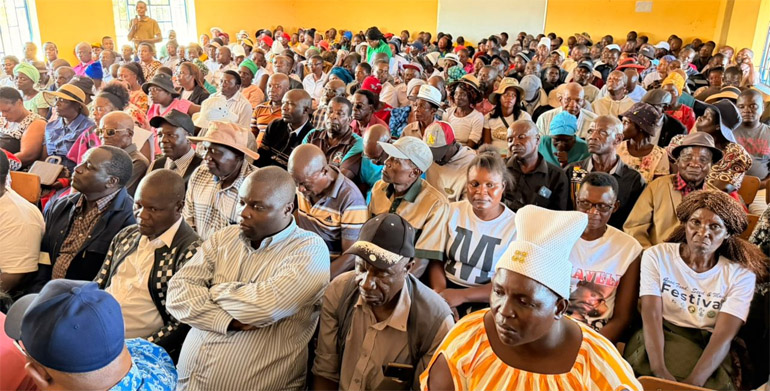
Samuel Kadungure
News Editor
THE third day of public hearings on Constitutional Amendment Bill Number 3 drew huge crowds at Rimbi Community Hall in Chipinge and Chakohwa High School in Chimanimani, with attendees overwhelmingly backing the proposed changes.
Residents supported extending the presidential, parliamentary, and council election cycle from five to seven years, and electing the President by parliament, citing stability and development.
“A longer term will give our leaders the opportunity to implement long-term policies without the pressure of frequent elections,” said Mrs Christine Chivhunze.
Participants also welcomed the Registrar General handling the voters’ roll, citing past issues with electoral processes.
“We hope all anomalies will be corrected,” said Mrs Evelyn Sithole of Chipinge.
The Bill’s clauses are expected to address constitutional grey areas and promote development.
“The merger of the Zimbabwe Gender Commission and Human Rights Commission will save taxpayers’ money,” said Mr Kudakwashe Bhasikiti, of Chimanimani.
He added that the changes would benefit citizens across the political divide.
Honourable Supa Mandiwanzira, chairperson of the parliamentary team, noted citizens’ commitment to law-making and support for the Bill. He highlighted two key themes – reducing costs associated with frequent elections and redirecting resources to infrastructure development, and confidence in the Second Republic’s efforts to drive growth and attract investment.
“People recognise the enormous work done in infrastructure development and attracting investors,” he said, adding that citizens want to see continued progress and development in their communities.
The parliamentary team will compile a report on the public hearings, incorporating views from across the province, before presenting it to Parliament.
The hearings conclude tomorrow in Buhera, marking the final stage of the consultation process in Manicaland.
Citizens await the outcome, hopeful that the changes will bring positive developments to the country. Residents cited potential benefits of a more stable and effective governance system, including reduced political polarization and increased focus on unity and development.
The proposed amendments have received widespread support across the province. As the process nears conclusion, citizens eagerly await the outcome, expecting the changes to bring meaningful improvements to tje country’s governance and development.