admin
admin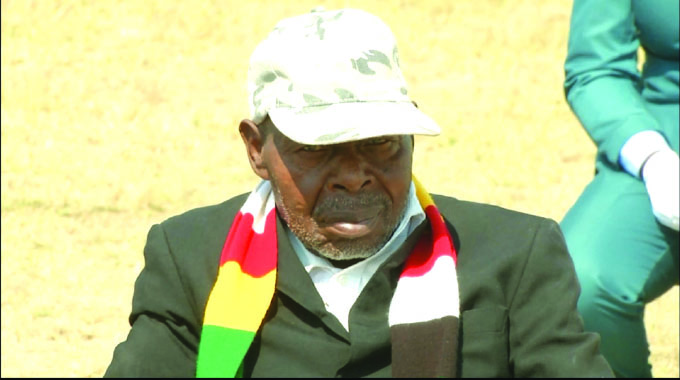
Fungai Lupande-Mashonaland Central Bureau
President Mnangagwa has fond memories of national hero, Cde Jaison William Chirinda, who was affectionately known as Chezhira Chakaipa.
The two met at Harare Prison where they were both sentenced to death, but later became friends after their sentences were commuted and they were transferred to Khami Prison in Bulawayo.
Cde Munyaradzi Machacha, the Zanu PF National Political Commissar, said President Mnangagwa remembers Cde Chirinda as a short man, but a fierce fighter. The national hero was also “a brave man who loved his country and the revolution”.
“He was later sentenced to 20 years, while President Mnangagwa was serving 10 years. President Mnangagwa was released early and left Cde Chirinda behind. He was released when the country attained independence,” said Cde Machacha.
“He was active in all veterans of the liberation struggle meetings. The Politburo unanimously agreed that he deserved national hero status,” Cde Machacha said.
He pointed out that Cde Chirinda joined the liberation struggle at a time when it was dangerous to do so.
“He went to Zambia, where he stayed with his aunt until he joined the struggle. He trained in Tanzania and then proceeded to Ghana,” said Cde Machacha.
“He was part of the group that returned to the country led by Josiah Tongogara, who was the Commander of the ZANLA forces. He fought battles in Chimoio, while other groups also engaged in significant battles including the famous battle at Chinhoyi, while the group of President Mnangagwa was active in Fort Victoria (Masvingo).”
Cde Machacha said Cde Chirinda’s group of freedom fighters were betrayed and captured. Cde Chirinda will be buried at the National Heroes Acre at a date to be announced. He died on October 27, at the CDM Diabetic Centre in Harare after battling diabetes for a long time.
He was 82.
Cde Chirinda was born on September 1, 1942, in Goora, Madziwa, where he spent his early years with his family.
He attended Madziwa Goora Primary School before relocating to Zambia for secondary education. In Zambia, he lived with his elder sister, Mai Dzamba, who was married to a Zambian citizen.
Cde Chirinda joined the armed liberation struggle in 1965 and completed military training at the 3 Leaves Brigade in Tanzania. He then went to China for further training, and upon his return, he participated in the first military operations against the Rhodesian Forces in Sinoia (now Chinhoyi).
Cde Chirinda led one of two groups dispatched to Sinoia to fight against the Rhodesian Forces.
The other group was led by the late Cde Chatambudza, and this became the legendary group of seven heroes who perished at the Sinoia battle, igniting the Second Chimurenga.
Cde Chirinda’s group initially consisted of eight freedom fighters, including the late Cde Tongogara, who had to return to Zambia on another mission when the battle began. He was arrested following the Chinhoyi encounters, initially receiving a death sentence that was later commuted to life imprisonment.
He served alongside other renowned revolutionaries, including President Mnangagwa, Cde Victor Mlambo, Cde Lloyd Gunda, Cde William Ndangana, Cde Herbert Samba, Cde Dzangasi Dube, and Cde Benjamin Mahaka, among others.
After his release from prison following the attainment of independence in 1980, Cde Chirinda was employed as a patrol officer in the Ministry of Information and Publicity and later at the National Railways of Zimbabwe. In 2003, he began working at the Parliament of Zimbabwe.
Cde Chirinda is survived by his wife, Monica Muchenje, six children, and 19 grandchildren.


 Online Reporter