daniel chigunwe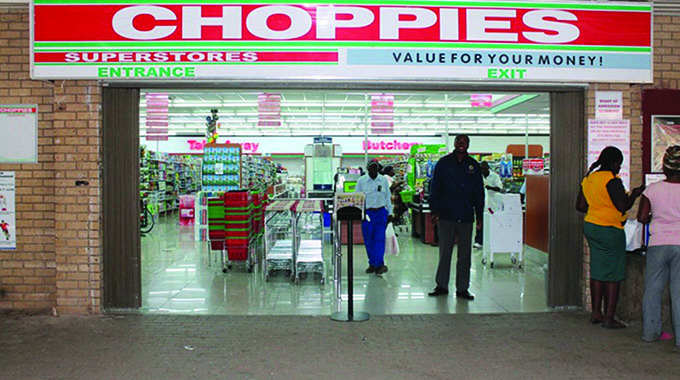
Business Writer
Supermarket group, Choppies, says Zimbabwean consumers have significantly shifted to shopping at smaller stores from formal retailers because smaller outlets are able to operate with lower overhead costs.
This comes as major retail players from diverse sections of the economy, like food, clothing, textiles, and footwear, have fallen victim to the sprawling informal sector and have since exhorted the government to bring the situation under control before it buries the once vibrant formal sector.
However, Finance and Investment Promotion Ministry permanent secretary, George Guvamatanga, has since dismissed the impact of tuck shops on formal retailers, instead hinting that most businesses are being run by managers who lack adequate knowledge on how to respond to economic dynamics.
He quizzed the rationale behind big retailers who complain that they are not able to compete because they have been taken out of business by those tuck-shops.
Meanwhile, according to Choppies, lower overhead costs at the smaller stores allow them to offer lower prices to consumers and better exchange rates, which are not necessarily compliant with exchange laws.
“This is important for consumers who are struggling to make ends meet in a difficult economic environment where salaries have been decimated by high levels of inflation and currency depreciation.
“We are closely monitoring the exchange rate as it will impact both Zimbabwe’s and the Group’s profitability and net asset value,” the retailer said in its financials for the period to June 30, 2023.
The Botswana Stock Exchange (BSE)-listed supermarket group has 33 stores in Zimbabwe in addition to its presence in other countries such as Zambia and Namibia.
The group noted that, as a result of the above-mentioned factors, Pula sales declined by 48,3 percent. EBIT and EBITDA declined by 151,6 percent and 125,5 percent, respectively, as cost inflation reduced margins.
Adjusted EBIT and adjusted EBITDA declined 133,3 percent and 108,1 percent, respectively.
Choppies said there are several factors causing the challenges of currency volatility in Zimbabwe, including weak consumer confidence, an appetite for United States dollars for safety of value, speculative behaviours, and the general market.
“As the economy is now largely dollarised, this leads to high demand for the United States dollar as most people are paid in Zimbabwean dollars, and this continues to devalue the local currency,” Choppies said.
Choppies said last year that while it has divested from loss-making regions, it has committed to managed expansion in Zimbabwe and two other countries.
In Zimbabwe, the group has a total of 33 supermarkets, of which four are value stores and 29 are super.



 Online Reporter