


 Online Reporter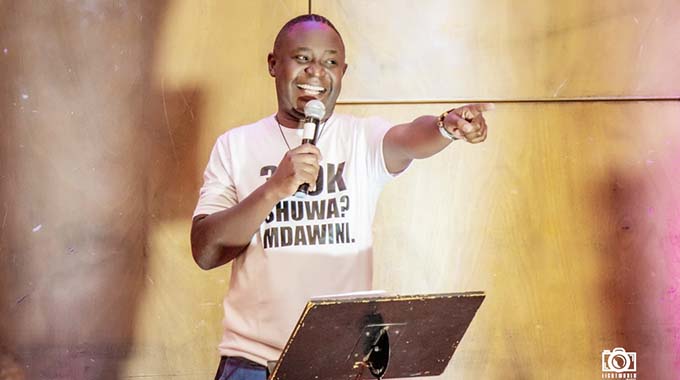
Bruce Ndlovu
Society Reporter
IF you had asked parents in Bulawayo in 2009 where they thought hell was located, they would have pointed you to the corner of Thornton Avenue and Robert Mugabe Way in Parkview.
Kudu Bar was many things to different people.
To some, it was a crime scene — a mini Sodom and Gomorrah planted next to a rugby field.
Critics saw it as a den of debauchery, where a young generation gleefully discarded the moral codes that had shaped lives under the African sun for generations.
To its loyalists, however, Kudu Bar was not just a club.
It was a movement.
A place to chop life with a big spoon, to cast off the rules left at the gate of Hartsfield and plunge headlong into the night.
And reigning over this carnival was Babongile Sikhonjwa — emperor of Kudu Bar, a king without a crown.
Clubs often take on the character of their owners and Kudu was cut from the same fabric as its master: rebellious, sometimes vulgar, chaotic, yet always fun.
Then, suddenly, it was gone.
When headlines began to splash lurid tales of raunchy sexcapades and scandalous episodes unfolding within the Hartsfield rugby grounds, everyone knew the party was nearing its end.
The shutdown was inevitable.
As Sikhonjwa would later admit in rare moments of reflection, the closure of Kudu Bar felt like a death.
He moved on, and so did the world — but a piece of him remained buried there.
In truth, Kudu Bar never really closed.
Months after its shutdown, people flocked to Jock and Saddle, where Sikhonjwa, with his Ballers League, had reportedly found a new nest.
Ascot Race Course, where it was located, was a fair distance from Hartsfield, but no one cared.
The venue did not matter.
Kudu Bar was not a place — it was a concept, a feeling.
And that feeling lived within Sikhonjwa.
Wherever he went, they followed.
To Hlabangana Lounge. To Fund’ Ukulinda in Tshabalala. Such was his magnetic pull.
The first time this reporter met Sikhonjwa was in 2012 at Jock and Saddle.
Then a student journalist, I had been assigned to interview him about his latest gamble — a move some thought reckless and unnecessary.
By the time I spoke to him, close to midnight, one of his eyes was bloodshot.
Yet he seemed sober, speaking with the same measured clarity and eloquence that endeared him to radio listeners across the country.
I did not ask what he was drinking or why the substance seemed to discriminate against one eye in particular.
What was the risk Sikhonjwa was taking?
That night, he had pledged to welcome Maneta Mazanhi, rolling out the red carpet for her.
To some, this was a brazenly provocative act. Mazanhi had recently been ejected from the Big Brother Africa house and was blamed for getting the people’s favourite, Rockford “Roki” Josphats, booted alongside her.
Sikhonjwa decided to charge patrons a hefty fee for the pleasure of seeing the country’s new favourite villain up close.
On the night of her appearance, some feared the building might be set ablaze.
Such was the ill-feeling towards the reality TV star.
But for Sikhonjwa, who delighted in dancing close to the sun, it was a roll of the dice — and to him, it was worth it.
“Maneta is a Bulawayo girl. We cannot turn our backs on her when the chips are down,” he said when asked about the wisdom of hosting such a controversial guest in a club full of intoxicated revellers.
That moment captured who Sikhonjwa was at heart.
Most remember him as the guy with the Colgate smile and the T-shirt that read “Ndebele Maker”, with an arrow pointing downwards to his manhood.
That picture is a fair depiction of who Sikhonjwa was.
Away from the rock star who loved to party, away from the comedian with a punch line for every sentence, Sikhonjwa was a champion for the underdog.
When Maneta returned to Bulawayo that September, a cloud of shame hovering above her, Sikhonjwa saw someone worth rooting for.
He always stood with those fighting against the odds.
This is perhaps what made him such a beloved figure in Bulawayo’s arts scene.
He actively supported musicians, artistes and young creatives who were punching above their weight.
From comedian Clive Chigubhu to rapper Asaph and Band Fusion, Sikhonjwa had a hand in empowering young maestros who lacked platforms to showcase their genius.
On a random afternoon, he would call you to Red Café, crack open a crate of beer and play music from upcoming artistes he wanted to push to stardom.
His ear for music was as unfailing as his eye for talent and you would leave the bar wondering how this reputed rock star had somehow managed to find time to delve into the hidden depths of the music industry and discover such hidden gems.
Perhaps it was the same spirit that drew him to Highlanders.
The club, forever feeling besieged, seemed a natural fit for a man who always aligned himself with the struggling, the overlooked, the underdog.
Ask him and he would tell you supporting Bosso was his birthright.
More than anything, Sikhonjwa was a man of the people with a taste for grand gestures.
He roasted pigs on spits and served them free to patrons.
He shared calabashes of opaque beer with strangers at Hlabangana Sports Club whenever Highlanders humbled Dynamos.
During one wild night, he recruited this writer and another journalist for a limousine ride, joined by a popular young businessman and other colourful characters from around the city.
His joy was never solitary — he delighted in seeing others delight.
He had a generosity of spirit and a sense of community unmatched by the city’s so-called socialites, who only seem to enjoy life when it comes with a VIP tag.
Sikhonjwa’s devil-may-care attitude gave him magnetic charm and earned him many friends — and his fair share of enemies.
Of course, there were moments of frustration.
Conservative audiences took offence at some of his jokes and many squirmed when he was announced as the MC at formal events.
Even among his tribe — the drinkers and party lovers — he sometimes went too far.
During one Black Motion gig at Hartsfield, an ill-timed joke sparked a riot.
The crowd had been teetering on the edge all night.
Sikhonjwa, ever the provocateur, shouted into the microphone: “If you are going to throw bottles on stage, at least make sure it’s expensive whisky, not this cheap stuff that you are tossing my way.”
The message was not well received. Before he finished the sentence, a deluge of bottles flew into the air, threatening to obscure the moon.
It was the beginning of a riot that nearly turned Bulawayo upside down.
In the end, Sikhonjwa had a quiet death.
There were no jokes told before his departure. There was no train party or big bash to announce that he would no longer grace the city with his presence.
After such an eventful life, perhaps the 49-year-old deserved a quiet exit.
As he departs, one cannot help but wonder whether a piece of Bulawayo died when he breathed his last in the early hours of last Sunday morning.
Long after his own heart has stopped beating, the Ndebele rock star will continue to rest in people’s hearts.



