Chronicle Editor
Leonard Ncube, [email protected]
MONDAY, December 25, is Christmas Day, a globally revered holiday celebrated by billions. While traditionally characterised by bustling preparations, elaborate meals and joyous gatherings, the essence of this day has evolved significantly over time.
In the past, families hustled through preparations, adorning homes with trees while harmonising Christmas carols. Sumptuous meals were prepared, featuring the finest cuts of meat, and children frolicked outdoors or ventured to local shops. City-based family members reunited with rural kin for hearty feasts, while rural communities queued for exclusive access to foods like bread.
Today, however, the landscape of Christmas has shifted. Once-special treats have become commonplace, with daily availability of once-scarce luxuries like bread and meat. Yet amid this evolution, the fundamental question lingers: What truly defines Christmas, and where did it originate?
At its core, Christmas commemorates the birth of Jesus Christ, an annual festival observed globally on December 25. The name “Christmas” stems from the Mass of Christ, a significant religious and cultural celebration rooted in the Christian faith.
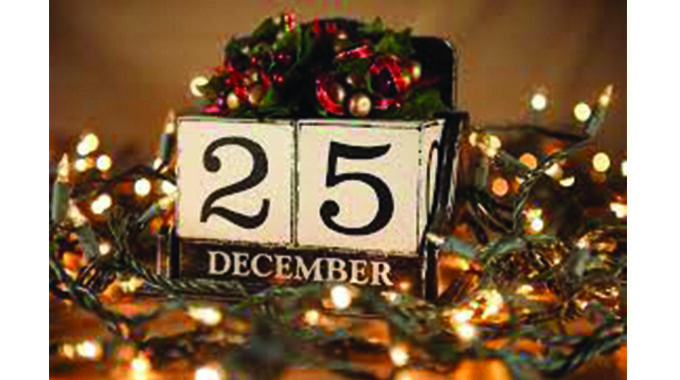
Historically, the church in Rome formalised Christmas festivities on 25 December during the 4th century under Emperor Constantine’s reign, cementing it as a pivotal event in the liturgical calendar. Different denominations mark the day with distinctive services, each emphasising the birth of Christ as the crux of the celebration.
Archbishop Alex Thomas, the head of the Roman Catholic Church in the Archdiocese of Bulawayo which covers the metropolitan province and Matabeleland South except for Beitbridge, Bubi, Umguza, Nkayi, Tsholotsho, and parts of Lupane in Matabeleland North, said Christmas is a celebration of the birth of Jesus Christ.
“From a Christian point of view, the birth of Jesus is the fulfilment of God’s plan to save his people from sin. God had promised a Messiah. It is the dawn of new hope. With Christ everything is made new. Christ becomes the centre and as the New Testament begins, the Christian era begins AD when the name Christian come from Christ.
“For Catholics it is more or less the same and in Christ is our life. Catholic Church is centred on Sacraments. All sacraments are instituted by Christ. For us Eucharist instituted by Jesus is the highest point of worship. We are nourished by the body of Christ in the Holy Eucharist. Christ is our final destination as well,” he said.
Echoing this sentiment, Reverend Travena Chichoni of the Methodist Revival Church said Christmas as a celebration of love, drawing biblical parallels to express God’s gift of love through Christ’s birth.
“Christmas is an annual festival celebrated by Christians on the 25th of December. Biblically, the festive is written in Isaiah 9:6 and John 3:16 which states that Jesus is a gift from God to express His love to humanity, hence the festival is to celebrate the birth of a Saviour.
“The history is authored in Luke 2vs12-14 and the story shows the coming of our Lord Jesus Christ and the Bible writings give the history of this day. The role of Christianity is to exchange love with the most disadvantaged members of our communities and stand in God’s place to show His love for humanity,” she said.
While many associate Christmas with generosity, charities, and community-driven initiatives, traditionalists like David Mhabhinyana Ngwenya and Jaheliduna Ndlovu shed light on an alternative perspective.
“Inxwala was our traditional Christmas and was celebrated it in March when people enjoyed the first fruits and birth of new life. There were lots of rituals that were performed and people ate the first fruits in the fields.
“For example cow peas leaves were crushed and smeared on all joints as a way of cleansing from any disease and residues from inxwala were dumped on roads junctions also as a way of protecting people from diseases. This festival brought life and joy and it was the king who led the festivities but all this is gone. So as people we observe Christmas but it is not our celebration as traditionalists,” he said.
Ndlovu popularly known as Mpisi from Monde outside Victoria Falls said there are a lot of misconceptions about Christmas. He said people now concentrate on merrymaking and less on honouring the birth of Jesus Christ.
“Christmas today is mostly about merrymaking but with nothing about the birth of Christ. We knew God and literally lived with him in our tradition and we would have our festivities which we knew brought us closer to him.
“To us traditionally this would start in October and November when the new moon and New Year started and run into inxwala when there were new crops from the fields. So you would find every October wosannas would gather and make rituals which Christians are doing now.
“The fresh shoots from trees was confirmation that we are cleansed from diseases and we would respect the environment as a source of livelihood. So modern day Christmas has less meaning to us traditionalists,” he said.
In essence, the true essence of Christmas transcends mere festivity, symbolising diverse cultural legacies and spiritual reflections. Today, while the holiday season continues to spark joyous social activities, it remains imperative to reflect on its deeper significance — rooted in tradition, history, and the spirit of giving.
As Christmas beckons, let us embrace its multifaceted origins and imbibe the spirit of unity, generosity, and compassion — making this season not just a time of celebration but also a period of deeper reflection and understanding.
Wishing you a Merry Christmas filled with the warmth of tradition and the spirit of togetherness.


 Online Reporter