admin
admin
Ishemunyoro Chingwere
ZIMBABWE’S chrome production remained largely flat in the first four months of this year, with official figures showing that total output registered marginal growth of 0,5 percent.
Statistics availed to The Business Weekly by the Ministry of Mines and Mining Development, show that chrome mining houses hauled a combined 532 000 tonnes in the first four months compared to 529 000 tonnes in the same period last year.
This year’s figures put Zimbabwe on a pedestal to achieve or even better its 2018 output of about 1,358 million tonnes of chrome ore, translating to 4 percent of 2018 global output of 33,7 million tonnes.
The duo of Zimasco and African Chrome Fields remain the biggest contributors accounting for the largest chunk of chrome deliveries.
Chrome is one of the key minerals through which Government is seeking to grow exports from US$3,2 billion achieved last year to US$12 billion beginning 2023, as the country gears for upper middle income earning status by 2030 as envisioned by President Mnangagwa.
Last year the mineral was one of the top six minerals that contributed the bulk of export earnings along with the usual top performers platinum and gold as well as diamonds, nickel and coal.
Government is currently working on a Chrome development policy that is expected to drive growth of the industry, consistent with the yet to be exploited chrome reserves.
Zimbabwe has the world’s second largest known chrome ore deposits, with about 900 million tonnes of untapped ore against total world reserves estimated to be 7,5 billion tonnes. Only South Africa has more chrome ore resources than Zimbabwe.
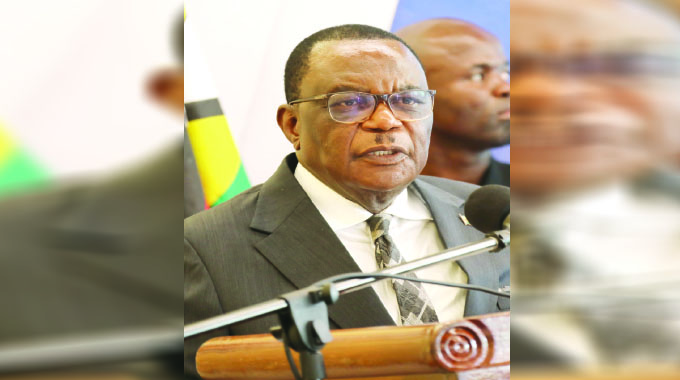
Speaking to our sister publication, The Sunday Mail Business ahead of this year’s International Chrome Development Association (ICDA) conference held in Zimbabwe last month, Mines and Mining Development Minister Winston Chitando said Zimbabwe was targeting to grow its output in line with increasing mining capacity.
“Chrome ore production will need to increase in line with increasing consumption in carbon and stainless steel production, therefore there is need for significant investment in developing the mining capacity of the country from exploration through to production,” the minister said.
The minister also said Government was targeting beneficiation in line with Government policy to cut on raw mineral exports in order to grow earnings and the creation of more jobs.
“Zimbabwe had over the last few years been witnessing decreasing ferrochrome production,” said Minister Chitando.
“Zimbabwe ferrochrome production is largely low grade High Carbon Ferrochrome with typical Chromium content of 52 to 60 percent.
“With global output for 2018 at 14, 32 million tonnes, Zimbabwe is contributing around 2,5 percent to global production. There is huge potential for the country to increase its ferrochrome production.
“While 2018 (ferrochrome) production of around 350 000 tonnes was significant for the country, new capacity being commissioned and planned for commissioning within the year could see a 20 percent increase of ferrochrome production capacity to 418 000 tonnes in 2019,” he said.


 Online Reporter