


 admin
admin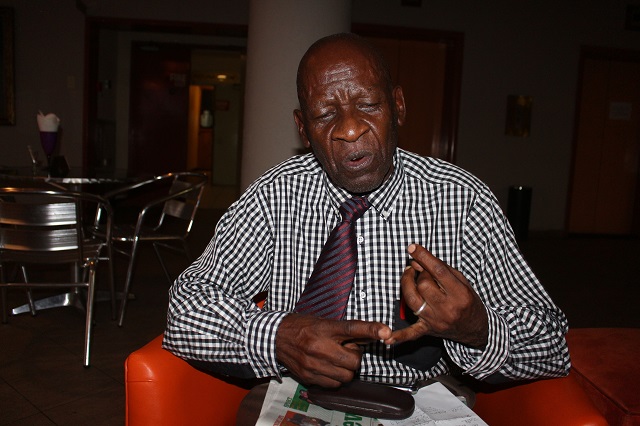

AFTER attaining good passes at school and getting a “good” job at Chrome Mines in the then Selukwe now Shurugwi in the Midlands Province the will to see an Independent Zimbabwe led a then 24-year-old Dr Milton Chemhuru to toss his new achievements into the dust bin and cross the border into Botswana to join the armed struggle.
The year was 1974 and the young Chemhuru seized by the revolutionary spirit embarked on a solo journey in his bid to see his people free from colonial bondage. The then young Chemhuru pseudo name Albert Ntonga or Dr Mbeya was to quickly distinguish himself as someone with a sharp military brain during a rigorous guerilla training in his group which included the current commander of the Zimbabwe National Army, Lt-Gen Philip Valerio Sibanda and the late Assaf who died in combat in Zambia in 1978 to be selected a military instructor soon after training at Morogoro in Tanzania. Today Dr Chemhuru, a former provincial medical director for Midlands and Manicaland provinces is a public health specialist for non-communicable diseases in the Ministry of Health and Child Care. Dr Chemhuru spoke to our Assistant Editor Mkhululi Sibanda (MS) about how he joined the armed struggle, training, deployment and how he ended up being trained as a medical doctor in Cuba.
Below are excerpts of the interview:
MS: Dr or Comrade Chemhuru many people know you as a medical doctor and might be surprised that you are an ex-combatant. Give us your brief background and tell us how you left the country to join the armed struggle.
Cde Chemhuru: I was born on 9 October 1950 in Shurugwi, Midlands Province and I did schooling mostly in Anglican schools. I did my primary education at St Augustine then St Patrick’s Mission. I then went to Chrome Secondary School for my secondary education. After that I worked in the Chrome mines, first as a general hand, clerk and after my secondary education I worked as a laboratory assistant. You see at first I used to work during the school holidays to raise money for my upkeep and so on. After I had done well in my studies I was employed as a clerk and then later on lab assistant.
MS: Then when did you leave the country to join the armed struggle?
Cde Chemhuru: I left the country in March 1974.
MS: What drove you to join the armed struggle?
Cde Chemhuru: The reason was that during the Pearce Commission or Anglo-Rhodesian proposals led by the British who wanted to have majority rule for the Zimbabweans the conditions in which they were giving were not acceptable to the blacks.
They were going around the country asking people about their opinion regarding the proposals. By that time we were youths, very motivated youths and we were reading books also about Mao, Karl Marx and other revolutionary movements, what had happened in Zambia and Tanzania where there were leaders such as Kaunda and Nyerere and of course there was the Joshua Mqabuko Nkomo factor. That time Zapu was the party which people actually followed and as the youths we were motivated by that, we were following the old man. So when this commission was going around the country people did not accept it because what was there was not in favour of the black majority but of the British and the whites. Then it happened that there were reports that the people in Shurugwi were happy about those proposals and that is when I came out in the open and challenged that. I then got into trouble.
MS: What exactly did you do?
Cde Chemhuru: What happened was that on 11 March 1974 I wrote an article to The Chronicle and in that article I emphasised that someone had come to Shurugwi and met some workers from Chrome Mine and those were people in top positions. It was then reported that at Chrome Mine in Shurugwi we had accepted the Anglo-Rhodesian proposal, so I felt like it was a betrayal, without even blinking an eye I wrote to the editor of The Chronicle and said people of Shurugwi were not different from the rest of the people of Zimbabwe, we do not accept this, whoever accepted this was a traitor to the people of Zimbabwe and I signed my name and sent it to The Chronicle. The following week I was arrested and detained in Shurugwi and then Mutapa in Gweru for a week then after that I was returned to Chrome Mine. I was fired and given a PI (prohibited immigrant) in Shurugwi. I was not allowed to talk to more than one person and I was just confined home and life became very difficult for me.
MS: Under those conditions what then did you do?
Cde Chemhuru: I turned to my former headmaster, Mr Chanakira who had connections. I went to him and he asked me what the problem was. I made it clear to him that I wanted to go out and join the armed struggle. Although he didn’t trust me, but he was just a friend, he advised me to go to Botswana and surrender myself to the police and from there mention the party that I supported whether Zapu or Zanu and at that time there was a problem of fuel coupons because Smith had sanctioned them, so he sourced fuel for me and requested one of my former teachers who had a truck to carry my property home, that is in Mazivisa. Noticing that my mother was concerned, I stayed for one week consoling her and then I left. I reached Francistown and I asked for directions to the police station and when I was shown the police station, I met the police officers and told them of my intention that I wanted to join the armed struggle.
MS: You went alone and how did you travel all the way to Botswana?
Cde Chemhuru: I travelled by train and I was alone when I left to join the armed struggle. By the way when I was in Shurugwi working as a clerk a Mr Smith who was my boss managed to assist me get a passport which at that time was very difficult and then I was viewed as trustworthy worker. When I went to secondary school he found out that I was very intelligent thus he assisted me for two years at Chrome giving me money so he trusted me and he assisted get the passport, it was very easy for me to crossover to Botswana without anyone suspecting me. At the police station they asked me if I wanted to join the armed struggle and asked which party between Zanu and Zapu and I chose Zapu. At that time the Ian Smith regime was sending its intelligent officers to capture those who were going to the armed struggle so I was put in prison for protection for four days. I then met a Zapu representative.
MS: Do you remember the representative’s name?
Cde Chemhuru: I can’t remember his name but from there on I began to change everything. I was no longer Milton Chemhuru but Albert Ntonga. At that time one’s entire IDs and so forth ceased to function.
MS: So your passport was taken away?
Cde Chemhuru: No I had to surrender it in Lusaka but after staying in Botswana came a time when I was told that I had to go to Zambia so I boarded the plane.
MS: Now you were with other recruits?
Cde Chemhuru: No, I was alone, remember it was very difficult to recruit because by that time it was that period of the Chikerema crisis. Chikerema had gone with most of the Zipra forces to join FROLIZ and there was tribalism there but I was not influenced by that because I had come direct and I had chosen the path of the old man because I was following Umdala, so I boarded the plane. The movement of the recruits to Zambia was known by a small group only. The plane was supposed to go to Lusaka where I was to find the Zapu people waiting for me. Unfortunately the plane developed problems and it landed in Livingstone, so in Livingstone the immigration people ordered everyone out and I had to change to another plane and the immigration officers started asking for passports but I had been told not to produce it except to the Zapu people. So those people gave me a problem and eventually I produced my passport and upon seeing that it was marked Rhodesia they said I should go back to Rhodesia and to make things worse the Zapu representative had given me papers to go and give J Z Moyo and imagine I had all those papers. They said I should go back to Rhodesia and it was almost 5PM and they cuffed me and labelled me a criminal because at that time an ANC leader had been killed by a letter bomb, I cannot remember his name though. The immigration officers then accused me of being one of the people sent by Smith to come and kill the nationalists, worse off I was carrying papers for J Z Moyo but at that time they had not seen them. They then took me to Livingstone and when we got there, they stated that I was a refugee and that was my luck.
MS: Now they were taking you to Livingstone Town?
Cde Chemhuru: Yes, and by the way those guys had not seen those letters so they took me in custody. They started searching me and that was when they found those papers and I told them who had given me the papers and that they were for J Z Moyo.
They then started asking me what the letters were in connection with, I told them I didn’t know and they said I was carrying letter bombs and they locked me up. Then came some guys from the intelligence and they started interrogating me the whole night, luckily by that time I was ready to fight for my country. They said I was an enemy and after some time they took me to the cells. The interrogation continued for two days until I told them I wasn’t going to eat or talk.
MS: You were on hunger strike?
Cde Chemhuru: Yes, and they threatened me though they didn’t hit me, only asking me stuff that I didn’t know. After four days another representative from Zapu came and he told me to forget about everything. He said I was very lucky, if I had been deported with JZ’ s papers I was going to be sent to death by the Rhodesian government.
While I was waiting to go to Lusaka I was put in prison for protection as well and there I met a number of guys who had the same problem because of the crisis that Zapu was going through. Some of them were being sent to Britain and others back to Rhodesia. I learnt a lot from them as they started telling me what was happening in the struggle but that didn’t change my mind, some said I should go with them to Britain as they had been offered scholarships.
They said was nothing much was happening in the struggle, but then I figured if I go to school I won’t be able to go and fight because my objective was to go and fight, I was angry with the Rhodesian government and after four days I was taken to the Zambian police and, together with the Zapu representative we went to Lusaka. I stayed there for some weeks waiting to be trained because during those days it was hard for the party to recruit because of the crisis but, after some weeks we were taken to the bush and we were not more than 20 and we stayed in Zambia for about three months without exceeding 40 and, by the way our commander was Cde Todd Mpisi and he is still alive. He is from Midlands as well.
Next week we conclude the interview with Cde Chemhuru talking about his training, becoming an instructor, deployment and how he ended up in Cuba.


 Bongani Ndlovu