Online Reporter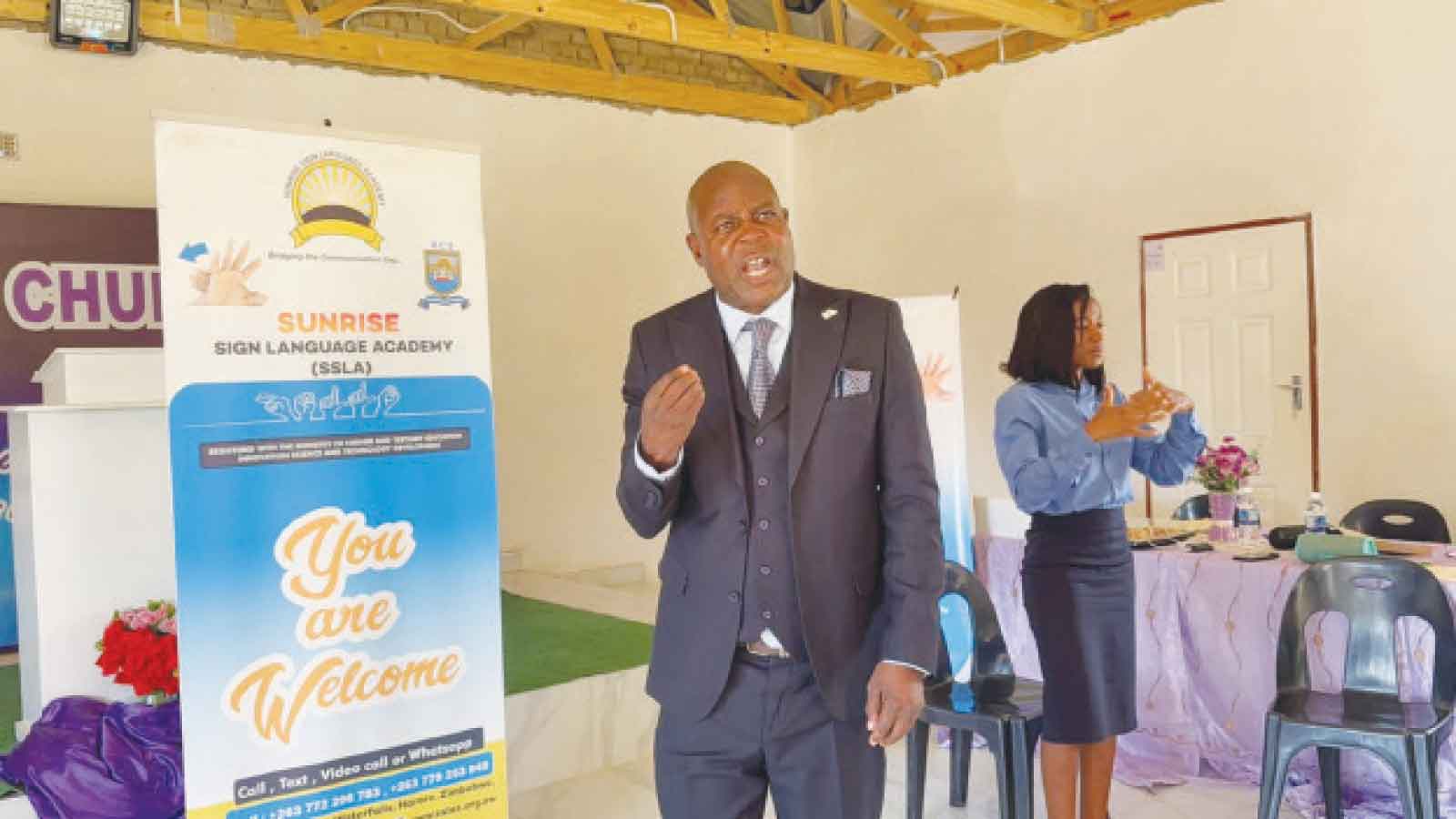
Fatima Bulla-Musakwa-Features Writer
When Chaplain Naomi Nyanhi travelled to Machipanda, Mozambique, last year to provide counselling services to new Christian believers, she did not anticipate that a lack of Sign Language knowledge would limit her ability to serve.
A pastor at the Church of God Christian Centre in Kuwadzana, Harare, Chaplain Nyanhi is trained in wellness counselling and correctional services.
However, on the fourth day of her mission, she encountered two women who required assistance, but could communicate only through Sign Language, something she had never learnt.
One of the women was deaf, while the other was non-speaking. Unable to communicate with them, Chaplain Nyanhi could only pray and embrace them to demonstrate her willingness to help.
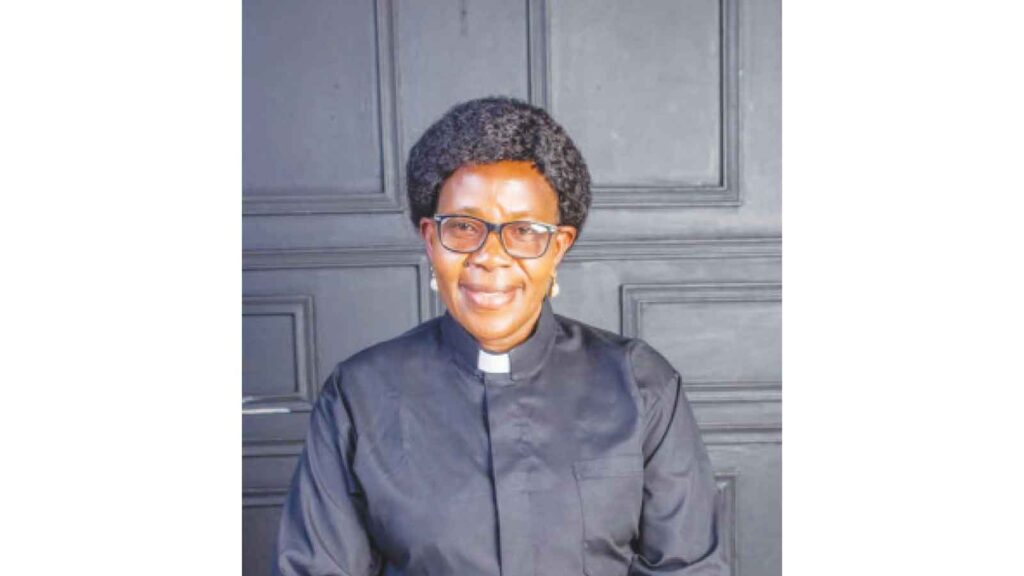
Chaplain Naomi Nyanhi
The experience confronted her with a reality that many churches have yet to address: communication barriers can prevent persons with disabilities from fully accessing spiritual and pastoral support.
“I could not talk to them, although something was bothering them. I believe they could see that I genuinely wanted to communicate with them, but I could not use their language. I returned home burdened by the need to learn it,” she said in a recent interview.
Following the experience, Chaplain Nyanhi was introduced to Sunrise Sign Language Academy, where she undertook Sign Language training. Through her influence, several members of her church and the wider Kuwadzana community also enrolled in the programme.
The training changed the way she viewed her community.
“Once I learnt Sign Language, I began noticing deaf people in my community. Before that, I did not see them,” she said.
Chaplain Nyanhi’s experience reflects a broader challenge within churches, where deaf and hard-of-hearing congregants are often physically present but excluded from meaningful participation.
For many worshippers, church services follow a familiar pattern of spoken prayers, praise and worship, sermons, and announcements.
However, services that rely heavily on music and uncaptioned speech, without Sign Language interpretation, can leave deaf and hard-of-hearing congregants as passive observers.
The exclusion often extends beyond the main service. Bible studies, prayer meetings, youth activities, cell groups, counselling programmes, and social gatherings may also lack arrangements that enable persons with disabilities to participate fully.
Despite these challenges, some churches are beginning to challenge the status quo.
The Seventh Day Adventist Church, through its Adventist Possibility Ministry, is among the denominations promoting greater inclusion.
Established in 1995, the ministry advocates equal opportunities for persons with disabilities to participate fully in church and community life.
Some Adventist congregations provide dual presentations throughout the service, with trained members delivering sermons and other proceedings in Sign Language alongside spoken interpretation.
The initiative operates in assemblies in Mufakose, Waterfalls, Hatcliffe, and Budiriro in Harare, as well as in areas such as Kariba and Chipinge. In these congregations, sermons may be delivered in Sign Language, with voice interpretation, or spoken, with simultaneous signing.
The church also provides services based on needs assessments, both physically and online.
Pastor Trymore Mutimwi, director of the Adventist Possibility Ministry, said congregations that had adopted the initiative were recording increased membership.
“People have also come to understand and value this ability. Because I work with people with different disabilities, I have seen that God loves everyone equally. I refer to them as differently-abled persons,” he said.
Specialised training remains essential to ensuring that inclusion goes beyond physical presence.
Douglas Mapeta, a member of the Seventh Day Adventist Church, established Sunrise Sign Language Academy after witnessing the communication gaps between deaf people and the wider community. The academy provides Zimbabwe Sign Language training and deaf-awareness programmes to churches and organisations.
Mapeta said he was deeply concerned by deaf congregants attending church services without being able to follow sermons, participate in worship, understand announcements, or interact naturally with other members.
The communication barriers, he noted, also affected Bible studies, youth programmes, prayer meetings, cell groups, and social gatherings.
For Mapeta, the objective should be to ensure that deaf people are able to understand, communicate, participate, serve, and fellowship with other believers.
The academy’s basic Sign Language programme is open to people of different age groups. Its teaching methods are adapted to suit participants’ ages, abilities and learning pace.
Participants learn greetings, introductions, family relationships, everyday vocabulary, questions, and basic conversational structures. Church-related terms such as God, Jesus Christ, the Holy Spirit, prayer, faith, salvation, sin, baptism, Sabbath, worship, and scripture are introduced at a later stage.
The programme also covers vocabulary used during church services, including announcements, prayers, sermons, and worship songs.
Mapeta believes teaching Zimbabwe Sign Language to children and young people can foster empathy from an early age and make communication between deaf and hearing people more natural.
“Introducing Sign Language to younger members is particularly important because it helps them grow up understanding that deaf and hearing people can communicate and participate together naturally,” he said.
The presence of trained interpreters makes sermons, prayers, announcements, and other elements of worship more accessible. Signing worship songs also enables deaf congregants to participate actively rather than simply observe.
In addition, when several hearing members know basic Sign Language, communication becomes less dependent on a single interpreter.
Feedback from deaf congregants can also help churches identify areas requiring improvement across worship services, Bible studies, fellowship activities, and other programmes.
Other denominations promoting inclusion include the Roman Catholic Church, Jehovah’s Witnesses, the Reformed Church in Zimbabwe, and the Apostolic Faith Mission.
The Reformed Church in Zimbabwe has a long history of supporting persons with disabilities. Its efforts date back to 1915, when Margaretha Hugo’s Copota School for the Blind was established just outside Masvingo.
In 1947, the church established Henry Murray School for the Deaf located at Morgenster Mission near Masvingo.
However, inclusive environments outside specialised institutions remain limited, and bridging the gap between these schools and ordinary parish life continues to be a challenge.
Reverend Julius Christian Mhakure, a Reformed Church in Zimbabwe minister and former teacher at Copota School for the Blind, advocates for the introduction of Sign Language across all local assemblies.
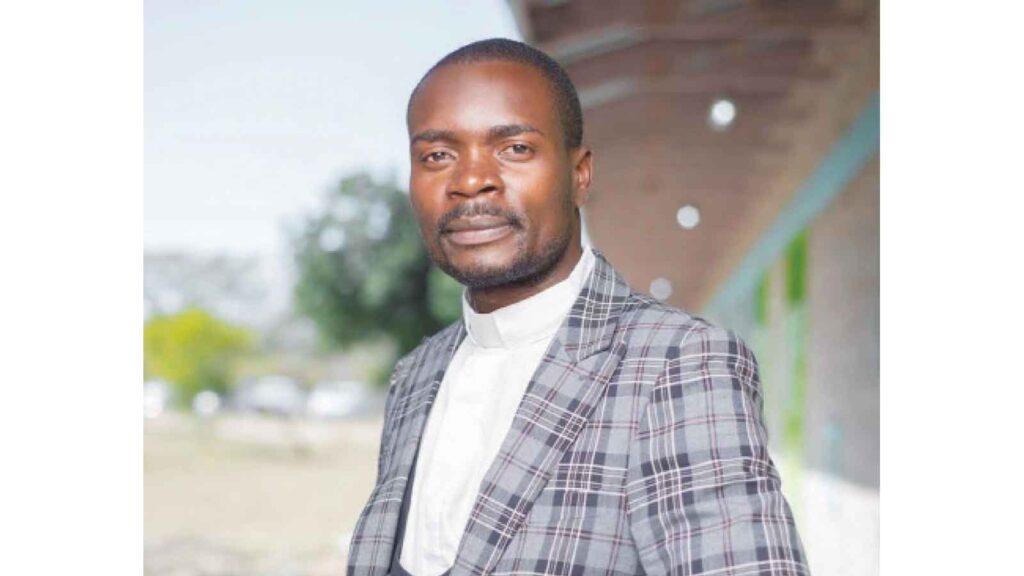
Reverend Julius Christian Mhakure
The part-time lecturer said the church had fallen behind in accommodating deaf people because of the absence of Sign Language interpretation, effectively making some congregations inaccessible.
“We all belong to the church. The mantra is to leave no one and no place behind. I believe the church should be a champion of that principle,” he said.
At one of his former assemblies, Sign Language interpretation is provided during the main service. Last year, the church celebrated 32 graduates who had completed basic and advanced Signing courses.
The development has increased the number of members capable of interpreting and has enabled the church to engage directly with the deaf community.
Although progress has been gradual, Reverend Mhakure believes that involving bodies, such as the Zimbabwe Council of Churches and the Evangelical Fellowship of Zimbabwe, could encourage deliberate and coordinated action.
“Until we start talking about it, people will not realise that a group is being left behind. It is important to create dialogue on platforms that encourage churches to become accessible and user-friendly,” he said.
He also called for disability inclusion to be incorporated into the training curriculum for pastors.
“Issues of inclusion should be in the curriculum of pastors. This would ensure that they become advocates for people with disabilities,” he said.
The Government has taken steps to promote equality, dignity, and the right of persons with disabilities to participate in all areas of life. These efforts are supported by the Constitution, the Persons with Disabilities Act, and the National Disability Policy.
However, because religious organisations operate largely as voluntary institutions, it is up to individual denominations and congregations to translate these frameworks into practical changes.
For churches, inclusion must extend beyond allowing deaf people to attend services. It should ensure that they can understand, communicate, worship, serve, and participate fully in the life of the congregation.
As Mapeta, founder of Sunrise Sign Language Academy, put it, deaf people should be able to say: “We belong here. We can communicate here, worship here, serve here, and participate here.”