Online Reporter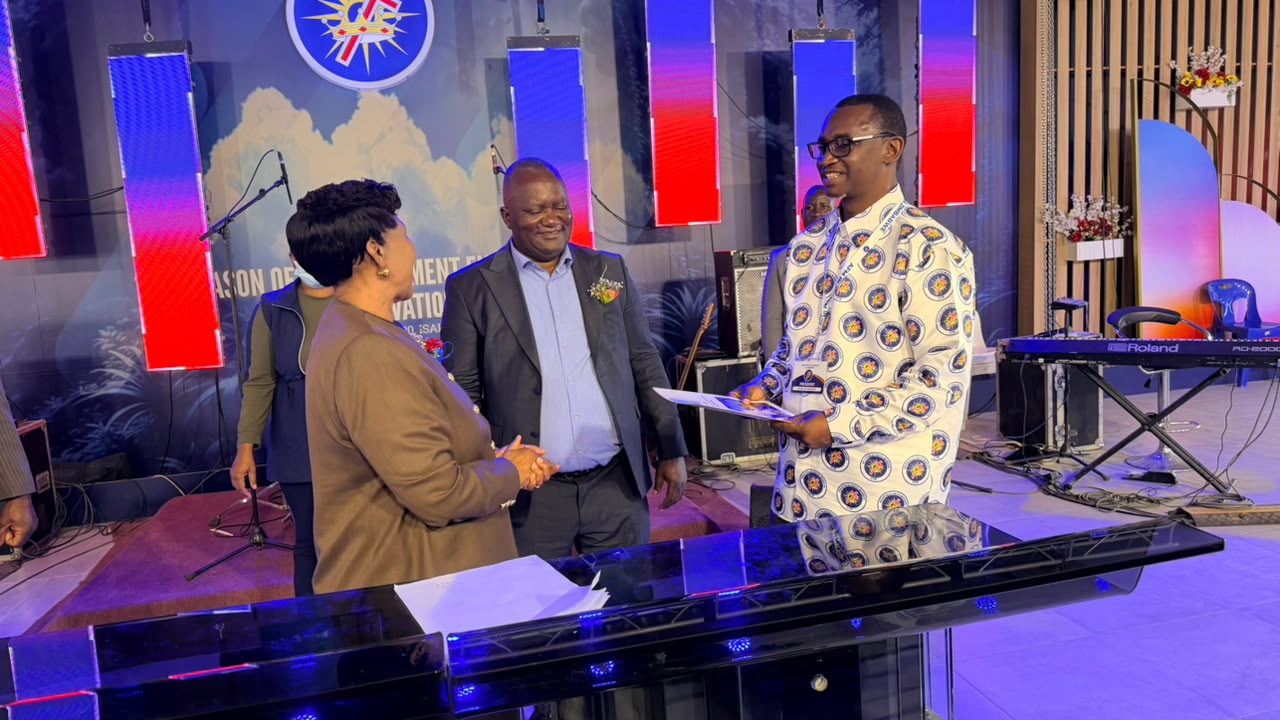
Gibson Nyikadzino-Zimpapers Politics Hub
In Zimbabwe, politicians and political leaders over the years have cultivated an increased and closer relationship with the church.
Traditional protestant, charismatic, pentecostal and African traditional churches have had the opportunity to host politicians in their services.
Alternatively, other faiths, including those of the Muslim community in Zimbabwe, have had an opportunity to periodically meet national leaders and discuss issues of concern.
Even so, custodians of the African Traditional Religion (ATR) have had the opportunity to converse with politicians and national leaders over issues of concern.
Recently, the Apostolic Faith in Zimbabwe (AFM) church received 50 hectares of land from Government; ZAOGA also got land in Bindura where it established a university; the Zion Christian Church (ZCC) received an offer letter to establish an agricultural university in Makonde; and other religious denominations have received valuable assets from Government.
During the times of Cyclones Eline and Idai, when the country experienced natural disasters like droughts and during moments when society had become ill, churches and religious groups have been inspired by compassionate movements.
They have always shown their presence as a bridge between the citizens and the Government. Other universal expressions say the church, in times of national challenges and peace, covers Government’s nakedness with compassion and care.
When these Church-State relations occur and blossom, those without regard for statecraft and public governance or management speak unknowingly and describe these interactions as “capture” of religious institutions.
At a time the Zimbabwean society is facing some social ills that have a bearing on national security; the religious institution is one of the centres of gravity that helps create trust between the people and the State.
Religion must not be seen to damage national security, public morality or social order, but to uphold such.
To separate the State from the Church or vice-versa is to exhibit ignorance on the key role religion plays in shaping national interests and the international political discourse or foreign policy strategy.
Additionally, religion is also an important source in shaping national identity. In jurisdictions that have no peace, where religion is not an instrument of harmony, difficulties relating to identity are exposed.
Thus, Church-State relations are crucial to enhance national security, that is, the state of trust on the part of the citizens that the risks to everyday life (whether man-made threats) are being adequately managed to the extent that there is confidence that normal life can continue.
National security, as the never-changing first responsibility of any government, also includes the defence of the country, protection of its constitutional systems of government and the advancement of its interests around the world, which religion or the church can help government advance through complementarity.
Another important aspect of maintaining Church-State relations as a key dimension to national security is that this relationship helps in maintaining or to not sacrifice the legitimate interests by avoiding war through diplomacy.
This gives the country an opportunity to prosper in the world economy. In the end, the essence of Church-State relations remains to enhance the safekeeping of the nation a whole, which entails the protection of the nation and its people from attack and other external dangers.
Under these desired circumstances that uphold national security in legitimate ways, it thus becomes preposterous for anyone to advocate for a separation of the church from the State, and the State from the church.
Religion or the church also functions as an institution for promoting social order and stability.
In an era where religion has been used to radicalise people by extremist groups, the church and the State should be able to collaborate and integrate different social groups into a harmonious structure that protects national security.
The terrorist activities reported in countries like Nigeria, Mali, Burkina Faso and Niger, and other insecurities have citizens are facing in those jurisdictions can be explained as to be happening because of a lack of trust between the church and the State.
That trust deficiency, thus, has led to various radical groups, who are also using religion, become radical elements that have become accustomed to terror.
The church or religion as a properly constituted institution of society serves as a vehicle that engineers an environment of trust between the citizens and the government to further consolidate national security.
Positively contributing to national security means the trajectory to components of human security is also addressed.
Without functional Church-State relations, pillars of human security that comprise of community, environmental, health, personal, economic, political and food security become compromised. When these seven pillars are preserved, they speak to the country’s commitment and ability to attain, at a global scale, Sustainable Development Goals (SDGs).
It is in this way of thinking that the essentiality of Church-State relations should be pronounced and amplified, from a family, community, national and international levels.
Faith-based organisation and their religious networks should be steered towards a more systemic and comprehensive commitment to sustainable development that solidifies national security.
There should be no citizen, knowingly or unknowingly, who in the name of “rights and freedoms” should attempt to disrupt the trust that the Church-State relations are cultivating with the nation. Behind every right is a duty, and behind every duty is a right.
As Government is aware of guaranteeing the inalienable rights of all citizens, it is the duty of citizens to be responsible and desist from wanting to disrupt national security.
In the end, it ought to be understood that the Church-State relations are not a mere pact of convenience, but a strategy to prevent, deter and overcome threats and disturbances to the integrity of the nation, one that is Zimbabwe.
Zimbabweans, remember we are one. This is homeland!