dyton mupawaenda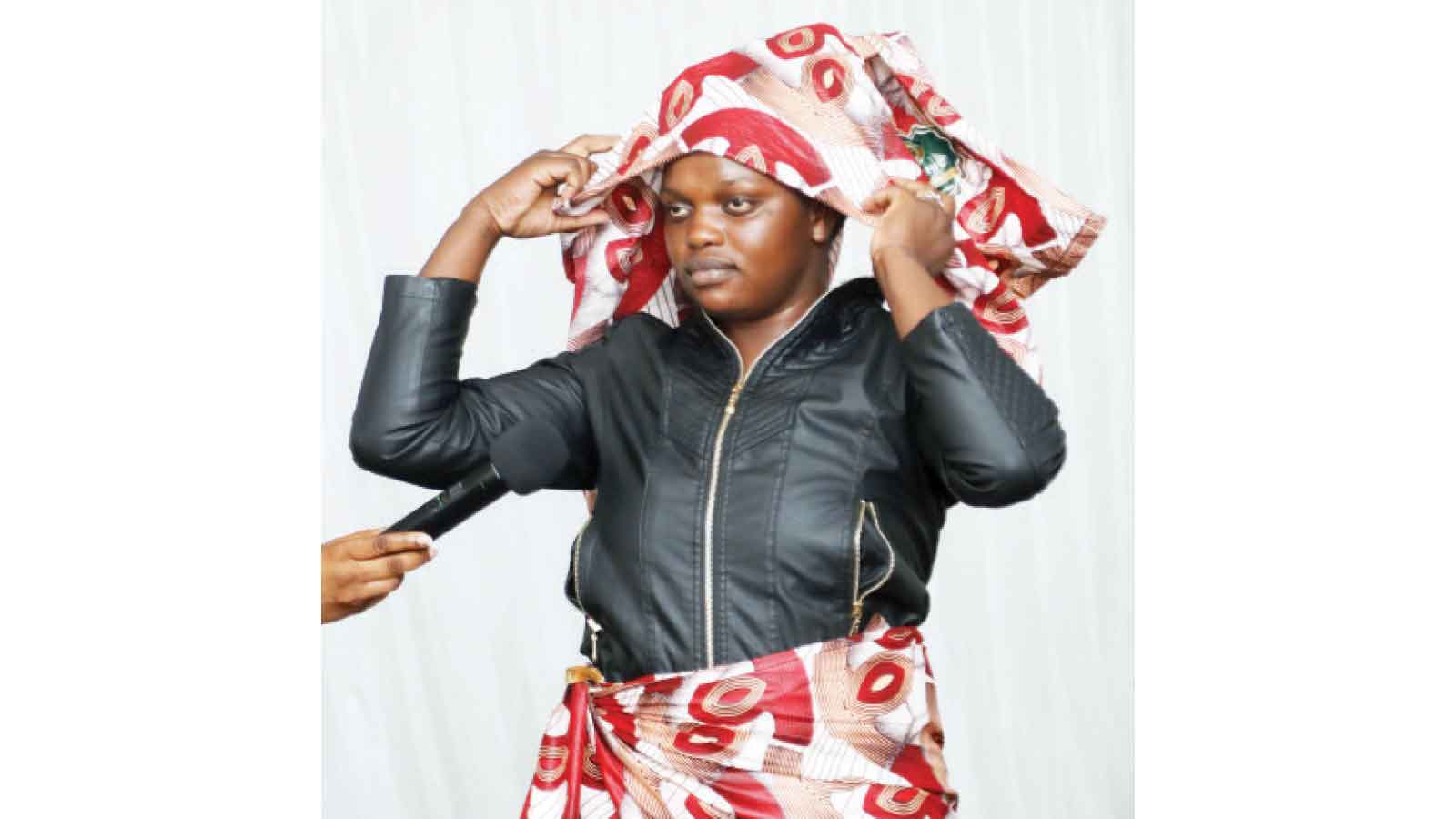
Blessings Chidakwa-Senior Reporter
THE simple act of tying a doek became a powerful celebration of faith, culture and womanhood yesterday as women from diverse Christian denominations gathered under one roof, singing, dancing joyfully and sharing generations of wisdom, while embracing First Lady Dr Auxillia Mnangagwa’s flagship Doek Drive initiative.
What began as a cultural programme blossomed into a lively and heart-warming celebration of sisterhood in Harare Province, with women of all ages enthusiastically demonstrating different doek-tying styles, exchanging ideas and identifying those that best reflected Zimbabwe’s cultural identity.
This culminated in the selection of six possible national doek styles, which were showcased by Mrs Rutendo Sibanda, Mrs Rose Pahwaringirira, Mrs Ingidzai Nyahando, Mrs Jane Hlupo, Mrs Erita Caroline Banda and Mrs Tendai Chipo Mudzamiri.
The various doek styles suitable for both everyday wear and special occasions were agreed upon, with designs best suited for family gatherings, church services, weddings, funerals and other social events.
Others stood out as versatile enough to be worn with dignity, respect and elegance in virtually any setting, reflecting the doek’s timeless place in Zimbabwean culture.
Cheerful women showcased each wrapping style, explaining its cultural significance and how it reflects a woman’s age, marital status, responsibilities and the occasion for which it is worn.
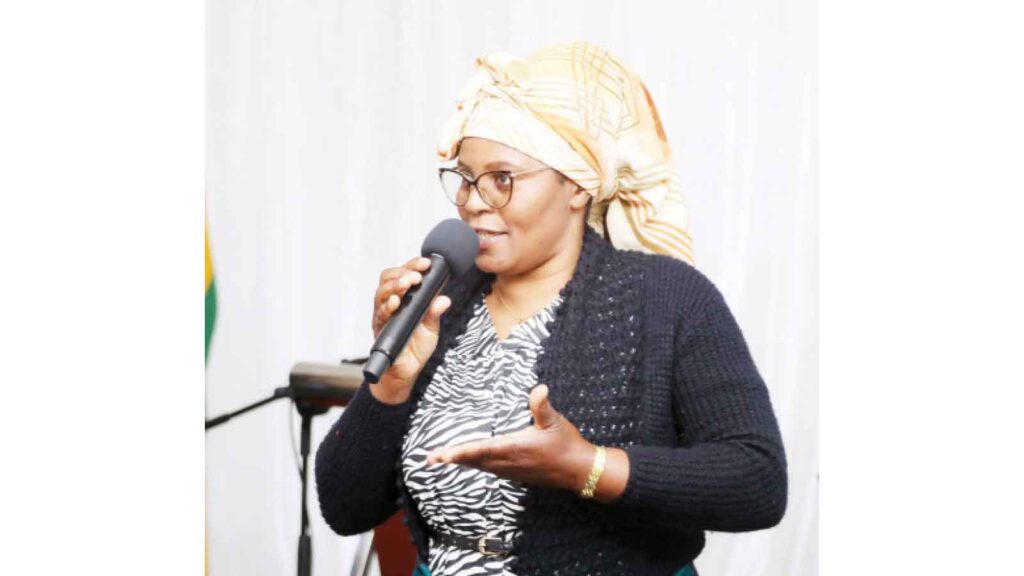
Mrs Ingidzayi Nyahando shares her preferred style of tying a doek during First Lady Dr Auxillia Mnangagwa’s interactive session with church members on the Doek Drive Initiative.
The programme also demonstrated that every woman can proudly wear a doek regardless of her hairstyle. Participants showed how the doek beautifully complements short natural hair, braids and other hairstyles, celebrating elegance, confidence and Zimbabwean cultural identity.
Those who had mastered certain styles freely taught others, while younger and older women alike proudly demonstrated their own techniques, turning the occasion into a joyful exchange of knowledge, creativity and cultural heritage.
Soon, the entire gathering joined in, with women laughing, singing and encouraging one another as they perfected the different techniques.
Their excitement and energy were evident throughout the gathering as they joyfully participated, encouraged one another and celebrated the beauty of coming together for a shared purpose.
As women openly exchanged new wrapping techniques, it became clear that Zimbabwe’s rich cultural heritage continues to thrive when women come together.
Among the most memorable moments was the inspiring demonstration by Mrs Charity Mangena and Mrs Yvonne Munemo, who creatively transformed an ordinary skirt and a shirt, respectively, into elegant doeks, drawing thunderous applause and emotional cheers from the crowd.
Their ingenuity became a powerful testimony to resilience and resourcefulness, showing that one should never be limited by circumstances.
Using what was readily available, they demonstrated that the spirit of the Doek Drive is not defined by the cost of the fabric, but by the dignity, confidence and self-respect that the doek symbolises.
Indeed, Zimbabwe House came alive with colourful doeks, matching zambias, joyous songs and resounding ululations as participants from churches including ZAOGA, the Roman Catholic Church, Methodist Church in Zimbabwe, Anglican Church, Johane Masowe Echishanu, Guta Ramwari, Gospel Truth and House of Prayer celebrated their shared identity despite belonging to different denominations.
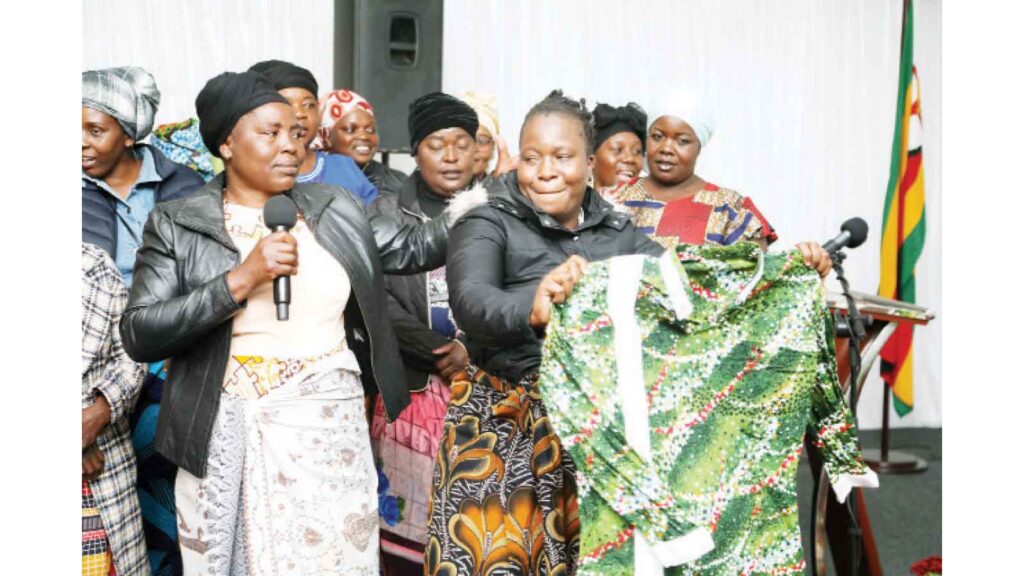
Mrs Charity Mangena helps a woman transform her shirt into a doek, illustrating that virtually any piece of cloth can be used as a doek.
When women gather with a shared purpose, something meaningful always emerges: they teach one another with love, celebrate together, preserve culture, strengthen communities and inspire future generations.
Interacting with the women, the First Lady thanked churches for embracing the Doek Drive initiative, urging women to continue being role models who uphold dignity, good values and respect in their homes and communities. Dr Mnangagwa said Zimbabweans should be recognised for their own unique ways of tying doeks and wrapping zambias, just as other nations have distinct styles of dressing that reflect their cultures and traditions during occasions such as church services, weddings and other gatherings.
“I introduced the Doek Drive so that we promote decent dressing, good conduct and pride in who we are as Zimbabweans. We want to encourage proper dressing at home, in churches and at different occasions. You must understand where you are going and dress appropriately for that occasion,” she said.
“The doek is more than just a piece of cloth. It carries dignity, respect and the values that define us as African women. It is our responsibility to preserve these traditions and pass them on to future generations.”
The First Lady said she was delighted to witness women showcasing their creativity through various doek-wrapping styles, saying the initiative demonstrated pride in culture, while reaffirming the doek and zambia as timeless symbols of respect, humility and African identity.
Dr Mnangagwa implored women to uphold good character and avoid social ills such as gossip, saying generations before them wore their doeks with pride while protecting their dignity.
“Our character is our strength as women. When a mother carries herself with dignity and respect, that respect extends to the family and the nation. We want to see good values being reflected in our mothers because they are the foundation of our homes and communities,” she said. The First Lady was visibly touched by the creativity and resilience displayed by women who transformed ordinary skirts and shirts into elegant doeks, saying their innovation perfectly captured the true spirit of womanhood.
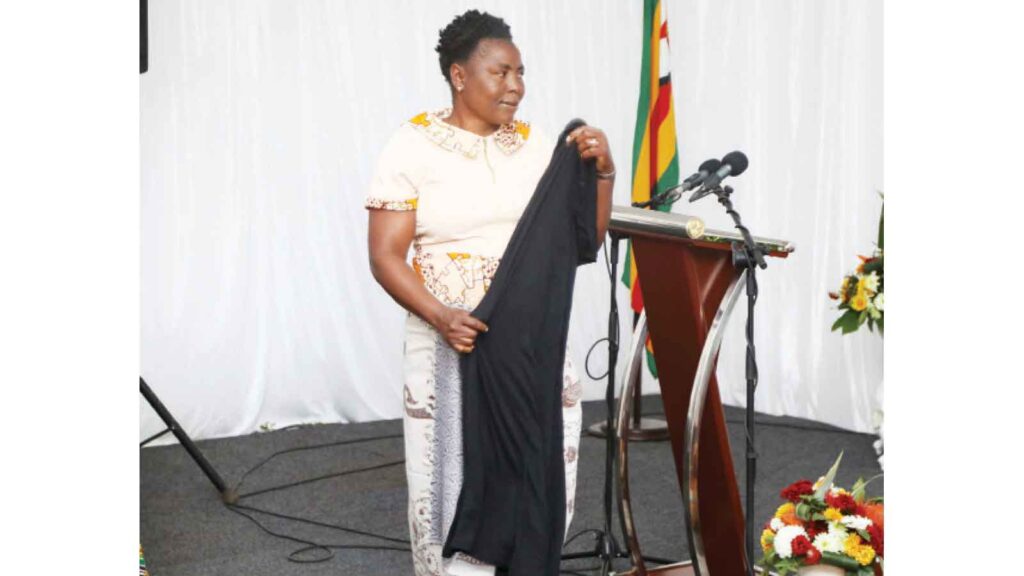
Mrs Charity Mangena proudly displays the skirt she converted into a doek during First Lady’s interactive session on the Doek Drive Initiative at Zimbabwe House.
Dr Mnangagwa said their willingness to step forward and confidently demonstrate what they had created showed that no woman should feel limited by her circumstances, as resourcefulness and determination could turn even the simplest of possessions into something beautiful and meaningful.
Among the beneficiaries, many said the programme had given them a renewed appreciation of the doek as a symbol of dignity, identity and womanhood. Mrs Naome Mupunga said the practical demonstrations had inspired her to embrace the doek more often.
“I have fallen in love with the doek and now want to wear it all the time. I was especially impressed by the beautiful styles demonstrated by the married women, and I cannot wait to try them myself,” she said.
One beneficiary said simply wearing a doek reminded her of her identity as a woman.
“Wearing a doek reflects my womanhood and reminds me of who I am. It gives me a sense of dignity and belonging,” she said.
Another beneficiary said the initiative had greatly boosted her confidence and self-respect.
“I had never thought much about wearing a doek before, but today my confidence and self-respect have been greatly uplifted. I am grateful to the women who came to teach us and to our First Lady for such a wonderful platform. The Doek Drive has helped us appreciate our Zimbabwean identity in a new way,” she said.
A member of the Zion Church described the occasion as one she would never forget.
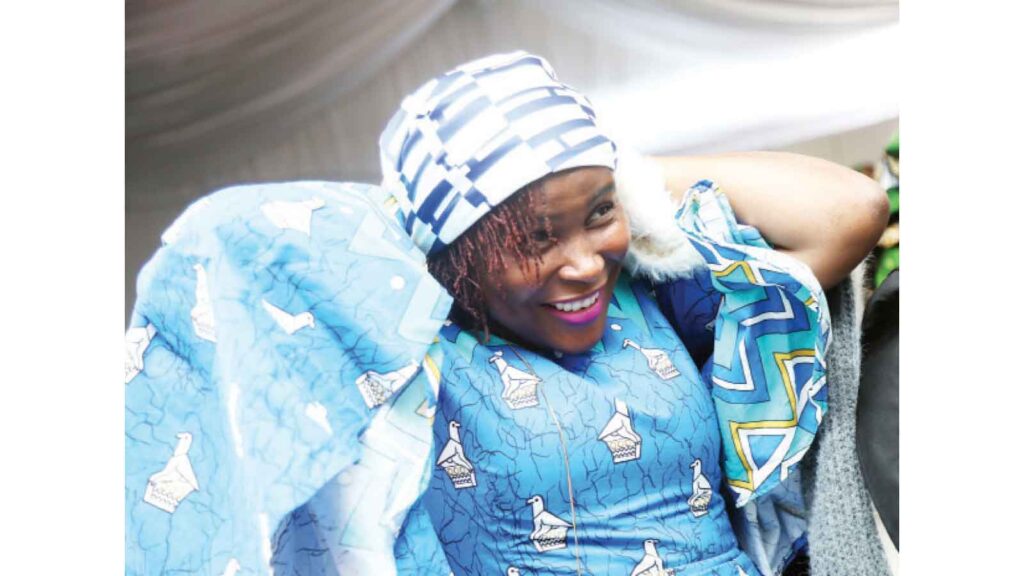
Joy is written all over the face of Mrs Langutane Chiota as she ties her doek during First Lady’s Doek Drive Initiative with churches at Zimbabwe House.
“I feel honoured to have my doek tied in the presence of our mother, Dr Mnangagwa. As a Zion woman, I will continue wearing my doek with pride because it is part of who we are. Today has been truly extraordinary,” she said.
Another participant said the programme had taught women how to choose the most suitable doek styles for different hairstyles and occasions.
“I am happy because I have learnt which doek styles best suit different hairstyles. I particularly like the Makoti style and will proudly wear it,” she said.
Another participant said women had also learnt the importance of matching their doek styles with outfits.
“We have learnt how to match different doek styles with our clothing, making it easier to dress appropriately and elegantly for every occasion,” she said.
As the event drew to a close, women departed smiling and embracing one another, proudly wearing their newly adopted doek styles. Their joyful interactions throughout the programme demonstrated the power of women coming together to share knowledge, celebrate culture and strengthen the bonds of sisterhood.
The Doek Drive continues to highlight the importance of preserving Zimbabwe’s cultural identity while promoting dignity, confidence and decent dressing among women across the country.


 Online Reporter