Online Reporter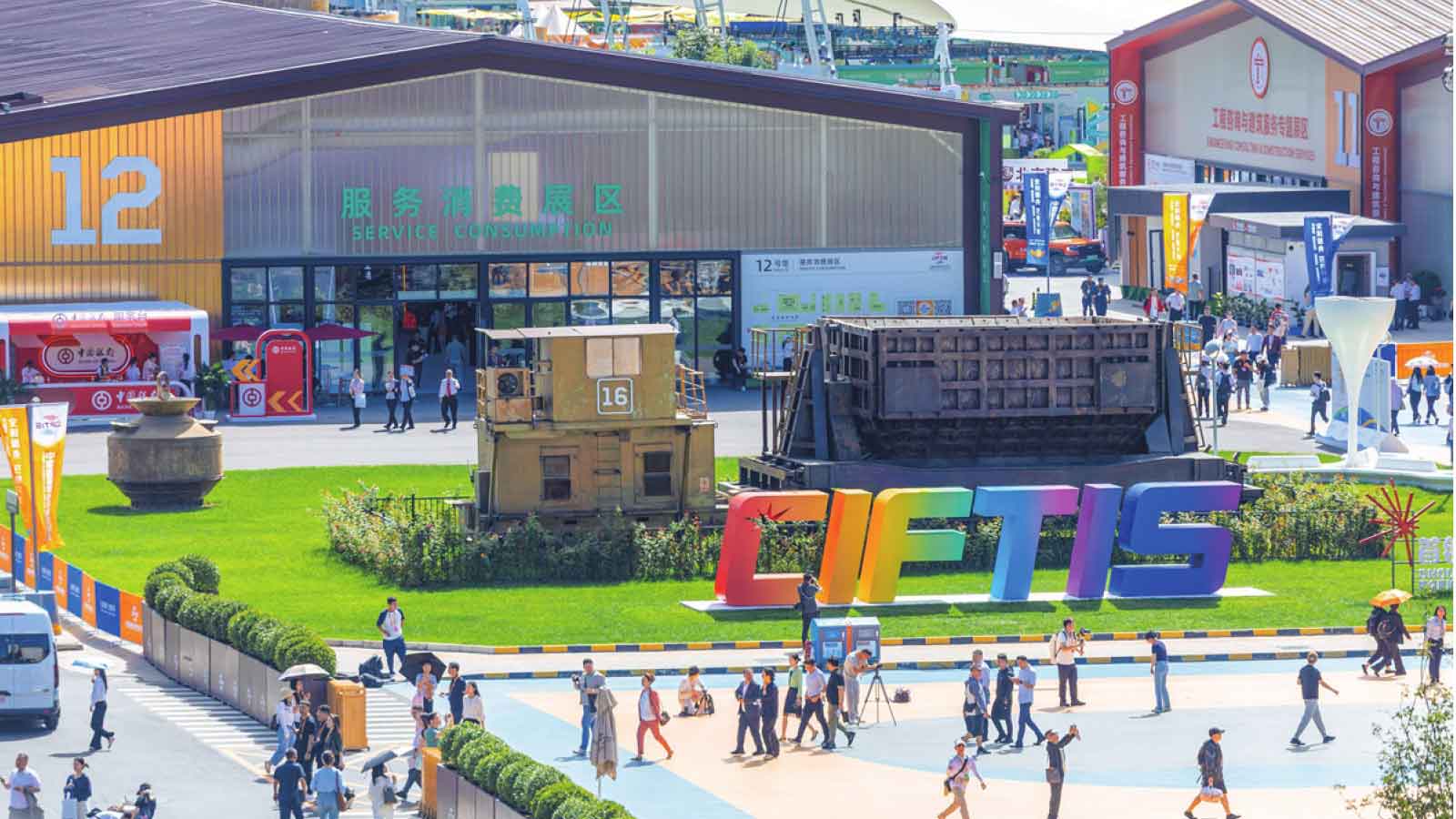
Kuda Bwititi in Beijing
VICE President Dr Constantino Chiwenga is currently in China, where he attended the 2026 China International Fair for Trade in Services (CIFTIS). His mission in Beijing represents an important juncture for Zimbabwe’s developmental trajectory.
On Wednesday, the Vice President met with Chinese Vice Premier Ding Xuexiang, on the sidelines of CIFTIS.
This presented yet another high-level political backing to translate the ironclad friendship between Harare and Beijing into tangible economic gains.
The CIFTIS IS a premier global platform that perfectly aligns with the Second Republic’s vision to modernise the economy.
Through focusing heavily on innovation, digitalisation, and knowledge-intensive services, the fair offers Zimbabwe a strategic blueprint to leapfrog its industrial and services sectors.
The global economic landscape is undergoing a profound paradigm shift. Demand is rapidly migrating from traditional physical goods to digital, green and intelligent services.
The Second Republic, under the stewardship of President Mnangagwa, has recognised this global trend and is actively broadening the national economic development strategy to strengthen the services sector.
The Beijing fair serves as a vital conduit for Zimbabwe to identify these emerging opportunities, build export capacity and attract credible partners across technology, finance, tourism, education, and healthcare.
The event is not merely an exhibition; it is a gateway to the future of global trade, where innovation is the primary currency.
A major highlight of the 2026 fair is the ascendancy of knowledge-intensive services, which are now driving China’s service exports.
Recent data indicates that exports in intellectual property, financial services, transport, and telecommunications are experiencing exponential growth.
For Zimbabwe, this presents a massive opportunity to pivot its economic base. At CIFTIS, Zimbabwe is engaging with the over 1,800 companies and nearly 500 Fortune Global 500 firms present at the fair.
As such, Zimbabwean delegates can explore partnerships that facilitate technology transfer.
The integration of big data, cloud computing, and artificial intelligence into service trade, as championed by Chinese officials, offers Zimbabwe the tools to modernise its public and private sectors. Implementing these intelligent technologies can revolutionise domestic sectors, from smart driving insurance and digital healthcare to intelligent childcare and elderly-friendly digital solutions, directly improving the quality of life for citizens while creating high-value jobs.
Historically, international trade has been dominated by the exchange of physical commodities. However, the current fair underscores a critical transition where companies are moving from simply exporting goods to providing integrated technologies, solutions, and full-cycle services. Zimbabwe can learn immensely from this model. For instance, the Chinese aviation maintenance sector has leveraged policy advantages to establish specialised facilities, attracting global clients and securing hundreds of international certifications.
Zimbabwe’s own manufacturing and industrialisation drive can adopt this approach. Instead of merely importing machinery, the country can seek partnerships that bring in the underlying technologies, maintenance capabilities and intellectual property required to build local capacity.
This shift is essential for the national agenda of beneficiation and value addition, ensuring that Zimbabwe does not just consume foreign technology, but actively participates in its creation and maintenance.
The fair features a newly established exhibition zone dedicated to national services, showcasing hundreds of representative cases that highlight the expanding global reach of advanced solutions.
Nearly forty percent of these cases involve the application of artificial intelligence, large language models, and intelligent agents in fields such as legal services, digital trade, cultural tourism and quantum computing.
For Zimbabwe, accessing these innovations is crucial.
The country possesses a strong potential in services, underpinned by its strategic geographical position in Southern Africa, a highly skilled and youthful population and a rich natural and cultural heritage.
While tourism remains a traditional strength and is on a renewed boom, as shown by the success of the ongoing Sanganai/Hlanganani Dzimbahwe World Tourism Expo in Masvingo province, the focus must also be on building robust capacities in transport, professional services, trade and financial services.
As a result of adopting the artificial intelligence and digital trade solutions showcased in Beijing, Zimbabwe can diversify and exponentially expand its services export base, moving beyond primary commodities to export high-value digital and intellectual services.
The high-level political backing secured by Vice President Chiwenga from Vice Premier Ding ensures that Zimbabwe’s engagements with Chinese investors are not just commercial transactions, but strategic partnerships aimed at shared development. Beijing’s commitment to expanding international cooperation and creating opportunities for its partners aligns perfectly with Zimbabwe’s National Development Strategy.
The Chinese leadership has reaffirmed its readiness to pursue mutually beneficial partnerships that deliver shared prosperity.
This political will is the bedrock upon which Zimbabwe can negotiate favourable terms for technology transfer, capacity building, and joint ventures in the innovation space.
The extensive programme of economic diplomacy, which includes touring various Chinese districts and engaging directly with business executives, will yield concrete investment partnerships that inject capital, expertise, and cutting-edge technology into the local economy.
Furthermore, the emphasis on green development and intelligent technologies at the fair provides Zimbabwe with a roadmap to achieve sustainable industrialisation.
As the world shifts towards automation, the demand for physical goods is increasingly being supplemented by the need for intelligent, eco-friendly services.
Integrating these green technologies into its agricultural, mining, and manufacturing sectors positions Zimbabwe to strengthen its global competitiveness while meeting international environmental standards.
The exposure to Chinese innovations in energy conservation and environmental protection will be instrumental in helping the country navigate the complexities of climate change while sustaining economic growth.
Ultimately, the 2026 China International Fair for Trade in Services is more than just a trade event but can serve as yet another strategic accelerator for Zimbabwe’s Vision 2030.
Through embracing the fair’s focus on digitalisation, intelligent technologies and green development, Zimbabwe can position itself at the forefront of the African services revolution.
The insights and partnerships forged in Beijing will enable the country to transition towards a higher-value-added, technology-intensive economy.
As the Second Republic continues to champion industrialisation and modernisation, leveraging the innovations showcased at the fair will be instrumental in transforming Zimbabwe into an upper-middle-income society, driven by a dynamic, knowledge-based services sector that benefits all citizens.
Through this renewed ironclad partnership, Zimbabwe is not just observing the future of global trade, but actively securing its place within it.



 daniel chigunwe