admin
admin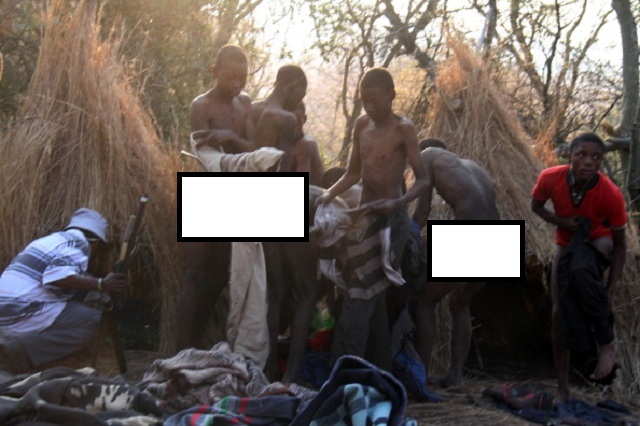

Vincent Gono
FOR close to a decade now the practice of circumcision has become not only popular but very topical prior to it being sacred —practised by a few tribes in the country and often talked about in hushed tones even by those whose culture and tradition is defined by the practice.
But times are changing. The practice has been demystified and now even little children know what it means to be circumcised.
Those who claim not to know may not have radios and televisions as adverts have been done and flighted all in an effort to encourage all regardless of age or tribe to be circumcised.
All this is done much to the chagrin and puzzlement of traditional leaders who are guardians of the practice as part of their culture definition, for they still hold esteem the practice and do not enjoy its advertisement.
The practice to them is still sacred because it defines who they are, therefore its exposure to various other communities erodes its dignity and is viewed in the same sense as the nakedness of all those who have been practicing it before its recent demystification.
Its demystification has largely been driven by the Government and non-governmental organisations (NGOs) after it was discovered that circumcision can help a great deal in the fight against HIV/Aids besides of-course the smartness and the subtle sexual pleasure factor that it is said to provide.
In the cultural and traditional olden day however, circumcision was not practiced in the homes, clinics and or hospitals. There was nothing called circumcision mobile or static clinic. It was done in the forests. And not every other forest was suitable for the practice. There were specific forests where the tribes or communities who were into it would gather and not at any time as is done now. There was a specific time of the year and a specific age group that was taken for circumcision every year.
The forests therefore became a part of the process and were also treated with the same kind of respect that the practice was honoured with. Cutting down of trees in the said forests was a gross violation of the entire community rite and would turn the whole community against the violator. It was seen as an act equivalent to that of undressing the community to shame it and would attract a beast as fine.
The forests were not fenced physically, neither were they durawalled but it remained every community member’s obligation to ensure that they were protected. Trespassers were therefore prosecuted, even grazing animals in the forests was not allowed.
And the communities that practised circumcision unconsciously ensured the preservation of trees and natural vegetation.
They were always thickets and in climate change lingo forests are important in trapping some of the atmospheric gases such as carbon dioxide and therefore they are called carbon sinks.
The communities did not only go into the forests for circumcision but they went there for initiation rites for both girls and boys where they were taught various and important skills of life as they matured into womanhood and manhood.
But the recent NGOs driven circumcision does not take into account most if not all of those traditional practices and most traditional leaders especially in Chiredzi and Mwenezi districts in Masvingo Province, Mberengwa in the Midlands Province and parts of Beitbridge in Matabeleland South where the practice is rife have expressed concern over the recent conscription and involvement of strangers, some of whom are women in the circumcision rites saying it had grossly compromised their culture that is to a large extent defined by the practice.
They have also raised a red flag over the depletion of the circumcision rites forests stating that there was a lot of trespassing with NGOs that are pouring money for the programmes concerned about numbers and reports and not the preservation of culture and the natural environment in the form of forests.
The traditional leaders admitted that there was some resistance when they were first introduced to the modern methods of circumcision but later embraced it after realising that the methods were more hygienic and aid in the prevention of HIV/Aids.
They said they never realised they were trading their culture in the process as it was now trampled on. They said the subject was taboo and not everyone was allowed to talk about it as it was regarded as a cultural secret to be shared among those who belonged to it where strangers were not welcome during the rites.
Headman Mpapa of Chikombedzi in Chiredzi under Chief Sengwe had no kind words on the way the current circumcision rites were practised. He said the involvement of strangers — people who do not belong to the culture and women in the circumcision rites was taboo.
“We are not happy at all. Our culture is under siege and this is no laughing matter. “Traditionally women were not involved in the circumcision rites but now they are in the forefront. There is also the conscription of strangers, some of whom have not been circumcised into the culture and circumcision camps to do the circumcision — all that was taboo but it’s now happening.
“We also used to tend the wounds until they completely healed while the boys will be staying away from home but now it’s a day’s process and at times it is done without consultation with the parents, especially in most of these rural areas. They think everyone from these areas should be circumcised. While it may be true we resent the lack of adherence to our cultural practices,” said Headman Mpapa.
He said apart from the general lack of respect the circumcision forests have dwindled because of the deforestation for farming land as people were resettled in part of the forests that were meant for circumcision.
Mr Ernest Chitanga of the Chitanga chieftainship in Mwenezi said while modern methods were smart, they were worried that their Shangani culture whose definition lies greatly on the practice that distinguished them among other cultures was fast facing extinction.
“Not that we are trying to shut others out. We are happy that the nation has seen something good in our culture and that the era where we used to be looked at with disdain as backward and uncivilised has finally ended. But while at it we implore authorities to respect our culture and know that we are not after numbers and reports when we do it but after fulfilling our cultural pride. Circumcision is our cultural pride and it defines identity. So we don’t just do it like anyone. It is not an afterthought but it’s one of the most important cultural arteries.
“The other thing is the depletion of our cultural rites forests. There used to be thickets meant for that along the Runde and Save Rivers but the massive cutting down of trees especially in areas where people were resettled has created open spaces.
Villagers who are not of that culture do not respect the circumcision rites and the forests thereof but we hope the Environmental Management Agency (EMA) will be dealing with that.
We are not attacking the programme (land reform) but we believe there was an oversight on our part as traditional leaders, we were supposed to advise the Government,” said Mr Chitanga.
He said they felt that their culture had been greatly compromised as such things as kokomba which was an initiation rite for girls into womanhood was no longer valued. And with the boys being circumcised at schools and clinics, the initiation of boys into manhood was no longer as respected as it used to be back then when the culture was exclusive to the Changana (Shangani) communities.
Headman Samu confirmed the depletion of circumcision forests adding that the rites were traditionally done when there were good rains and good harvests.
On the issue of resettled farmers causing the depletion of circumcision forests, Lands and Rural Resettlement Minister Dr Douglas Mombeshora said it was the duty of the provincial lands committee chaired by the resident minister of any province to identify suitable land for resettlement.
He however, said it was worrying when resettled farmers were trespassing into areas that were traditionally preserved for such important cultural rites.
Masvingo Provincial Administrator Mr Felix Chikovo however, said the chiefs have not raised the issues with his office.
“I have not received any such issues. We are however, a country that respects the cultural rites of any group of people as long as that culture does not interfere with the rights of other people. And we urge the resettled farmers to respect the cultural rites of the areas that they were resettled in and avoid the rampant cutting down of trees,” he said.
He said if there were such issues, the traditional leaders would raise them with his office so that they were redressed.
The Shangani communities are mostly under Chiefs Sengwe, Tsovani, Chitanga and Gezani in the then Nuanetsi district before it was divided into the current Chiredzi and Mwenezi districts.



 derick.khumalo