Bunjiwe Mkwananzi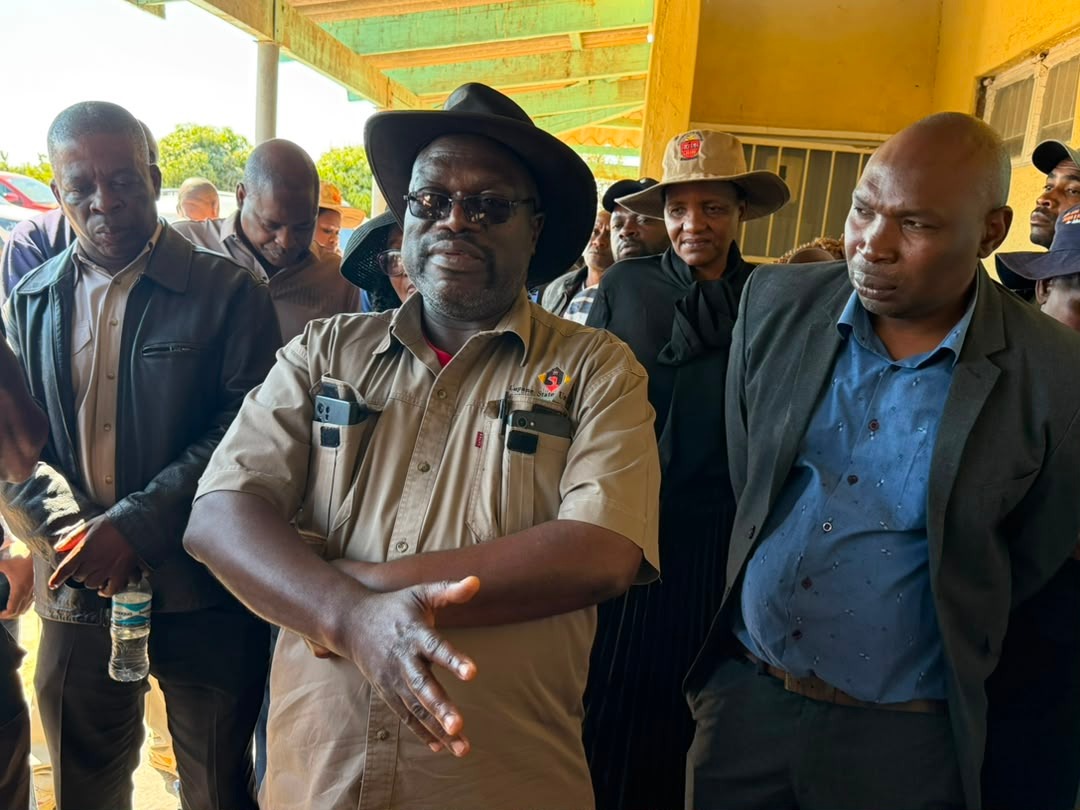
Gibson Mhaka [email protected]
THE City of Bulawayo has ruled out regularising the informal settlement at Richmond Landfill, popularly known as Ngozi Mine, describing it as a temporary settlement that will cease to exist once the dumpsite is decommissioned.
This emerged recently during a fact-finding visit by the Parliamentary Portfolio Committee on Local Government, Public Works and National Housing, which toured informal and dysfunctional settlements as well as housing projects in the city.
Presenting before the committee, the City of Bulawayo’s Director of Health Services, Dr Edwin Mzingwane, said the settlement’s existence was directly tied to waste disposal activities at the landfill and was therefore not suitable for regularisation or permanent development.
He said the residents were largely waste pickers who depended on recyclable materials recovered from the landfill for their livelihoods.
“The settlement around Ngozi Mine or the Richmond Landfill site is both informal, illegal and temporary. I think we must underline the word temporary, because it exists only as long as there is something being deposited at the landfill,” said Dr Mzingwane.
“As soon as refuse stops coming to the landfill, the people will migrate and go away. To them, it is almost like a tent. Just as road construction workers move their camps when a project is completed, we expect this settlement to dissipate once the landfill is decommissioned.”
He revealed that many of the occupants already owned houses elsewhere in Bulawayo but chose to stay closer to the dumpsite during the working week for convenience.
“Some of the people, about 1 500 of them, actually have houses within the city. However, those houses are too far from the landfill. To make it easier for them to access the site, they put up makeshift shelters and collect recyclable materials, which they sell to buyers who come directly to the landfill,” he said.
“Some return to their proper homes over weekends before coming back from Monday to Friday. Wherever we establish another landfill in future, we expect them to follow because that is where their source of income is.”
Dr Mzingwane said the municipality had no plans to upgrade or formalise the settlement.
“In short, we have no intention of regularising the settlement or improving it because we believe it is temporary,” he said.
He also gave the committee a historical overview of Bulawayo’s waste disposal sites, explaining that Richmond Landfill was commissioned in 1994 as the city’s 12th refuse disposal site after earlier dumpsites, including Hyde Park, had reached capacity.
The landfill, he said, had initially been designed to serve the city for about 20 years but had remained operational well beyond its intended lifespan.
Dr Mzingwane explained that refuse disposal at a sanitary landfill follows internationally recognised principles involving confining waste within lined cells, compacting it and covering it to minimise environmental and public health risks.
“At the landfill, we deposit refuse using what we call the three Cs — not the political CCC,” he said, drawing laughter from members of the committee.
“We confine the refuse within lined cells, compact it to reduce the risk of methane gas igniting, and then cover it to prevent access by flies and other vermin.”
However, he acknowledged that the city had struggled to consistently cover waste because of inadequate equipment.
“We have not been doing that as religiously as we should because of a lack of equipment,” he said.
Turning to Cowdray Park’s Hlalani Kuhle/Garikai housing scheme, Dr Mzingwane said the city’s refuse collection teams were unable to access some households due to poor road infrastructure.
“I collect refuse where I have access. The engineer has already highlighted that roads are only about four percent complete. It means I cannot commit my teams to collect refuse from doorsteps where there is simply no access. That remains our major challenge in that area,” he said.
The parliamentary committee was also briefed by Finance Director Mr Tennyson Mpunzi, representing the Town Clerk, Acting Director of Works Engineer Methusi Dibidi and Housing and Community Services Assistant Director Mr Zakeu Sibanda on service delivery challenges affecting Cowdray Park Hlalani Kuhle/Garikai, Richmond Landfill, Burombo Flats and Iminyela.
City officials maintained that although Hlalani Kuhle/Garikai still lacks full infrastructure such as roads and sewer reticulation, it cannot be classified as a dysfunctional settlement because it has approved layout plans and orderly development.
They also told the committee that the local authority, working with Government and development partners, had made significant progress in extending services to the area, with water infrastructure now complete and outfall sewers already constructed.
The officials said the Government-backed Kwangu/Ngakwami Presidential Title Deeds Programme is expected to play a key role in financing the remaining infrastructure required to fully service the settlement.



 Online Reporter