admin
admin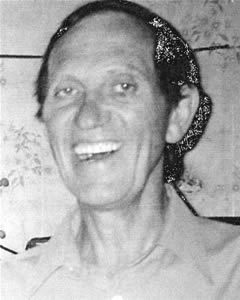
Mr Robinson, a structural engineer by profession, died on July 5 at a city hospital following an accident at work.
Mr Robinson will be most famously remembered for his stoic presentation of a petition to Lord Carver, the United Nations envoy to Rhodesia in 1977, calling on the Rhodesian government to stop the forced conscription of coloured people into the Rhodesian army, as much as for mobilising the coloured community to advance social and political rights during the protracted liberation struggle.
Such was the outpouring of grief by the coloured community who attended a sombre church service led by Father Patrick Makaka of the Roman Catholic Church in Harare on Wednesday.
One of Robinson’s most cheeky exploits was when he and lifetime associate, Senator Aguy Georgias, staged a two-man demonstration outside parliament demanding the release from custody by Rhodesian authorities of the late nationalist and national hero, Dr Oliver Munyaradzi, much to the chagrin of the then
Minister of Justice Lardner-Burke.
Speaking during the service, Senator Guy Georgias, who is also Deputy Minister of Public Works, spoke glowingly of his life long friend as ‘‘a man of the people, a fair minded and humble person, who always carried himself with an unassuming demeanour’’.
Georgias recounted how Robinson, with his rare qualities, “as a true socialist at heart “ was unselfish and wanted the best for every Zimbabwean and note that his legacy would not fade. The Senator recalled how Robinson “taught everyone the importance of hard work, the significance of family love, as well resilience and strength in the face of adversity.”
To Georgias, Robinson was a source of wise counsel.
He was the first person, he says, to congratulate him on his appointment to the Senate, admonishing him not to betray the immense trust bestowed on him by President Mugabe, on behalf of the coloured community, given Georgias’ scant background in nationalist politics.
Another close friend, former High Court judge, Mr James Devittie, bemoaned the loss of a dedicated and principled patriot to Zimbabwe.
“He touched the lives of all of us who came into contact with him. But in mourning him there is much that gives us cause to celebrate.”
He said, adding “this man of serious character played a big role in Zimbabwe’s history before independence. The gap he left will be difficult to fill.”
Mr Robinson was born in Harare on March 19, 1945.
He did his primary and secondary education at St Johns before proceeding to Morgan High School in Arcadia for his Advanced Level.
He then trained as a structural engineer completing his training in 1962. He worked for several engineering firms.
At the tender age of 20, Eugene Robinson was elected secretary for what was then called the National Association for the Advancement of Coloured People (NAACP) in Rhodesia.
With the support of nationalists such as the late national hero and former Zapu vice president, Josiah Chinamano, Robinson, in NAACP, mobilised the coloured community to fight for their civil and political rights.
When the nationalist forces came together under the umbrella of the African National Council (ANC) Robinson was appointed the London representative, where he accommodated and facilitated the granting of asylum to people who escaped from Zimbabwe in fear of conscription into the Rhodesian Army.
Robinson held strong his political views that in 1977 he quit a lucrative job with Stevens and Dawnys Structural Engineers, to work for the start-up of Trinity
Engineering firm founded by his friend from childhood, Senator Guy Georgias.
Together they put up the bus shelters in Chitungwiza.
Robinson is survived by five children and several grandchildren, his wife Beck having died in 2007.


 leeroy