Stephen Mpofu
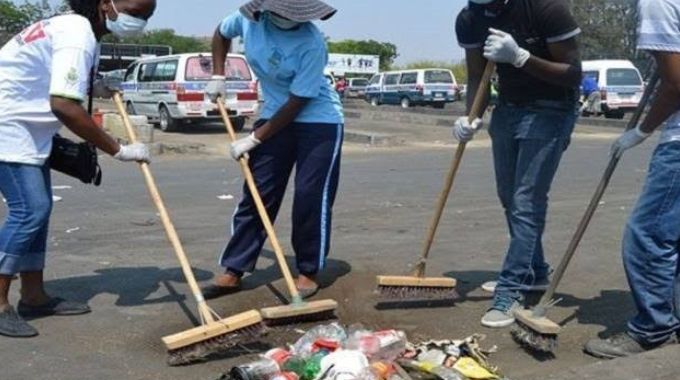
THE Government is determined to leave no person and no place behind in promoting the clean city concept, ensuring that urban areas are clean, orderly and safe for residents.
Government departments and local authorities have a responsibility to support this drive through sustained cleanliness campaigns, just as the country’s heroes and heroines of the liberation struggle worked to free Zimbabwe from colonial oppression.
Local authorities are already undertaking daily clean-up operations, including relocating street vendors to designated trading sites.
The initiatives are aimed at decongesting urban centres, improving sanitation and creating safer trading spaces for both residents and vendors.
Those who repeatedly disregard designated trading arrangements undermine these efforts and risk exposing others to unhealthy conditions, particularly where food is sold in unsuitable environments.
Beyond cleanliness, Bulawayo’s position as an international business destination also presents an opportunity to strengthen its environmental standards.
The Zimbabwe International Trade Fair has helped position the country, and particularly Bulawayo, as a destination for international investors seeking business opportunities.
The city’s potential for further industrial growth makes it important to ensure that development goes hand in hand with environmental responsibility.
Bulawayo must therefore move beyond its long-standing identity as “koNtuthu Ziyathunqa”, or the city where smoke billows into the atmosphere.
The expression has historically been associated with the city’s industrial activity and factory chimneys. However, as industries expand and new investment comes in, authorities and businesses must ensure that industrial emissions are properly managed to protect public health and the environment.
Industrial emissions, coal combustion and veld fires all contribute to air pollution and greenhouse gas emissions.
These environmental pressures underline the need for effective pollution controls, cleaner production methods and responsible management of industrial activities.
The protection of the ozone layer is also important, although it is worth distinguishing between ozone-depleting substances and greenhouse gases, which contribute to global warming through different processes.
A stitch in time saves nine. Authorities and industries should therefore address environmental shortcomings before they become more costly and difficult to manage.
As Zimbabwe, and Bulawayo in particular, seeks to attract more international investors through platforms such as the Zimbabwe International Trade Fair, a clean and environmentally responsible urban environment will remain an important part of its development ambitions.
With sustained investment in cleanliness, responsible industrial practices and environmental protection, Zimbabwe can strengthen its ambition of becoming a regional industrial hub.