admin
admin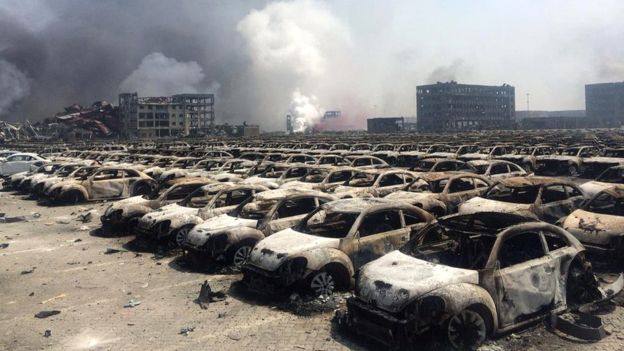
TIANJIN.- Most of the sodium cyanide surrounding the Tianjin blast area was to be collected and cleared by yesterday evening, He Shushan, deputy mayor of Tianjin, said at a press conference yesterday morning. The chemicals were scattered mostly within a 100 000 square meter core area. A “very complicated and difficult” clean-up, partially due to the presence of 16,500 empty shipping containers, was underway yesterday, he said.
Workers were now searching empty shipping containers for chemicals dispersed by the blast.
Sand and earth barriers were built around the core area to prevent any leakage of cyanide and other pollutants. Cofferdams would be reinforced to prevent the outflow of contaminated water after it rains.
Monitoring has shown air quality in the area and water in the nearby river were within safe standards.
Initial estimates put the amount of cyanide at the site at 700 tonnes, most of which was unaffected, said Shi Luze, chief of staff of the Beijing Military Area Command at a press conference on Sunday.
Sodium cyanide is a highly toxic white, water-soluble powder that prevents the body from using oxygen. It is fatal if inhaled or ingested.
It is mainly used in chemical manufacturing and to extract gold and other metals in mining.
When treated with acid, it releases the highly poisonous gas hydrogen cyanide.
The August 12 explosions at the hazardous goods storage facility in the port of Tianjin set off a giant fireball, devastated a vast area and raised fears over the impact of toxic pollutants.
The company operating the site had been storing hundreds of tonnes of cyanide, reportedly nearly 30 times the allowed amount, and while officials have insisted that the air and water in the city is safe, residents and victims’ relatives have voiced scepticism.
The Beijing News, citing storage plans it had seen, said the warehouse was only authorised to hold 24 tonnes of the substance.
The closest water test point to the blast site revealed cyanide 27,4 times standards on Sunday, officials said without specifying the quantity, but not beyond the cordoned-off area.
Sodium cyanide had been found as far as around one kilometre from the blast site.
Military chemical and nuclear experts have been brought in, as have experts from producers of sodium cyanide, exposure to which can be “rapidly fatal”, according to the US Centres for Disease Control.
Environmental campaign group Greenpeace said on Sunday it had tested surface water for cyanide at four locations in the wider city and had not detected high levels of the chemical.
Officials said yesterday the death toll from the disaster had risen to 114 with 70 people missing, but cautioned that some of those could among the 60 corpses yet to be identified.
Chinese media reports yesterday said the son of a former police chief of Tianjin port was a major shareholder in the company operating the site, Rui Hai International Logistics. – Xinhua/ AFP.


 Online Reporter