Online Reporter
Sukulwenkosi Dube-Matutu [email protected]
LOCAL authorities in Matabeleland South have set a target to reach 74 percent coverage of water supply in communities across the province by the end of this year.
The push is part of a broader plan to meet the Government’s Minimum Service Delivery Standards (MSDS), which all urban and rural councils must achieve by 2030.
Alongside water, the province is also targeting 90 percent coverage in sanitation management and 97 percent for solid waste management.
The Government set these minimum standards to ensure that every Zimbabwean has access to basic services as the country works towards attaining an upper middle-income economy by 2030.
For water supply, urban councils are expected to cover 90 percent of their areas by the end of next year and 100 percent by 2030.
Rural local authorities are expected to reach 70 percent coverage by next year and 100 percent by 2030. The standards also specify how close water should be from people’s homes.
In towns, every property must have a direct connection or access to water within 100 metres walking distance. In rural areas, water should be within 500 metres or a 30-minute round trip walk.
Improved drinking water sources include piped water systems, boreholes, protected deep and shallow wells, protected springs, rainwater harvesting, sand abstraction, artesian wells and safely delivered packaged water.
In urbanised areas, councils are required to provide piped water schemes or treated water from boreholes and springs.
Presenting the Regional Development, Inclusivity through Devolution and Decentralisation thematic committee report at the Matabeleland South Provincial Development Committee meeting
recently, the province’s Deputy Director of Local Government, Mr Simon Muleya, said a provincial plan has been put in place to guide councils.

He said the plan will help all local authorities in Matabeleland South to align their budgets and projects to the MSDS targets.
“We are looking forward to seeing an upscaling in the establishment of piped water schemes on high-yielding boreholes and the incorporation of sand abstraction technologies,” said Mr Muleya.
“Sand abstraction is being prioritised in dry areas where rivers run underground, and communities have struggled for years to access safe water.
“To improve solid waste management, the province is targeting the construction of household and institutional toilets.”
He added that councils will also enforce sanitation by-laws to ensure that waste is disposed of properly and that open defecation is eliminated.
On roads and public lighting, Mr Muleya said the province has set a target of 77 percent coverage by year-end.
He said local authorities must upscale routine road grading and pothole patching to improve access to water points, clinics and schools.
“More work is also needed on the maintenance of street lighting and the rehabilitation of drainage systems to prevent flooding and contamination of water sources,” said Mr Muleya.
“Under public health, local authorities are expected to scale up the construction and equipping of health facilities.”
He stressed that there is a particular need to improve water and sanitation coverage in clinics and hospitals.
“Without clean water in health facilities, patients and staff remain at risk of waterborne diseases. In housing and social amenities, the province is aiming for a 71 percent target by December,” he emphasised.
“This includes the servicing of residential stands, the development of recreational facilities and the regularisation of informal settlements.”
Mr Muleya said councils must also improve transparency and accountability in how they deliver services.
This, he said, will be done through citizen engagement platforms, public consultation meetings and the publishing of budget and expenditure reports.
“We expect upscaling in the servicing of residential stands and the development of recreational and social facilities,” he said.
The MSDS Indicators for Local Authorities, Amendment Regulations, 2026 No. 1, now makes these standards legally enforceable for both urban and rural councils.
The regulations provide a mechanism for monitoring performance, strengthening accountability, enhancing transparency and promoting good governance.
The MSDS covers key sectors such as water supply, sanitation, solid waste management, roads and public lighting, public health, environmental management, housing, community services and corporate governance.
Local authorities are required to prioritise spending on services over administration.
The recommended ratio is 70 percent for service delivery and 30 percent for administration costs. This means more money must go directly into drilling boreholes, repairing pipes, building toilets and collecting refuse.
“The implementation of the framework is expected to improve residents’ access to essential services and ensure public resources are used prudently. Compliance will be monitored and evaluated by the Ministry of Local Government. Councils that fail to meet the standards will face corrective and disciplinary measures in line with the law,” said Mr Muleya.
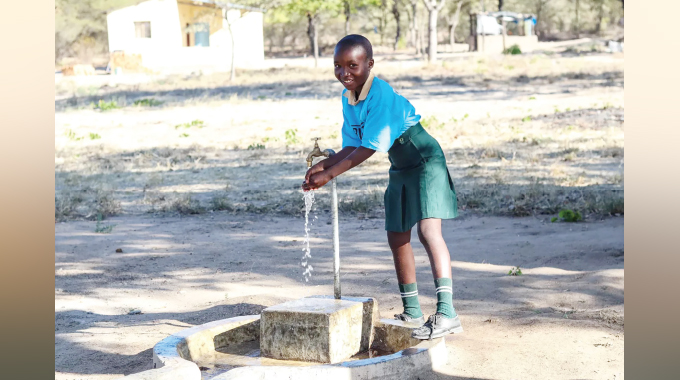
For communities in Matabeleland South, the targets bring hope of shorter walks to water points and cleaner environments.
Many rural villages have for years relied on unprotected wells and distant boreholes, forcing women and children to spend hours fetching water.
Residents in towns like Gwanda, Beitbridge and Plumtree have also complained of intermittent supply and burst pipes.
By committing to the MSDS, councils are signalling that access to potable water and proper WASH services is no longer optional.
It is now a legal and development priority tied to the country’s Vision 2030. Government says the ultimate goal is to ensure that ratepayers get value for their money.
It also wants to ensure that no community is left behind as Zimbabwe moves towards better health, education and economic outcomes.
With the provincial plan now in place, Matabeleland South local authorities say they are ready to accelerate projects, mobilise partners and track progress every quarter.
Clean water, safe sanitation and proper waste management are the foundation of healthy communities, and delivering them is a duty that councils can no longer postpone.