Raymond Jaravaza, [email protected]
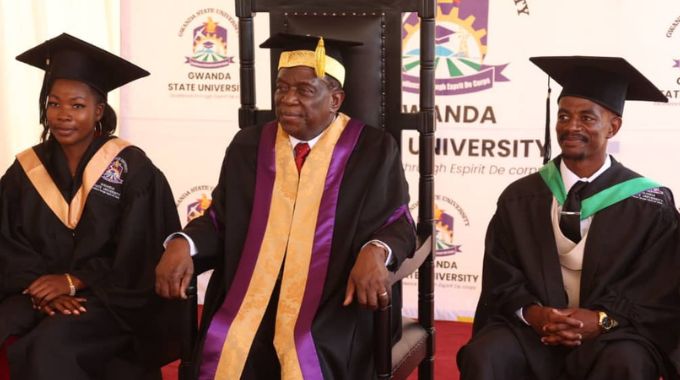
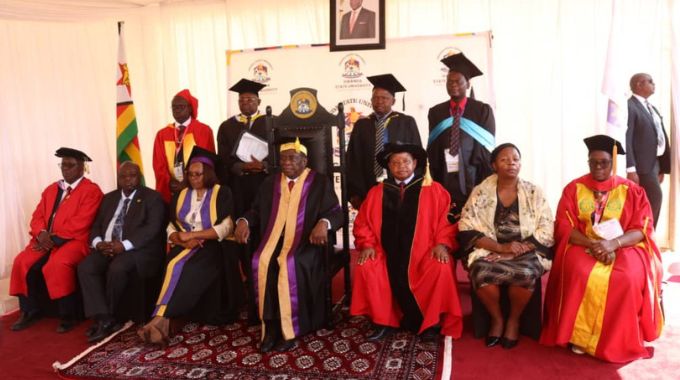
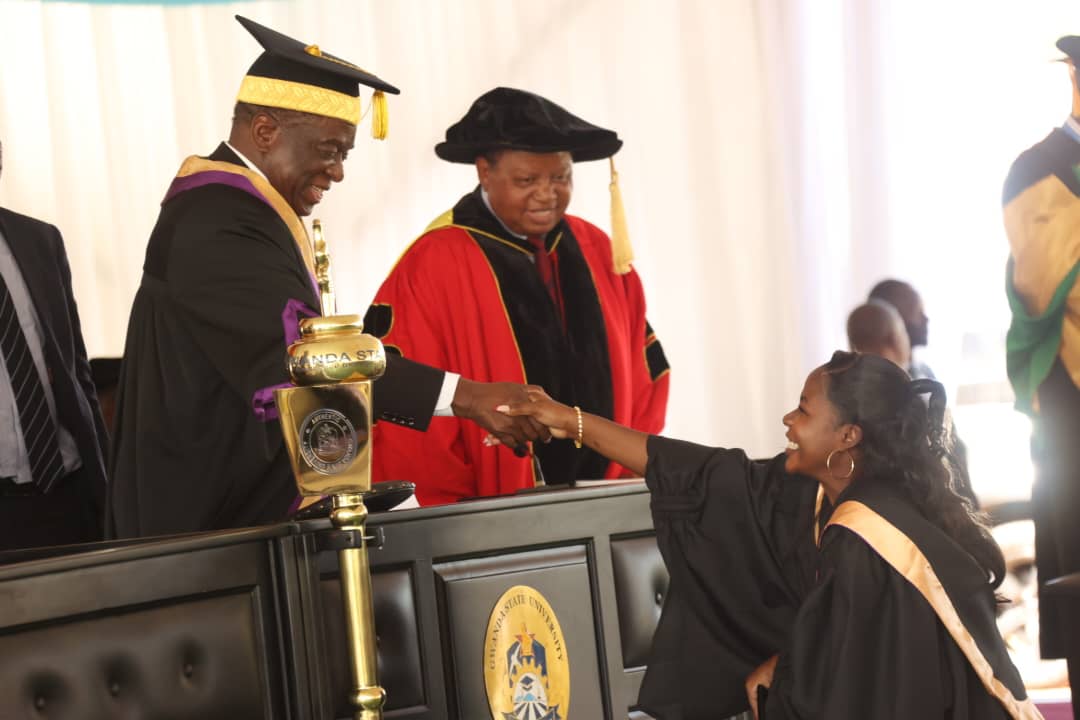
PRESIDENT Mnangagwa yesterday capped 104 graduates at Gwanda State University’s fifth graduation ceremony held at the Epoch Mine Campus in Filabusi, Matabeleland South Province, where he also commissioned two facilities aimed at strengthening practical training, research and innovation.
The graduation ceremony was held under the theme: “From Academic Excellence to Industrial Competence”.
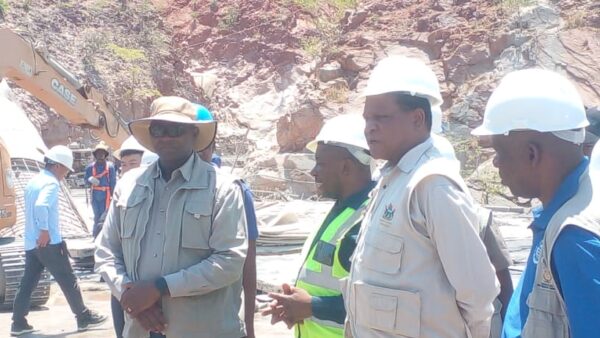
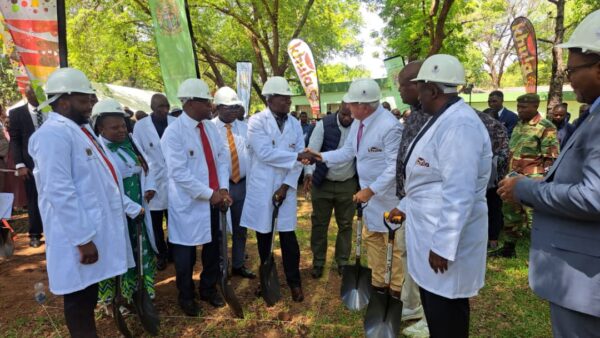
Before the ceremony, President Mnangagwa commissioned the GSU Mining Engineering Laboratory and Innovation Complex as well as the Agro-Innovation Complex.
In a post on his social media accounts, President Mnangagwa said the ceremony reflected the country’s vision of transforming higher education into practical solutions that support industrial development.
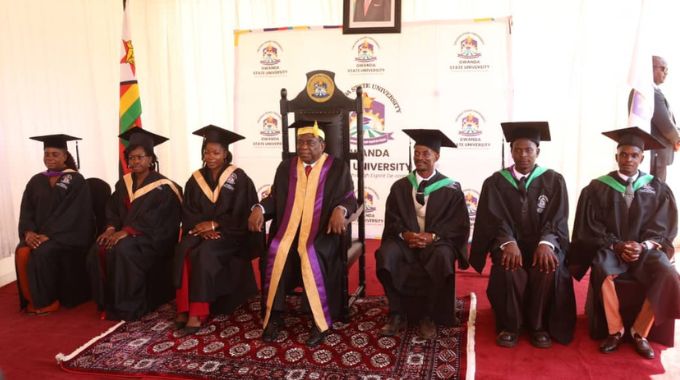
“Today, as President and Chancellor of all State Universities, I had the distinct honour of presiding over the 5th Graduation Ceremony of Gwanda State University (GSU), hosted at our Epoch Mine Campus in Filabusi, Matabeleland South Province.
“In line with our Heritage-Based Education 5.0 philosophy, our institutions of higher learning must continue to shift from theory to tangible practice, producing innovators, problem solvers, and industrial leaders who build the Zimbabwe we want,” said the President.
He said the GSU Mining Engineering Laboratory and Innovation Complex was equipped with modern systems to revolutionise training, support local small-scale miners, and drive value-addition in the country’s growing mining sector.
President Mnangagwa said the Agro-Innovation Complex was a critical hub designed to spearhead breakthroughs in livestock management, crop production, and climate-resilient agricultural technologies for the region.
In her speech, GSU Vice-Chancellor Professor Doreen Zandile Moyo said the two facilities will provide an enabling environment for experiential learning, advanced research, prototype development and technological innovation.
“More importantly, the facilities strengthens our capacity to nurture problem-solvers, innovators, and entrepreneurs capable of addressing real-world challenges and contributing meaningfully to Zimbabwe’s industrial transformation agenda.
“Equally significant has been the completion of the Agro-Innovation Complex, a landmark development that reinforces the University’s commitment to advancing agricultural innovation, food security, climate resilience, and rural industrialisation. This facility serves as a hub for research, technology development, value addition, and knowledge transfer, creating opportunities for collaboration between academia, industry, communities, and Government,” said Prof Moyo.
The Vice Chancellor said the university was laying a strong foundation to respond to the demands of the Fourth and Fifth Industrial Revolutions, as well as Zimbabwe’s national development aspirations.
“A major highlight of the year was the establishment of a state-of- the-art, 120-seater computer laboratory at the Agro-Innovation Complex.
“The facility is powered by a dedicated 25 kVA smart solar system, providing a more reliable and sustainable power supply. This investment represents a significant milestone in strengthening the University’s teaching and learning capacity,” said Prof Moyo.
She said the facility will enhance students’ access to practical computer-based learning, digital research resources, specialised software and technology-enabled academic activities.
“The facility also reinforces the university’s commitment to producing graduates equipped with the digital skills that the modern workplace requires. Through competencies investments such as this, we are laying a strong foundation for a modern university that is responsive to the demands of the Fourth and Fifth Industrial Revolutions and the national development aspirations of Zimbabwe,”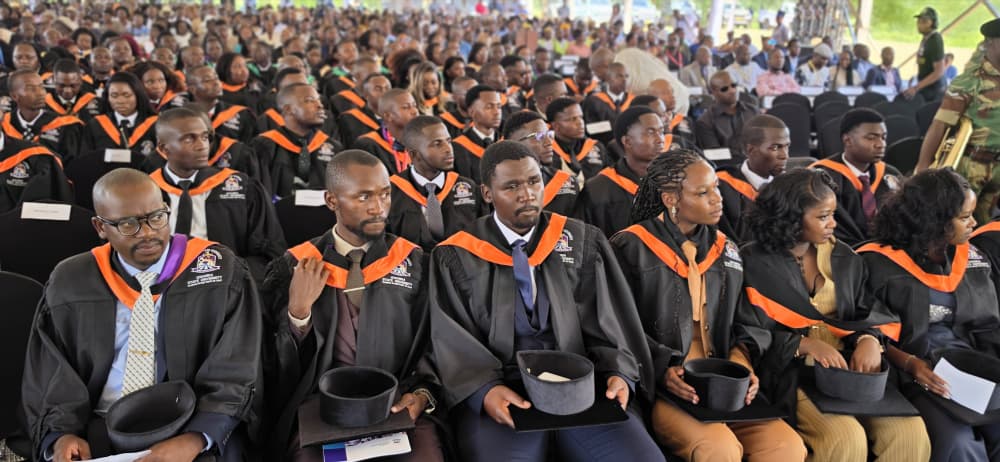
Turning to the university’s efforts to transform its library into an inclusive, digitally enabled and research-oriented knowledge hub, Prof Moyo said the institution was making progress.
“A major milestone was the launch of the Disability Resource Unit and Reprography Services Unit on 1 September 2026.
“With financial support from the Ministry of Higher and Tertiary Education, Innovation, Science and Technology Development, and in collaboration with the Zimbabwe University Libraries
Consortium (ZULC), the University acquired specialised assistive technologies to improve access to information and learning resources for students with disabilities,” said Prof Moyo.
She said the initiative underscored the university’s commitment to inclusive education and equal access to learning opportunities.
“Guided by the national vision of Education 5.0 and the aspirations of Vision 2030, the University has made great progress in strengthening its infrastructure to support cutting-edge learning, research, innovation, and industrial production.
“Among our most notable achievements has been the completion and equipping of the Mining Engineering Laboratory and Innovation Complex. This strategic investment marks a major milestone in our journey towards producing highly skilled graduates equipped with practical competencies and industry-relevant expertise,” said the Vice Chancellor.
Prof Moyo also congratulated President Mnangagwa on assuming the chairmanship of the Common Market for Eastern and Southern Africa (COMESA) for the 2026-2027 term.
“This regional leadership stands as a testament to your commitment to advancing socio-economic transformation, industrialisation, and continental integration. May you continue to be blessed with wisdom, good health and strength as you steer both Zimbabwe and the broader region toward unprecedented stability and shared prosperity,” she said.
Of the 104 graduates who were conferred degrees, 73 were males and 31 females representing a 51 percent increase from last year.
71 were from the Faculty of Engineering and the Environment, 18 from the Faculty of Natural Resources Management and Agriculture while 15 were from the Faculty of Business Sciences and Management.