

 admin
admin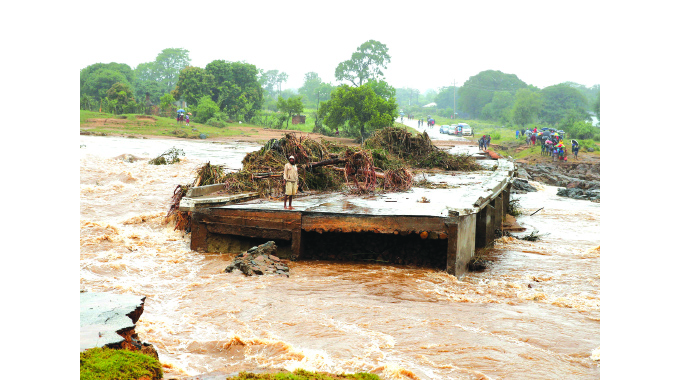
Ruth Butaumocho African Agenda
When the first case of HIV was reported in Africa sometime in the 1980s, the whole continent went agog with fear, amid revelations that the pandemic had no cure and one would probably die at one go, in the absence of medication.
What followed were a flurry of activities; billions of dollars being allocated for mitigation and sleepless nights being spent in laboratories across the globe as scientists sought to gain knowledge on the virus.
As years went by with no possible cure in sight, the résumé of HIV was astounding.
Thousands succumbed to the virus each year, stigma became a buzz word, as communities’ apportioned blame on each other, as it became increasingly difficult to contain the health crisis.
Other pandemics and outbreaks of varying nature were to follow, but not as catastrophic as the HIV/Aids, which the globe has to contend with to this day, although it is no longer a death sentence.
When all these pandemics were shaking the world, the impact of climate change had begun to take a toll on the world, but little or no attention was given to it, what with other competing interests that needed urgent attention.
Exactly a century after scientists discovered the first case of HIV, the globe is battling with the growing problem of climate change.
Climate change is one of the greatest threats facing people, wildlife, and the planet.
From warming temperatures to more extreme weather conditions, communities in Africa and around the world are already feeling the impact.
The effects of climate change can result in the death of millions through hunger and the effects of natural disasters such as heat waves, floods and other calamities if necessary action is not taken now.
Concern over the negative impact of climate change has strengthened fears that environmental degradation and demographic pressures will displace millions of people in Africa; death of people and wildlife, while also creating serious social upheaval.
Many climate models predict negative impacts of climate change on agricultural production and food security in large parts of sub-Saharan Africa.
Higher temperatures, droughts, increased pest and disease pressure, shifts in suitable areas for crop and livestock production, increased desertification in the Sahara region, floods, deforestation, and erosion are all signs that climate change is already happening and represents one of the greatest environmental, social and economic threats facing Africa.
The consequential effects have begun to show for all and sundry.
Most scientists studying the potential impact of climate change have predicted that Africa is likely to experience higher temperatures, rising sea levels, changing rainfall patterns and increased climate variability, all of which could affect much of its population.
The predictions are not far off the mark, looking at various natural disasters that have rocked Africa in the last few years, which are being attributed to the effects of climate change.
Several countries in East Africa were last year hit by floods, with over 40 000 people being displaced in Kenya.
Hundreds crop hectarage were also destroyed resulting in 2,1 million people facing severe food shortages, according to the Kenyan National Drought Management Authority (NDMA).
The same period last year, Sudan experienced heavy floods, leaving thousands homeless.
In 2019, Cyclone Idai resulted in the death of more than a 1 000 people, while many were also affected and some unaccounted for in the Southern region due to the floods.
Three years after Cyclone Idai hit several countries in Southern Africa — Zimbabwe included, the effects of the floods remain etched in the minds of many.
The Conference of Parties (COP 27) meeting scheduled for Egypt next month presents an opportunity for Africa to deliberate on issues affecting the continent, considering that it is the worst affected by climate change, yet its contribution to this mess is almost negligible.
The mere fact that COP 27 is being held in Africa, presents a golden opportunity for all stakeholders to rise to the occasion and tackle effectively the global challenge of climate change, while zeroing on the continent.
Africa is hopeful that one of its own, Egypt assumes the incoming presidency of COP 27 with a clear recognition of the gravity of the global climate challenge and appreciation of the value of multilateral, collective and concerted action as the only means to address this global threat.
Like the African proverb which says: “The cow that bellows does so for all cows”, the deliberations and the resolutions that are expected to take place at this meeting, will not only benefit Africa alone, but the whole world, including some parts of the globe that are yet to experience the effects of climate change.
Speaking ahead of the COP27 in Sharm el-Sheikh, Egypt, the new executive secretary of UN Climate Change, Simon Stiell, said there was urgent need for the world to invest in renewable energy, support lifesaving adaptation efforts and address the worsening plight of communities suffering losses and damages due to the phenomena.
Already, several African countries have since started experiencing electricity shortages, resulting in long hours of long shedding as they battle to contain the crisis, which could take years to address.
With solar already proving to be a capital intensive form of renewable energy, COP 27 should look at how countries can be assisted either through partnerships such as Build Operate Transfer, investments and even donations to ensure that Africa continues to access different forms of energy, to sustain economic productivity and meet social needs.
Already, incessant floods in some parts of Africa have resulted in droughts, a development that is impacting on Africa’s food security.
That development now calls for investment in adequate water bodies such as dams, which member countries can use to irrigate hectares of land, when natural disasters of such magnitude strike.
Such issues would need to be deliberated on during COP27, and be resolved within that same space, so that the climate conference does not become an annual talk issue, with no tangible results to show.
It has also become critical for several countries to walk the talk and desist from practices that are damaging the ozone layer through the continued use of forms of energy and chemicals that weakens the ozone layer.
By and large, the world knows what needs to be done to correct the effects of climate change, unlike at the advert of HIV, where the world was thrown off the rail, after it emerged that finding the cure was probably beyond the scope of man, and would probably take hundreds of years to find.
Climate adaptation alone is not enough, but there is need to stabilise global temperatures by avoiding damaging actions, a decision which lies with people.
Feedback:[email protected]



 Online Reporter