admin
admin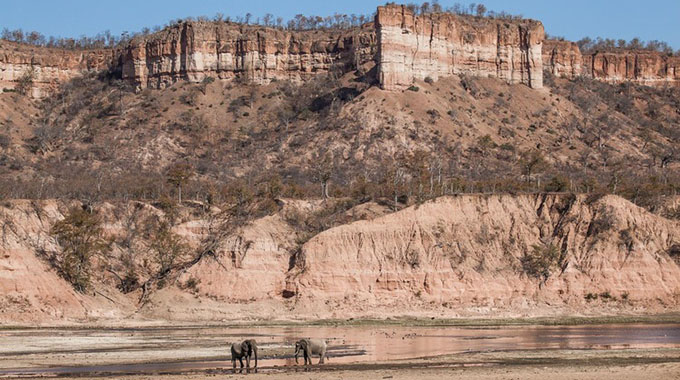
Sifelani Tsiko
Environment Editor
Africa’s natural world heritage, which includes some of the most iconic wildlife and landscapes on the planet, is now increasingly becoming threatened by climate change, according to a report published recently by IUCN (International Union for Conservation of Nature).
In the latest global report, the nature agency says a third (33 percent) of natural World Heritage sites are threatened by climate change, including the world’s largest coral reef, the Great Barrier Reef, assessed as having a “critical” outlook for the first time.
The Cape Floral Region Protected Areas of South Africa, where there is a rapid spread of invasive species, was cited as being among the 83 natural World Heritage sites now threatened by climate change.
The Great Barrier Reef, where ocean warming, acidification and extreme weather have contributed to dramatic coral decline, and as a result decreasing populations of marine species, was also reported to be affected.
The Pantanal Conservation Area of Brazil was badly damaged by the unprecedented 2019-2020 wildfires.
In Kluane Lake, located in a World Heritage site in Canada and the USA, the rapidly melting Kaskawulsh Glacier has changed the river flow, depleting fish populations.
“Natural World Heritage sites are amongst the world’s most precious places, and we owe it to future generations to protect them,” said Bruno Oberle, IUCN director-general.
“The IUCN World Heritage Outlook 3 reveals the damage climate change is wreaking on natural World Heritage, from shrinking glaciers to coral bleaching to increasingly frequent and severe fires and droughts.
“As the international community defines new objectives to conserve biodiversity, this report signals the urgency with which we must tackle environmental challenges together at the planetary scale.”
The IUCN World Heritage Outlook 3 builds on previous reports from 2014 and 2017 to track whether the conservation of the world’s 252 natural World Heritage sites is sufficient to protect them in the long term.
It finds that climate change has overtaken invasive species as the top threat to natural World Heritage.
Africa is said to have vast natural world heritage sites which include the Okavango Delta, the Serengeti Plains, the Virunga Mountains, the Namib Desert and Mount Kilimanjaro.
Most of the African natural World Heritage sites hold sui generis fauna that has rhino, elephant, hippo and giraffe animals not seen anywhere in the world.
Africa also boasts rich tropical forests, which support a wide range of species, such as great apes — gorillas, chimpanzees and bonobos — as well the curious lemurs of Madagascar, the strange giraffe-like okapi of eastern Congo, and the miniature pygmy hippo in West Africa.
The continent still has huge opportunities for creating other bigger natural World Heritage sites as documentation and research of remarkable landscapes and seascapes remains untapped in various parts of the continent.
Areas that still hold a lot of promise include the Bijagós Archipelago (Guinea-Bissau), the Eastern Arc Mountains (Kenya and Tanzania), the Erte Arle volcano and Danakil Depression (Ethiopia), the Great Western Desert (Egypt), Lake Tanganyika (Burundi, Democratic Republic of the Congo, Tanzania and Zambia), the unique Madagascar dry forests, the Succulent Karoo desert (Namibia and South Africa), the Sudd wetland (South Sudan), and the marine hotspots in the Benguela Current and Mozambique Channel.
IUCN researchers say they also feature a number of tropical forest areas, stretching from the Upper Guinea biodiversity hotspot in West Africa, across the Gulf of Guinea and Cameroon Highlands in Central Africa, to the East African coastal forests.
Also identified are sites that include the Kenya Lake System in the Great Rift Valley, the Djoudj National Bird Sanctuary (Senegal), the Okavango Delta (Botswana), Simien National Park (Ethiopia) and Lake Malawi National Park (Malawi).
The latest IUCN Outlook assesses the prospects for World Heritage site values — the unique features which have earned them their World Heritage status — based on threats, and how good protection and management is.
It assesses 63 percent of sites as either “good” or “good with some concerns”, while 30 percent are of “significant concern” and seven percent are “critical”.
Half of the sites are found to have “effective” or “highly effective” protection and management, with the sustainability of the sites’ funding being the most common issue rated as a “serious concern”.
The Outlook finds that 16 natural World Heritage sites have deteriorated since 2017, while only eight have improved.
The report also finds early evidence of the effects of the turmoil caused by the Covid-19 pandemic. While lower tourist numbers may ease pressure on some ecosystems, in more cases impacts appear negative.
Closing sites to tourism causes significant revenue loss, and illegal activities are on the rise with fewer staff deployed to prevent them.
“The findings of the IUCN World Heritage Outlook 3 point to a dire need for adequate resources to manage our irreplaceable natural areas,” said Peter Shadie, director of IUCN’s World Heritage Programme.
“Many natural World Heritage sites show that conservation can and does work for the greater good, and their achievements serve as models that can be replicated and scaled up elsewhere. We need more inspiring examples like Comoé National Park in Côte d’Ivoire to ensure a brighter future for nature’s finest.”
Climate experts say Africa is more vulnerable than any other region to the world’s changing weather patterns as millions of people depend on rainfall to grow their food and the fact the continent’s climate system is controlled by what experts say is an extremely complex mix of large-scale weather systems.
The African continent is warming quickly and climate change is expected to disproportionally affect every aspect of life there, from the natural world heritage to human health and food security and economic growth, according to the World Meteorological Organisation’s first-ever State of the Climate in Africa report.
Temperatures in Africa have increased over 1º Celsius compared to the average between 1901 and 2012, and warming in large areas of the continent may exceed 2ºC from pre-industrial times by 2080 to 2100 if emissions continue at their current levels, according to the report which was released in October.
The latest IUCN report offers useful insight into the climate change threats facing Africa’s vast and outstanding natural resources.
It lays bare, what actions are needed to save Africa’s natural world heritage.



 Online Reporter