Chronicle Editor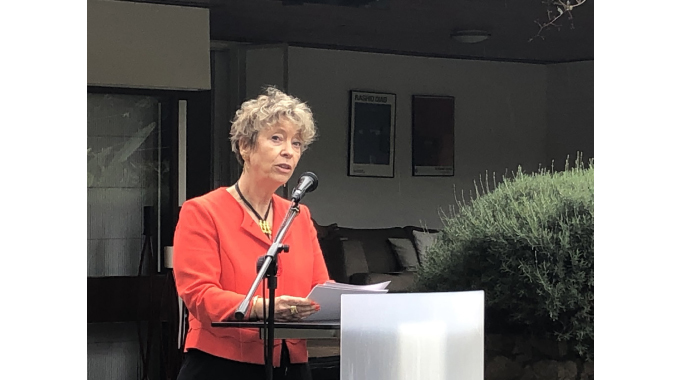
Sikhulekelani Moyo, Business Reporter
CLIMATE change is posing a serious threat to progress made towards achieving Sustainable Development Goals (SDGs) and countries need to embrace mitigation measures to cushion their economies, The Netherlands Ambassador to Zimbabwe, Dr Margret Verwijk, has said.
SDGs are a collection of 17 interlinked global goals designed to be a blueprint to achieve a better and more sustainable future for all.
These were set by the United Nations General Assembly in 2015 and are intended to be achieved by 2030.
Dr Verwijk, who was speaking during a recent two-day media workshop that was held in Harare to enhance climate change reporting, said climate change was a threat especially to already marginalised groups such as the poor and women.
“Without strong action on both mitigation and adaptation, much of the progress we have made towards achieving goals such as the SDGs will be reversed,” she said.
“Millions of people are already suffering its impacts.”
The Netherlands Ambassador said her country was one of the leaders in supporting smart agriculture, sustainable water management, renewable energy, adaptation and climate resilient development and was keen to help Zimbabwe develop adaptive capabilities.
“Dutch experts at the Green Impact Centre at Chibero College are sharing technical expertise on the latest precision agriculture tools and methods that save resources and protect the environment,” she said.
“My favourite example though is the recent success of a consortium of various local and Dutch organisations in Rusitu Valley, Chipinge, where small-scale pineapple farmers achieved organic certification on their produce,” said Dr Verwijk.
She said cooperation between Greenstone Foods, PUM and ZimTrade has given 40 farmers significantly higher incomes as they can now access export market in The Netherlands, thereby, increasing their resilience.
“For me, this is a shining example of climate resilient development, inclusive and sustainable agriculture, community development, and international trade.
“Work is underway to add a further 200 farmers to the group,” said Dr Verwijk.
Oxfam programme manager, Dr Leonard Unganai, said women were hardest hit by climate change extreme events considering their traditional role in agriculture production, procurement of water, firewood and other household needs.
“Adaptation to climate change is a crucial pillar of the sustainable growth and development of the country and investing in resilient infrastructure, institutions, systems and natural capital has immediate benefits,” he said.
He said women have shown great impact in adopting climate change impacts especially in Matabeleland where men are in the diaspora and women are left behind.
Government is also working together with the private sector to introduce projects to adapt to and mitigate climate change.
Zimbabwe launched its Green Climate Fund (GCF) Country Programme in 2021 and since then a lot of climate change mitigation and adaptation programs are underway.
“As of 27 January 2022, the GCF has approved 190 projects with 68 percent of projects under implementation stage, worth US$6,8 billion,” said Ms Munashe Mukonoweshuro from the Climate Change Management Department in the Ministry of Environment, Climate, Tourism and Hospitality Industry. — @SikhulekelaniM1


 Online Reporter