Online Reporter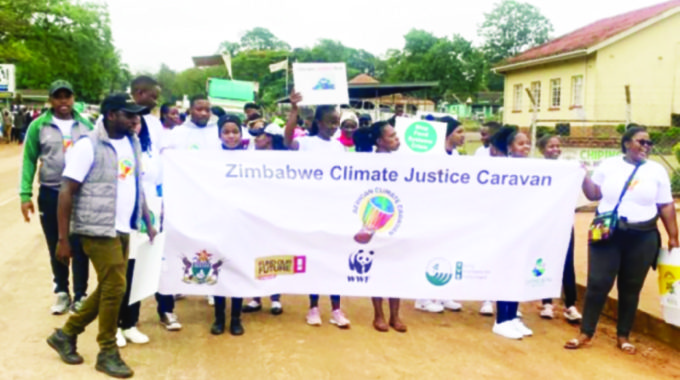
William Duri
Herald Correspondent
As the world grapples with the devastating impacts of climate change, African countries, Zimbabwe included are bearing the brunt of this global phenomenon.
Rising temperatures, changing rainfall patterns, and increased frequency of extreme weather events are threatening the livelihoods of many in Zimbabwe.
The question on everyone’s lips is: who pays for the damage? At the heart of this question lies the concept of climate justice.
Climate justice refers to the fair distribution of the benefits and burdens of climate change mitigation and adaptation efforts.
It recognises that climate change disproportionately affects vulnerable communities, including low-income households, indigenous peoples, and small-island developing states.
Climate justice in most countries is undermined by several factors.
One of the main challenges is the lack of access to climate information and early warning systems.
Many rural communities rely on traditional weather forecasting methods, which are no longer reliable due to climate change.
This lack of access to climate information makes it difficult for communities to prepare for and respond to climate-related disasters.
Another factor that undermines climate justice in most countries in Africa is the limited access to finance and resources for climate change adaptation and mitigation.
Many communities lack the financial resources to invest in climate-resilient infrastructure, such as flood-resistant homes and irrigation systems.
This limited access to finance and resources exacerbates the vulnerability of these communities to climate change. Furthermore, climate justice is also undermined by the lack of participation and representation of vulnerable communities in climate change decision-making processes.
Many climate change policies and programmes are designed and implemented without the input and participation of the communities they are intended to benefit.
This lack of participation and representation can lead to climate change solutions that are not tailored to the specific needs and contexts of vulnerable communities.
In Zimbabwe, the Government is taking steps to promote climate justice.
One of the key initiatives is the development of Zimbabwe’s Nationally Determined Contribution (NDC), which outlines the country’s commitments to reducing greenhouse gas emissions and adapting to the impacts of climate change.
The NDC recognises the importance of climate justice, emphasising the need for equitable and inclusive climate action.
The Government is also working to improve access to climate information and early warning systems.
The Meteorological Services Department is being strengthened to provide more accurate and timely weather forecasts and warnings.
The MSD has been demonstrating its ability to provide accurate and timely predictions.
This essential information enables the Civil Protection Department to implement early warning systems and proactive measures to mitigate the impacts of weather extremes on public health, agriculture, and other critical sectors.
The Government is also working with international partners to establish a national early warning system that will provide critical climate information to vulnerable communities.
Steps are also being increased to access funding and resources for climate change adaptation and mitigation.
The Climate Change Management Department is working with international partners to mobilise climate finance and support the development of climate-resilient infrastructure. The Government is also committed to ensuring the participation and representation of vulnerable communities in climate change decision-making processes.
The Zimbabwe Climate Change Policy recognises the importance of community participation and representation, and provides for the establishment of community-based climate change committees. The Government is working to promote climate-resilient agriculture practices, which are critical for enhancing food security and reducing poverty.
Investment has also been made in climate-resilient infrastructure, such as dams and irrigation systems, to support agricultural productivity.
The Government is working with educational institutions to incorporate climate change into the curriculum and is also conducting public awareness campaigns to educate citizens about the impacts of climate change. Furthermore, the Government is taking steps to increase access to finance and resources for climate change adaptation and mitigation.
Globally, several initiatives are supporting climate justice. The Paris Agreement, for example, recognises the importance of climate justice and emphasises the need for equitable and inclusive climate action.
The Green Climate Fund (GCF) is another global initiative that provides financial support to developing countries to adapt to the impacts of climate change.
In Africa, several countries are putting in effort to combat climate injustice.
Rwanda, for example, has made significant progress in promoting climate resilience and reducing greenhouse gas emissions.
The country’s climate change policy emphasises the need for equitable and inclusive climate action.
South Africa is another country that is taking bold steps to combat climate injustice.
South Africa is also a key player in the global climate negotiations, pushing for stronger action to address the impacts of climate change.
Climate change strategy recognises the importance of climate justice and emphasises the need for equitable and inclusive climate action. The African Union’s strategy also recognises the importance of supporting climate change adaptation and mitigation efforts in Africa.
Climate justice is a critical issue for Zimbabwe, where climate change is having a disproportionate impact on vulnerable communities.
Feedback : [email protected] / 0719411601