George Maponga in CHIVI
PRESIDENT MNANGAGWA has rallied traditional leaders and rural communities across Zimbabwe to adopt climate-proof farming practices ahead of the 2026/2027 summer cropping season.
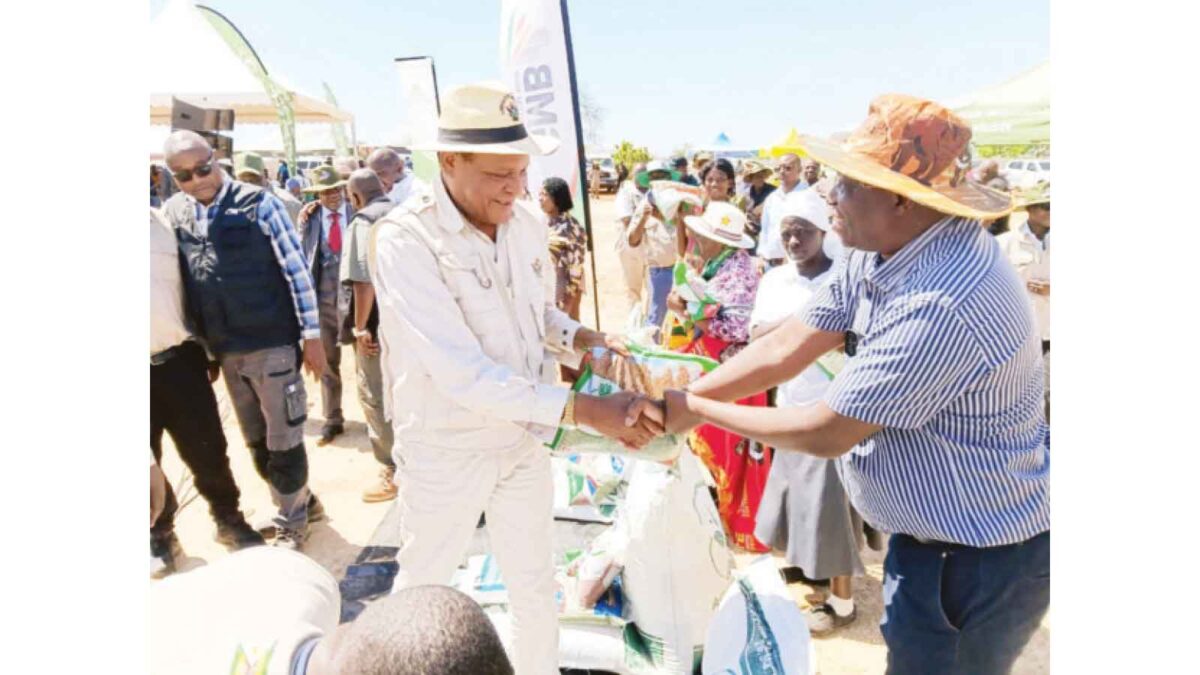
Launching the National Pfumvudza/Intwasa programme and summer inputs distribution at Shanduka Village in Chivi, the President —represented by Agriculture Permanent Secretary Professor Obert Jiri — emphasised that the country must combine indigenous knowledge with conservation agriculture to shield itself from projected normal to below-normal rainfall.
Nationwide preparations are already heavily underway, with 2.3 million Pfumvudza/Intwasa plots spanning one million hectares already prepared by farmers.
Chiefs, headmen and village heads, the President said, must establish Pfumvudza/Intwasa plots, grow drought-tolerant traditional grains and work closely with agricultural extension officers to maximise yields.
He said people should not be discouraged by the rainfall forecast, saying Government had put measures in place to prepare the country for the season.
The President called on traditional leaders to draw inspiration from the ingenuity of the Munhumutapa Kingdom and combine indigenous knowledge systems with climate-proof farming methods to build a food-secure nation.
“As we all know, the great Munhumutapa was known for innovation and ingenuity that propelled his kingdom to greatness and today, you (traditional leaders), every year, there are certain practices that you do in your areas of jurisdiction to prepare for the main summer cropping season,” he said.
“Some of you do rain-making ceremonies, others pray, while some can use their knowledge to read and predict the weather.
“However, expert weather forecasters have predicted that the 2026/2027 agricultural season is bound to have below-normal rainfall, but this information should not bother and worry us or cause us sleepless nights.”
President Mnangagwa said Government had obtained adequate agricultural inputs to support farmers during the season.
He urged traditional leaders to ensure that vulnerable groups, including people with disabilities, received priority in the distribution of seed and fertiliser.
“We have put in place measures to insulate our country from the predicted low-rainfall season and every homestead should make sure it has developed Pfumvudza/Intwasa plots and at the same time, make sure there is a plot reserved for traditional grains that are drought-tolerant,” the President said.
More than 2,3 million Pfumvudza/Intwasa plots have been prepared nationwide ahead of the main farming season, covering about one million hectares.
Traditional leaders will also continue to anchor the Zunde Ramambo/ Isiphala Senkosi initiative, with Government providing inputs to sustain the community-based food-security programme.
President Mnangagwa rallied households to store surplus produce in their granaries to cushion themselves during periods of hardship.
He also appealed to households that benefited from Government input support last year to deliver a portion of their harvest to the Grain Marketing Board to replenish the national strategic grain reserves.
Farmers were further advised to work closely with agricultural extension officers to ensure they grow crops suited to their agro-ecological regions.
All 52 chiefs from Masvingo received seed and fertiliser from the President at the launch, alongside other participants.
In his remarks, Minister Masuka said Pfumvudza/Intwasa was critical to sustaining agricultural production and protecting the country against food insecurity.
He said the strategic grain reserves hold about 290 000 tonnes of maize and traditional grains.
Minister Masuka also commended the expansion of grain storage infrastructure, including the opening of several artificial intelligence-powered silos, saying the facilities would help preserve harvested grain.
Government was also developing village and chiefs’ business units to strengthen food production and nutrition in rural communities.
The programme was continuing, with priority being given to arid areas such as Masvingo.
Minister Masuka challenged farmers to make greater use of irrigation, saying Masvingo’s high concentration of dams allowed the province to become the country’s irrigation hub.
Speaking at the same event, Minister of State for Masvingo Provincial Affairs and Devolution Ezra Chadzamira praised Government’s input support programme, saying it was helping rural farmers contribute to national food security.
He said Masvingo had exceeded its winter wheat target by 300 hectares, bringing the total area planted to 5 300 hectares.
Minister Chadzamira also thanked the President for declaring last Monday’s hailstorm a State of Disaster, noting that the severe weather had damaged some wheat crops.