admin
admin
Nicole Hondo : Correspondent
Talk of a coalition of opposition parties in Zimbabwe appears to be gathering steam. What is interesting is that the envisaged participants, most of whom originally appeared to thumb their noses at the idea, are now scrambling to vow their commitment to the assembling of this collection of political brickbats, otherwise referred to as a grand coalition.This apparent new-found love for a get-together by opposition parties begs the question, why now?
A brief look at the current state of these parties reveals a tale of struggling political parties that, bereft of any new ideas, are fast losing support (not to mention donor money) and panicking ahead of the 2018 harmonised elections.
These parties have therefore decided to find solace in numbers.
One such party shrieking for a coalition is Zapu.
That excuse of a political party has failed to make any splash, let alone a ripple, in the sea of Zimbabwean politics since its leader, Dumiso Dabengwa, left Zanu-PF.
As such, that party has remained confined to one region and has petered out in terms of relevance.
It is no surprise therefore, that Zapu today finds itself totally, absolutely broke.
That party has had to postpone its elective congress twice, with Dabengwa crossing the length and breadth of the country, and even beyond, with a begging bowl in hand. Without the necessary financial input required to keep any venture afloat, Zapu realistically has no chance of survival without the help of a crutch such as the mooted grand coalition. That party’s enthusiasm for a coalition should therefore not be mistaken for any “democratic calling” or people-driven desire, but simply, a need for survival.
Another expected participant is the People’s Democratic Party (PDP) led by Tendai Biti.
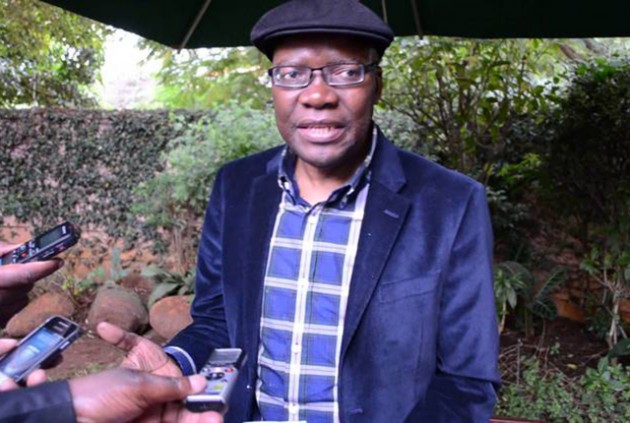
That group of MDC-T deserters has failed to attract any meaningful support and has since been relegated to a “press statement party” with Biti and Party Spokesperson, Jacob Mafume, remaining largely the only known members of that party as far as the general public is concerned.
It is no mystery how that party has failed to make any inroads given that their ideology and policies consist of one word, “transition”.
Having dismally failed to convince the electorate that they have anything of substance to offer, PDP is more than willing to suck the life-sustaining political blood from other parties in a coalition.
Then comes PDP’s little brother, the Renewal Democrats of Zimbabwe (RDZ), led by Elton Mangoma. While dreams are allowed for any individuals, the RDZ is a good example of marijuana-induced hallucination taken too far.
What that party’s leader, Elton Mangoma, sought to achieve in forming the RDZ, only he and his ancestors know best, suffice to say his project remains a pipe-dream.
A prime example, is the recent Mazowe North by-election, where RDZ candidate, Elias Malukula, garnered a paltry 619 votes against a whooping 12 573 votes polled by his Zanu-PF opponent, Advocate Martin Dinha.
Such is the worth of the RDZ to the electorate.
It does not need a rocket-scientist to discern that the party desperately needs to be a part of something, anything, in order to remain relevant. Other players in the perceived coalition should, however, be warned that Mangoma has a history of wanting to be president of any club or grouping he finds himself in, just saying.
While Zimbabwe People First is posturing like a peacock and giving out that it does not necessarily need to be part of a coalition to stand a chance in 2018, truth of the matter is that this grouping of Zanu-PF rejects needs to join forces with other opposition political parties in order to gain some semblance of legitimacy as an opposition party.
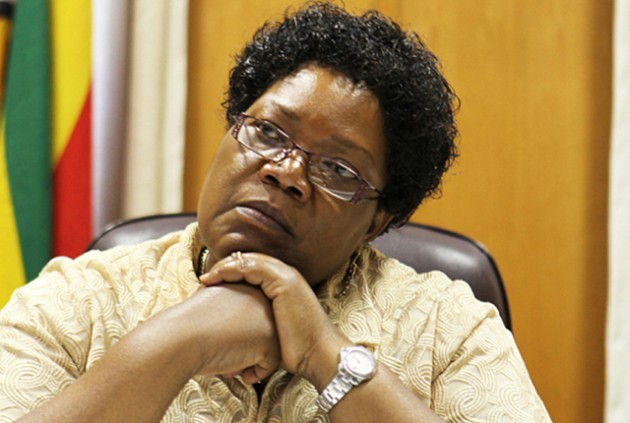
That party’s officials, starting with its leader, Joice Mujuru, have a tainted past as corrupt and crooked individuals, a record that resulted in their unceremonious booting out from Zanu-PF.
What that party’s senior officials have recognised is that in order to hoodwink the electorate and gain the support of those who don’t support Zanu-PF, they need to stand on the shoulders of some dumb already established opposition parties so as to be seen by the electorate.
Remarks by that party’s senior officials over the past few months have betrayed a huge superiority complex and belief that the other opposition parties are only useful as far as they can push the ZimPF into power, and can be discarded later.
The ZimPF’s participation in such a coalition is therefore premised on a need for some dumb sheep’s clothing to mask their wolfish tendencies.
Then comes the big brother MDC-T, that party that wants other parties to come to it crawling on hands and knees for it to join a coalition.
The MDC-T’s angle is obviously power to reclaim supporters that are fast jumping ship after being disillusioned by that party’s leader, Morgan Tsvangirai, who has proved to have a huge deficiency in leadership skills and political aptitude.
That party has already shown signs that it would want Tsvangirai to lead any envisaged coalition as he sees himself as the “pioneer” of the struggle against Zanu-PF, whatever that means.
Participation and the expected pole position in the mooted coalition would also generate much needed finances into the MDC-T coffers that are running in the red.
Such scheming and angling is probably why that party is hesitating to commit to the idea of a coalition; they want a guarantee that they will be the “igwe” first.
What is blatantly obvious from a brief look at the above mentioned parties is that the so-called grand coalition of opposition parties is a collection of political scrap metal that needs to band together to avoid being blown away by political gales and lose all semblance of relevance.
It would be folly to therefore support such a venture and pretensions of democracy and “one love” for the Zimbabweans that these opposition political parties are giving out.
The so-called grand coalition would be nothing more than a gathering of parasites on life-support and would likely be short-lived, after all, there is no honour among thieves.


 Online Reporter