admin
admin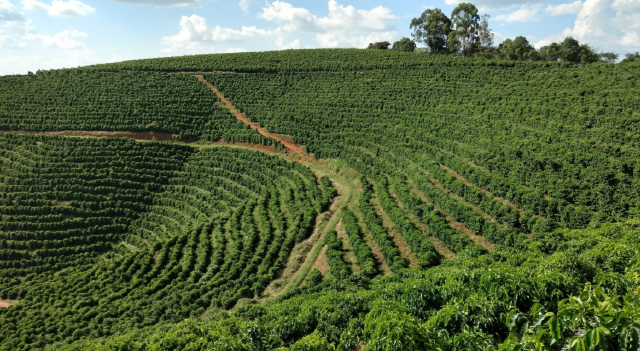
Samuel Kadungure
Senior Reporter
COFFEE production is on the rebound, with the country currently producing 370 tonnes from the 389 hectares in both smallholder and large-scale plots in Manicaland.
All of the coffee currently being produced in Zimbabwe is from Manicaland.
Unlike other crops, coffee can be grown on sloppy terrain.
Coffee has a break-even yield of 1 171kg/ha, break-even hectarage of 0,58ha under good management, coupled with a return per every dollar invested of $0,71 — thereby making it a low hanging fruit for the attainment of Vision 2030.
Over 98 percent of the total coffee produced in Zimbabwe is exported to USA, Japan, China, UK, Netherlands, Germany, Switzerland and South Africa, making it a major foreign currency earner.
Coffee Research Institute head Mr Caleb Mahoya said currently Nespresso buys small-holder coffee at an average price of U$6,50/kg.
The price has resulted in the establishment of a lot of new coffee plantations across the country.
This has seen demand for coffee seedlings outstripping supply, with new farmers coming on board in Headlands, Karoi, Mhangura and Nyanga.
“Production can also be increased by bringing back all former coffee producing areas into coffee production and opening up new suitable areas.
“Since 2010, production has been on an upward trajectory, especially for the smallholder farmers whose production rose from 10 tonnes to the current 45 plus tonnes.
“This is set to rise further as new farmers are joining the sector,” said Mr Mahoya.
Apart from Manicaland, coffee used to be grown in all Mashonaland provinces.
At its peak, the sector employed over 20 000 people and contributed 2,1 percent to the national Gross Domestic Product (GDP).
“To its credit, Zimbabwe has a coffee milling capacity of over 50 000 metric tonnes that have not been exploited, even at peak production.
“The sector has a well-developed value chain anchored by a well-organised farmer association, a public research institute and extension services.
“The country has favourable climatic conditions, soils, skilled and literate labour and coffee infrastructure on the farms,” said Mr Mahoya.
Despite the lucrative nature of the business, smallholder coffee producers are still facing teething challenges like lack of consistent funding, negative impacts of climate change, high costs of production, inadequate primary processing equipment, lack of irrigation infrastructure and shortage of labour.
These problems make it difficult for them to follow requisite agronomic practices and effectively manage coffee pests and diseases.
“A well-funded coffee value chain, including farmers, research and extension services will go a long way in unlocking the full potential of the sector to improve productivity and livelihoods as we work towards achieving Vision 2030,” he said.
Mr Mahoya said the Coffee Research Institute, with the help of development partners, is inculcating a ‘coffee culture’ in the Zimbabwean education system.
“We are seized with the generation of sustainable coffee production technologies and seedlings in partnership with Nespresso. We are also conducting farmer advisory services, farmer training and reintroducing coffee in all former coffee producing areas.
“The institute has embarked on a programme to introduce coffee growing at schools, agriculture colleges and universities by establishing demo plots in order to mould coffee-conscious graduates.
“As a result, the coffee sector is experiencing one of its strongest revival vibrations in many years,” he said.
Nespresso, through Technoserve, is offering training and seedlings to the smallholder farmers and also helping them acquire hand pulpers for the processing of coffee to improve its quality.
Other agencies partnering Government to revitalise the coffee sector include the Zimbabwe Coffee Mill, Palladium, the Food and Agriculture Organization (FAO) and DFID.
The World Coffee Research has helped the sector by bringing into the country 31 of the best performing coffee varieties that are still being evaluated for performance under local conditions before they are recommended for production.
Coffee is the second most traded commodity in the world after oil, with global retail sales estimated to be US$90 billion.
Brazil is the largest world’s coffee producer, followed by Vietnam, Colombia, Indonesia and Ethiopia.



 Online Reporter