Online Reporter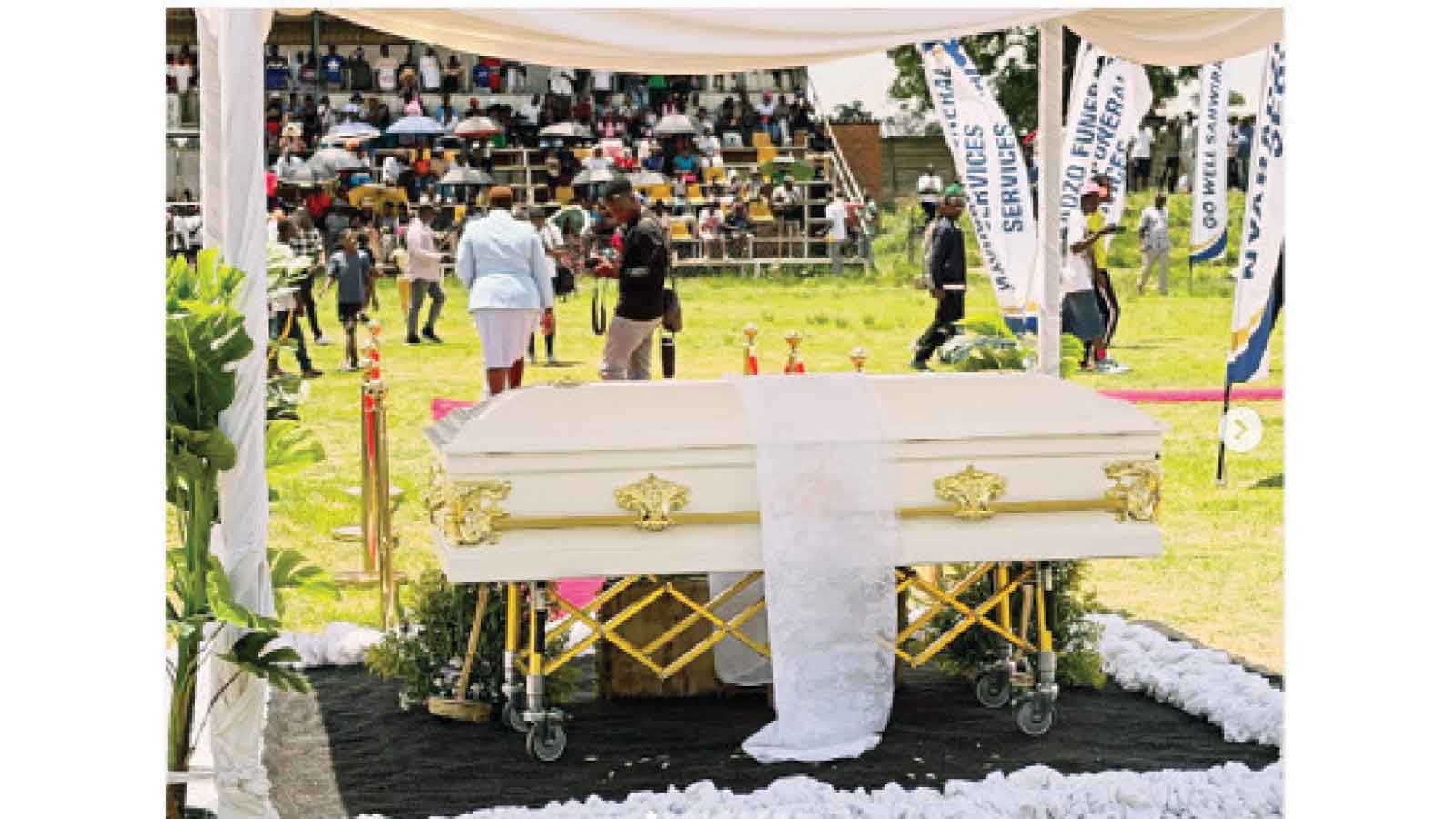
“There was nothing sinister in the manner Madzibaba was buried, as it aligns with our religion, which has four fundamental practices that must be followed. One of those practices is that we bathe the deceased and wrap them with three pieces of cloth for men and five pieces for women. We then pray for them after dressing the deceased in accordance with our religion. If someone has converted to another religion without renouncing Islam, we still bury them using Muslim rites because they remain part of our community.” — Sheikh Ishmail Duwa
Trust Khosa
Zimpapers Arts and Entertainment Hub
SUNGURA legend Nicholas “Madzibaba” Zakaria may have been buried last week, but his legacy will be cherished for years to come.
Known by fitting monikers such as “Senior Lecturer”, “Sungura Godfather” and “Professor”, he was undoubtedly a creative genius.
Adored by many, hated by a few and revered in the creative industry, he was truly a man of the people.
After losing his battle with diabetes and hypertension at Chitungwiza Central Hospital a fortnight ago aged 69, his funeral wake and burial drew considerable attention.
Thousands bade him farewell in Chitungwiza and Chiweshe.
As was expected, some top musicians, known for often snubbing other artistes’ funerals, were conspicuous by their absence.
However, it is the circumstances surrounding Madzibaba’s burial in Chiweshe that have since touched off animated discussions. His coffin was destroyed and burned, while his remains were interred wrapped in a white cloth.
Despite being a devout Christian, he was buried according to Muslim rites following the insistence of village elders.
Although there is a historical connection between the Muslim community and some Vapostori sects in the manner they bury their own, Madzibaba’s burial raised questions among some about the implications of such a practice for someone who was Christian.
The influence of religion and tradition is deeply embedded in practices of many communities. While individuals may express their wishes on how they would want to be buried, cultural and religious customs often take precedence.
Experts interviewed by Zimpapers Arts and Entertainment Hub said there was nothing untoward about the practice.
“As Muslims, we follow prophets such as Adam, Abraham, Moses and Mohammed as part of our religion and their burial practices,” said Supreme Council of Islamic Affairs in Zimbabwe president Sheikh Ishmail Duwa.
“There was nothing sinister in the manner Madzibaba was buried, as it aligns with our religion, which has four fundamental practices that must be followed. One of those practices is that we bathe the deceased and wrap them with three pieces of cloth for men and five pieces for women. We then pray for them after dressing the deceased in accordance with our religion.
“If someone has converted to another religion without renouncing Islam, we still bury them using Muslim rites because they remain part of our community. We also destroy the coffin and lower the body into the grave wrapped in cloth, as the scriptures state that we will return to the soil from which we came.”
Sheikh Duwa said all prominent prophets, including Jesus, were never buried in coffins, which should not make Madzibaba’s burial an exception.

“Those expensive coffins and caskets mean nothing to us; otherwise, that money should be used to support the beneficiaries of the deceased. Even Charles Charamba sang that when Jesus was buried, only the shroud was discovered, not a coffin. People should not be misled into thinking that our burial practices are strange,” he added.
“I don’t understand why this issue has generated such debate, as we previously addressed a similar situation in 2020 during the burial of socialite Moana (Mitchell Amuli), where there was a debate on how she should be buried, given that his parents were divided on the matter.
“In that case, the practice aligned with our African culture, where kings were buried without coffins, holding their walking sticks.”
He urged Zimbabweans to conduct thorough research.
“The major challenge we have in Zimbabwe is that people are quick to judge without understanding. Everyone should research and understand different religions and traditions.”
Yesteryear Dendera musician Foster “The Force” Mkweu, who grew up in Chegutu where Islam was practised, believes there is nothing wrong with how they bury their own. Formerly with the Marxist Brothers, Mkweu, a Christian who embraced his Muslim colleagues, shared: “There is nothing wrong in the manner they bury their own because it is their religion and culture. If you are not part of them, just let them follow their rites. In my case, I am a Christian, but I have been raised in the farming community of Chegutu where Islam was practised, and we had no issues with them because that’s what they believe in. Like I said earlier, those who don’t believe in Islam should simply follow their religions of choice. After all, we have the freedom to worship, and people are free to choose what they want.”
A prominent self-styled Harare prophet who attended Madzibaba’s funeral agrees.
“At our apostolic sect, we don’t bury you in a coffin for spiritual reasons that will be valuable to every citizen. When you die, you are expected to return to where you belong, which is to the dust. There is no need to buy an expensive coffin when you are going back to the dust,” the prophet said.
Two years ago, Mbira queen Stella Chiweshe’s burial also attracted attention after she was buried in the traditional way in Masembura, Bindura. Her body was transferred from an expensive casket, wrapped in cloth and placed on a new reed mat. The coffin was subsequently destroyed. Her close relatives were in charge of the proceedings. The media was also barred from taking pictures, in line with tradition and Mbuya Chiweshe’s wishes. Her daughter, Virginia Mkwesha, who oversaw the funeral, ensured that her mother’s wishes were respected.
“We are sorry that there won’t be any body viewing as per her instruction. She said she didn’t want children to come for body viewing, and we are simply following what mama said. I hope you can understand that this is a family issue we cannot compromise on,” she said.
“I stayed with mama in Germany when she was unwell and monitored her when she returned here, so she shared all these wishes with me.”
Virginia also said some people were taken aback by some of the practices at the funeral.
“We are just following her instructions. Being wrapped in cloth, she wanted to quickly connect with the ancestral spirits and owners of the land,” she explained.
Village elders in Masembura also remarked that there was nothing unusual about Chiweshe’s burial.
“We simply followed what she wanted, as that was the best we could do in accordance with her wishes. She was also buried in the same way that chiefs and other top traditional leaders are honoured,” a villager added. The significance of religion and tradition cannot be overlooked.
Madzibaba’s burial will always serve as a reminder of how the power of faith and tradition can influence even the most personal decisions, reinforcing the idea that, in many communities, collective customs maintain a stranglehold over individual preferences.