Vusumuzi Dube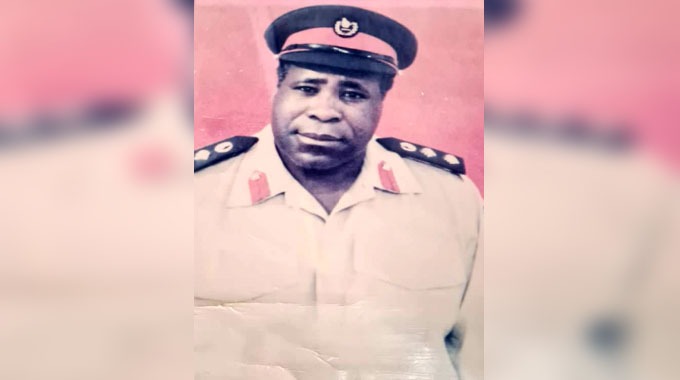
Mkhululi Sibanda, Assistant Editor
FOR Mrs Miriam Fikile Dube, widow of Colonel Joseph Zethi Dube, fondly known among his comrades as Cde Zwangami, September 2025 will forever remain a defining moment in her life.
Nearly three decades after his death, her husband was posthumously declared a National Hero, a recognition that brought profound honour, pride and long-awaited recognition to the Dube family.
Speaking to Sunday News on Wednesday last week, a visibly elated Mrs Dube said she had pursued the recognition for many years and expressed deep gratitude to President Mnangagwa for conferring the honour.
Mrs Dube, who showed this publication the official letter of declaration, said the family would be eternally thankful to the President for acknowledging her husband’s immense contribution to Zimbabwe’s liberation struggle and national development.
“His Excellency the President and First Secretary of Zanu-PF, Cde Dr ED Mnangagwa, has conferred Posthumous National Hero status on the late Cde Joseph Zethi Dube, who died on 19 February 1996 at United Bulawayo Hospitals in Bulawayo.
“The late Cde Joseph Zethi Dube was buried at Lady Stanley Cemetery in Bulawayo. I shall be most grateful if you make the usual payment of benefits to the family,” reads part of the letter written by then Zanu-PF Secretary-General Dr Obert Mpofu to the Chief Secretary to the President and Cabinet, Dr Martin Rushwaya.
The letter was dated 18 September 2025.
Mrs Dube said the conferment of National Hero status was a clear demonstration of the President’s philosophy of “leaving no one and no place behind.”
“As a family, we are extremely happy and grateful to the President for conferring National Hero status on my husband. The President took note of my husband’s immense contribution both before and after Independence. We cannot thank him enough for this gesture,” she said.
Recalling the day of her husband’s passing on 19 February 1996, Mrs Dube said Col Dube died after suffering a heart attack.
“On the day he passed on, he suffered a heart attack and I drove him to United Bulawayo Hospitals. When we arrived, I rushed out of the car to seek help, leaving him inside. When we returned, he had passed on,” she recalled.
“He died fighting, like the brave man he was. He had tried to open the car door as we found one of his legs already outside and the door open.”
Col Dube was born on 16 August 1935 in the scenic Matobo District of Matabeleland South Province. Like many boys of his generation, his early life was shaped by rural traditions, including cattle herding, which instilled discipline, resilience and a strong sense of responsibility.
He began his formal education in 1943 at St Joseph’s Primary School, where he studied until 1950, before proceeding to Empandeni Mission in Mangwe District, where he attained his Junior Certificate.
After completing his JC, he briefly worked as a teacher at Sontala Primary School in Matobo District.
Seeking further advancement, Col Dube travelled to South Africa and enrolled at Demelin College in Johannesburg, where he matriculated under the Joint Matriculation Board. It was during this period that his political consciousness deepened.
He joined the African National Youth League and worked alongside liberation icons such as Nelson Mandela and Walter Sisulu, experiences that profoundly shaped his revolutionary outlook. At the time, he was employed as a dispatch clerk at South African Breweries.
Col Dube later began travelling between South Africa and Zimbabwe, mobilising youths to join the Zimbabwe African People’s union (Zapu). His political activities soon attracted the attention of colonial authorities, leading to his arrest in Kezi by the then District Commissioner, Douvenek. He was detained for three months before being released on bail, after which he fled the country via Harare to Lusaka, Zambia.

From 1963 to 1966, Col Dube was based in Egypt, where he underwent intensive commando training at an Egyptian military camp. The training equipped him with advanced skills in organisation, intelligence, weapons handling, infiltration and small-unit deployment.
In 1966, he proceeded to the Cuban Military Training Centre, where he rose to the rank of Captain. His training in Cuba deepened his understanding of guerrilla warfare, military science, logistics and command and control.
Between 1966 and 1969, he served as Zapu’s representative in Latin America and the Caribbean, based in Havana, Cuba.
Upon his return to Zambia, Col Dube was deployed for operations and between 1972 and 1974 served as a member of the Zapu delegation to the Joint Military Command (JMC), led by Cdes Herbert Chitepo and Jason Ziyapapa Moyo.
During the formation of the Zimbabwe People’s Army (Zipa), an amalgamation of ZPRA and Zanla—Col Dube was appointed adviser to the ZPRA command element during the preparations of the unification of the two guerilla outfits. Between 1977 and 1978, he was once again posted to Havana as Zapu’s representative in Latin America and the Caribbean.
From 1978 to 1980, he served in the ZPRA High Command, working within the commissariat department.
Following the ceasefire and during the integration of Zanla, ZPRA and former Rhodesian forces, Col Dube was selected to serve on the Joint High Command between 1980 and 1981, overseeing force integration, conventional training and demobilisation.
He continued to serve in the Zimbabwe National Army until November 1986 and at one point held the position of Commandant of Inkomo Barracks.
After retiring from the military in November 1986, Col Dube transitioned into the private sector, where he served as Senior Personnel Manager at Blue Ribbon Foods, continuing his contribution to national development in civilian life.


 Online Reporter