

 Online Reporter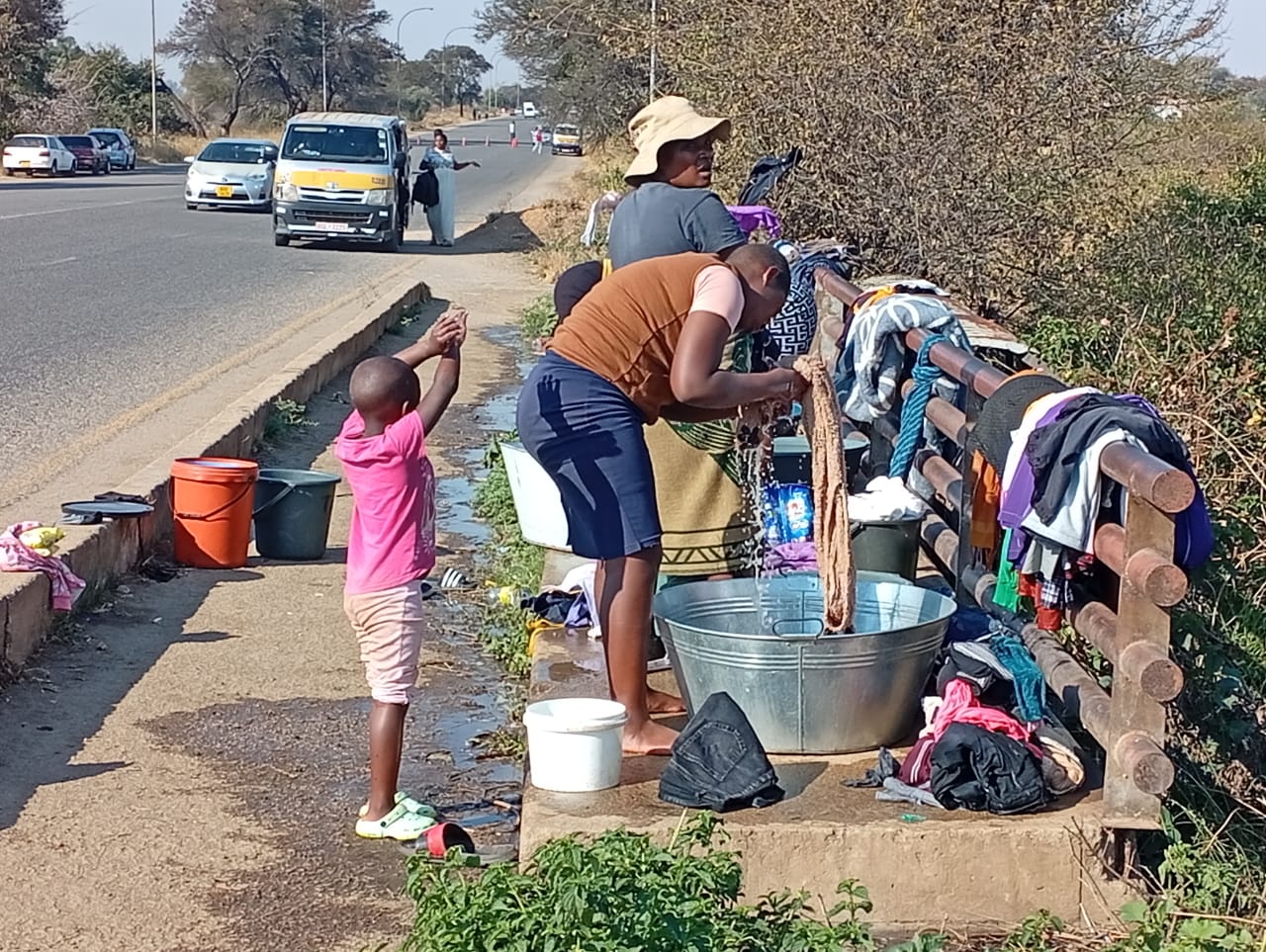
Raymond Jaravaza, [email protected]
WITH a small blanket wrapped around her waist, a jacket draped over her shoulders and a hat pulled low over her head, Zanele Mukweli braves the biting cold of a Friday morning to fetch water from a shallow well in Lobengula suburb, Bulawayo.
The winter chill is unforgiving, but for Mukweli and scores of other women in the suburb, staying indoors is simply not an option.
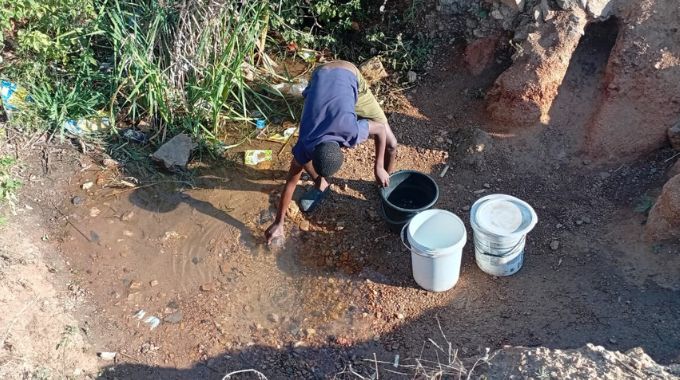
Before long, she is joined by about eight other women carrying plastic buckets as they gather around a makeshift water point, a shallow well fed by water seeping from a municipal pipe that burst several months ago.
What started as a technical fault has since become a vital source of water for residents of Lobengula, Old Magwegwe and Pelandaba suburbs, many of whom have grown accustomed to relying on the steady trickle of treated water from the damaged pipe.
The water does not flow freely. Instead, it slowly fills the shallow well, forcing residents to queue patiently and wait their turn. Ironically, a rehabilitated borehole that is fully functional lies less than half a kilometre away. For Mukweli and many other residents, however, the difference between the two water sources matters.
“Water from this burst pipe is municipal water and we reserve it for drinking. Borehole water is mainly used for other household chores such as laundry and bathing. It takes about two minutes to fill a 20-litre bucket, so we all have to be patient and take turns,” she says.
The cold spell gripping Bulawayo in recent days has done little to interrupt this daily routine.
Early morning temperatures have fallen below 10 degrees Celsius, while nights have become even colder. Yet Mukweli says persistent water shortages leave residents with little choice but to venture out.
“As a mother and grandmother, I can’t make excuses for not fetching water because of the cold. We have been facing water challenges for a long time, so sometimes we don’t mind whether it is too hot or too cold to fetch water from open sources or boreholes in our communities,” she says.
For many women in Bulawayo, the struggle extends far beyond collecting water.
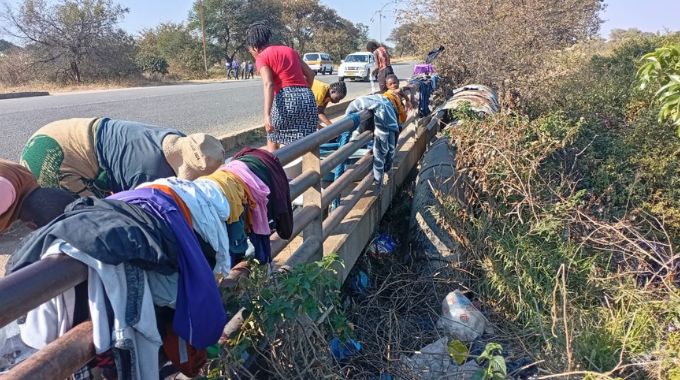
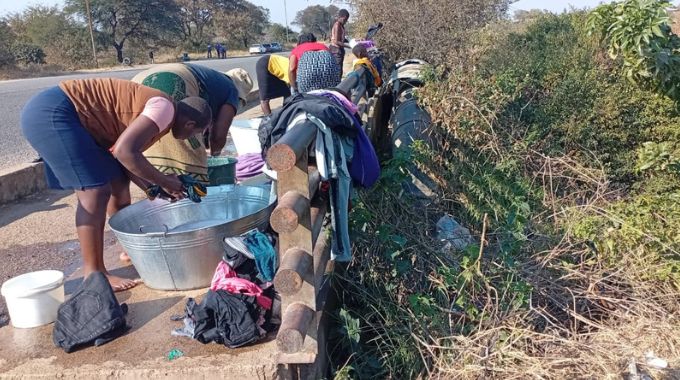
The cold weather has also failed to halt household chores such as laundry, with some women spending hours washing clothes in the open using water from burst municipal pipes.
At another burst pipe along Masiyephambili Drive, near a bushy area close to Pelandaba West suburb, Rhoda Mawere spends hours doing laundry despite the freezing conditions.
The mother of three says putting off the task is not an option.
“I have three small children and the amount of laundry that accumulates over a week is enormous, so I have no choice but to come here and wash the clothes. I find it easier to brave the cold for an hour and a half and do the laundry here than to fetch water in buckets multiple times from the shallow well close to my house,” she says.
Mawere is joined by two other women who have also chosen to brave the cold to wash clothes. Their determination underscores how water shortages have transformed routine household chores into daily struggles, with women often carrying the heaviest burden.
A snap survey by the Zimpapers news crew in Nkulumane, Sizinda and Pumula East suburbs revealed similar scenes, with women continuing their search for water despite the harsh weather.
In Nkulumane, a group of boys and several women were seen fetching water from boreholes as early as 10am, bundled up in warm clothing to shield themselves from the cold.
For Talent Moyo, a mother of two from Pumula East, waking up early to look for water has become part of everyday life.
“We fetch water from a burst pipe next to the beer garden and it is always best to get there early in the morning. Nearly all my household chores need water, so I can’t stay at home because of the cold weather,” she says.
The latest cold spell has been attributed to a cut-off low in the middle levels of the atmosphere, coupled with a high-pressure system over the south-eastern coast of South Africa. Some areas have also received light showers.
Neighbouring South Africa has experienced similarly severe conditions, with parts of the Eastern Cape, KwaZulu-Natal and Free State affected by heavy snowfall, freezing temperatures and icy conditions.
But in Bulawayo’s high-density suburbs, life cannot be put on hold because of the cold. For women like Mukweli, Mawere and Moyo, fetching water, washing clothes and keeping their households running remain unavoidable responsibilities, even when the water is icy and the morning air cuts through layers of clothing.
With water shedding worsening the city’s long-running water crisis, residents continue to rely on leaking pipes, shallow wells and boreholes. Their daily struggle highlights the extent to which families, particularly women, have been forced to adapt to a challenge that shows little sign of disappearing.


What exactly has caused this water crisis in Bulawayo? Does the mayor David Coltart and his councillors face the same water problems on daily basis? And when is the Gwaai-Shangani dam going to start supplying the much needed water to people? Bulawayo residents have been warned over and over that service delivery should never be linked to tribal and party politics. People must be voted into office based on competency. David Coltart should never have been in that office. His history is well known. He can’t change his attitude towards black people now. And why residents thought they were being smart by electing him as Mayor of such an important city erases the logic of human thinking.
I feel it is really scary. What will seriously be done. To help these people. It is now a matter of life and death.