Judith Phiri, [email protected]
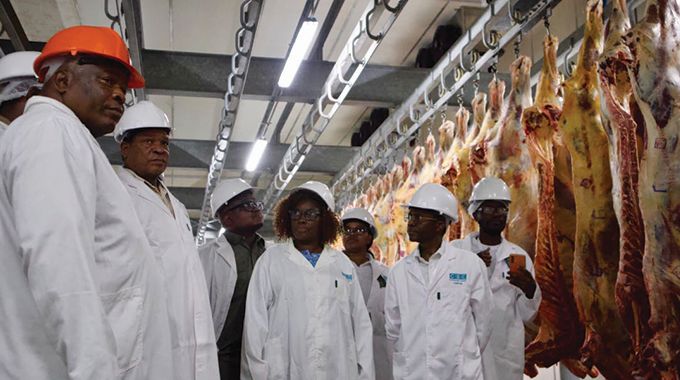
A US$9,3 million revival of the Cold Storage Company (CSC) is offering a potential lifeline to livestock farmers in Matabeleland, Midlands and Masvingo provinces, who have been urged to use the upgraded facilities to destock and protect their herds against anticipated El Niño-induced drought conditions during the 2026/27 agricultural season.
The investment by the Mutapa Investment Fund is funding the refurbishment of CSC’s processing facilities and cold storage infrastructure, with the Bulawayo abattoir’s capacity being restored from 320 cattle to a targeted 800 per day. The call for farmers to utilise the facilities comes as they are encouraged to adopt proactive livestock management strategies, including selling unproductive cattle before pasture and water shortages intensify.
Speaking after touring the facility on Wednesday, Agriculture, Mechanisation and Water Resources Development Minister Dr Anxious Masuka commended the progress made at CSC and urged farmers to make use of its facilities.
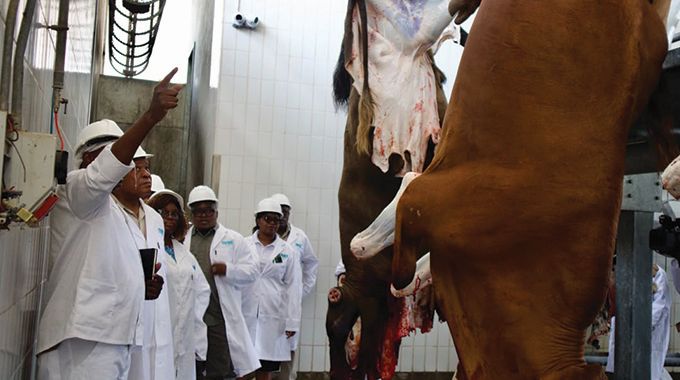
“Today we are touring CSC here in Bulawayo where they are resuscitating their biggest abattoir to a processing capacity of at least 800 beasts a day. The established capacity now is 320 although they are slaughtering about 150 a day.
“So they are well on their way to ensuring that this capacity is rebuilt and we thank Mutapa Investment Fund for having provided the US$9.3 million loan that has enabled them to get this stage,” he said.
“The resuscitation is timely because of the expected below normal rainfall for the 2026/27 season, the Matabeleland region, Masvingo, Midlands will be under stress and many farmers will want to panic-sell their cattle. Our advice is they must bring them through the CSC facilities.”
Dr Masuka said CSC was seeking US$10 million in working capital support in 2027, which was expected to be provided through linkages facilitated by the Mutapa Investment Fund to accelerate the company’s revival.
He said CSC was also resuscitating its 117 000-hectare ranches, while the Willsgrove fattening plot, which has capacity for 5 000 cattle, was operational.
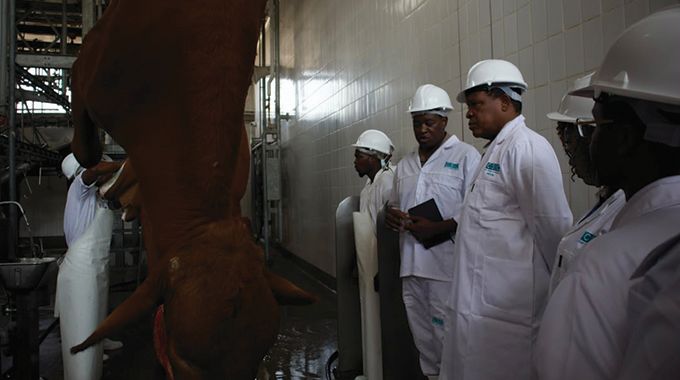
“So we want CSC to play a very vital role in ensuring that they provide a credible market for farmers, especially the communal farmers. Going forward, my expectation is that this resuscitation can be accelerated, the synergies that have been built can be consolidated so that CSC cannot only get back to the old CSC but will be brighter, better with more markets in Africa, the Middle East and elsewhere,” he added. The Minister said the company also had a small-stock line focusing on goats and sheep, while he hoped it would eventually venture into poultry processing.
He also commended CSC’s cold-chain facilities, saying they could be used for other agricultural commodities requiring temperature-controlled storage and transportation.
Mutapa Investment Fund deputy chief investment officer, Mr Ernest Denhere, said the fund was largely on track with its turnaround efforts at CSC.
“As you know, we took CSC out of corporate rescue beginning of October 2025, so it’s probably a year now”.
Continues on www.chronicle.co.zw
“When we took over this asset, there was really no activity here. We have upped the capacity at this Bulawayo facility, which is the flagship abattoir, to processing 320 cattle per day.
“The capacity, if we finish our works, is 800 cattle per day, but currently we are doing about 150 cattle per day. So we are largely on track and we have disbursed about US$9.3 million, and had to do a lot of capital improvements,” he said.
“We installed chillers, the refrigerated facilities are working and there is a lot that we have been doing just to increase the overall optimisation of the entity, looking into what CSC can do in Bulawayo since it’s headquartered here, it’s really the entire beef value chain industry.”
Mr Denhere said the fund’s plans went beyond slaughtering, with the intention of reviving the wet blue, canning and tanning sections to capture the entire beef value chain.
He said the fund wanted CSC to contribute to the aspirations of the National Development Strategy 2 (NDS2).
“CSC is probably one of the most sustainable businesses we have under Mutapa Investment Fund. So we want to promote and capitalise the sector. There is a national herd of 6 million, most of the cattle are mainly in the rural areas.
“We are looking into a cattle financing facility of up to US$15 million as part of El Niño risk mitigation as well as a US$10 million facility for working capital for 2027. So there are a lot of initiatives, but the key is really management capabilities and we will be making some announcements around our plans of installing a highly capable management team to run CSC,” he added.
Mr Denhere said CSC had traditionally played an important role in providing rural cattle owners with a reliable market, buying their animals for fattening before selling them at a margin beneficial to both farmers and the company.
He said the fund was working to restore that model.