Maria Chiguvari
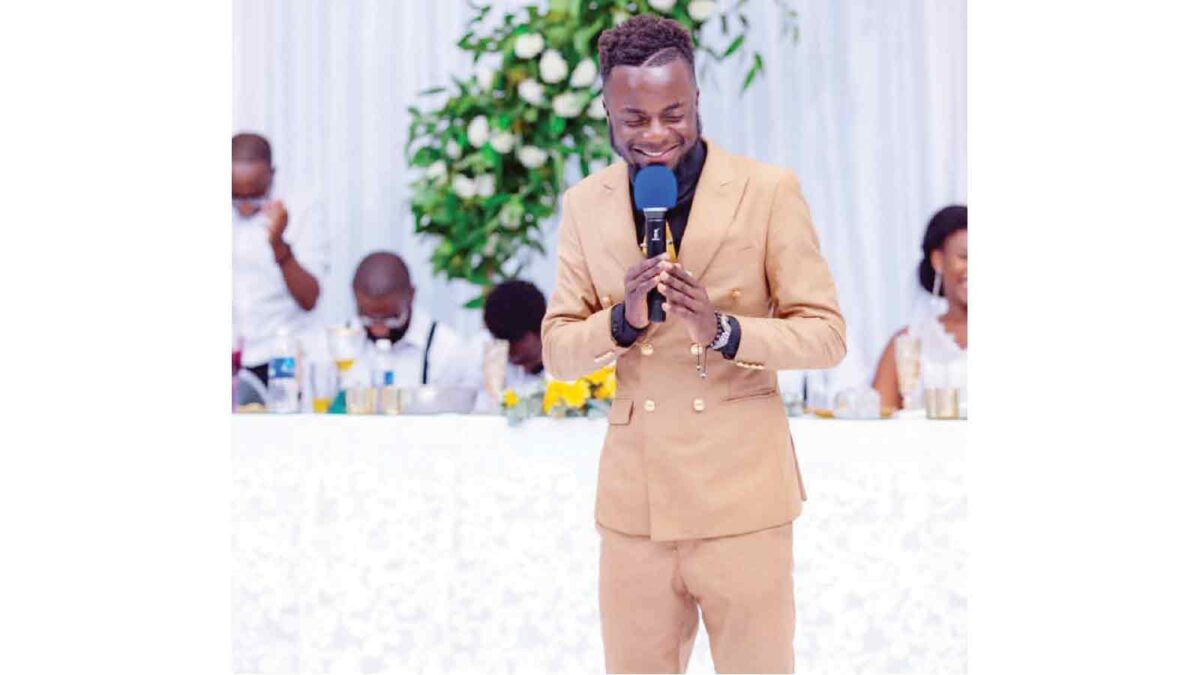
FOR stand-up comedian Tinashe “This Is It” Fortune, everyday life provides an endless source of creative material.
From the streets of Glen Norah to family gatherings and community experiences, the rising star has built his career around relatable narratives that connect deeply with audiences.
His steady rise in Zimbabwe’s stand-up comedy scene is fuelled by a talent for transforming ordinary situations into memorable humour while remaining anchored in his roots.
For Tinashe, comedy extends far beyond generating quick laughs — it is about telling stories that mirror people’s lives and offering fresh perspectives on familiar realities.
Recently, the comedian trended online after impersonating sungura legend Alick Macheso’s viral moments at the funeral of Wicknell Chivayo and Lucy Muteke.
His upbringing continues to define his style, delivery and choice of material.
Even as his profile expands, he remains deeply tied to his background.
“I feel like everything about me simply shows that I am from the ghetto and my comedy is everyday stories for everyday people. These stories are interpreted from the perspective of a young boy from the ghetto, so having grown up in Glen Norah made a huge contribution to my delivery, inspiration and content,” he said.
Tinashe considers his background a vital source of creativity that imparts a distinct voice to his performances.
Township life has helped him carve a unique niche within Zimbabwe’s entertainment industry, where stand-up comedy continues to gain momentum and mainstream influence.
The growth of the art form, he notes, has opened significant doors for performers to showcase their craft and reach broader audiences, establishing sustainable career pathways for emerging talent.
He credits fellow comedians King Kandoro and Nigel Tha Slick Pastor for shaping the contemporary landscape.
“The rise of the Zimbabwean stand-up comedy discipline has opened a lot of doors for us. Everyone who is invested in it is interested in the art form itself and it has been very fun to watch both from an observer’s point of view and as part of the movement.
“I also feel like we need to give credit where it’s due to guys like King Kandoro and Nigel, who have played a personal role in ushering in this new age of stand-up comedy and putting us in the beautiful space that we are in today,” he said.
Tinashe’s career has also gained international traction.
He has performed across South Africa, appearing in Johannesburg and Cape Town as an opening act for Nigel Tha Slick Pastor and King Kandoro.
Additionally, he featured in Botswana through a collaboration with the Major Moves Comedy Club.
The international exposure has allowed him to share Zimbabwean stories with diverse audiences while demonstrating that local experiences possess cross-cultural appeal.
Performing abroad proved particularly rewarding as it offered an opportunity to present authentic local experiences to audiences unfamiliar with everyday life in Zimbabwe.
“The experience for me was actually good because it put me in a space where I am telling a story to someone who is not on the ground in Zimbabwe. When I say it is everyday stories for everyday people, I experience these things, I see these things and I take them out there.
“That is the same thing that happened when I went to Botswana to perform with the Major Moves Comedy Club. It is fun sharing a story and making people see things from your perspective,” he said.
Beyond the comedy stage, Tinashe has established himself as a corporate events host and wedding master of ceremonies.
While these engagements require a different approach, he views them as natural extensions of his core brand.
“I would not say I have faced challenges because everything I do, whether being an MC, a host, a comedian or the ghetto youth that I am, all comes down to Tinashe as a character,” he said.
He noted that while he maintains his signature background identity, he understands the necessity of professionalism and composure in corporate settings.
Throughout his career, Tinashe has also publicly celebrated his strong bond with his grandmother, earning the affectionate moniker “Muzukuru waGogo” from fans.
“I always carry the ghetto persona, even when I am doing corporate events, but you carry it with enough composure that it does not go out of hand. Being my grandmother’s grandson all comes down to Tinashe as a character, so all these things are an extension of who I actually am, which makes things easier for me.”
Reflecting on his Reps Theatre production, Certified Ghetto Superstar, Tinashe explained that the title represents both his journey and the audience support he has earned over the years.
Ultimately, he views the title not as a statement of fame, but as inspiration for young people from similar backgrounds.
“Being the ghetto superstar simply means I am trying to live a dream to show people from where I am from that it is actually possible. It is not about where you are from; it is about who you choose to be.
“The journey itself has been fun. I did not earn the title because I randomly woke up one day and told people I was a ghetto superstar. I had to work until people bought into the whole concept, hence the title of the show, ‘Certified Ghetto Superstar.’”