


 peter
peter
Rutendo Nyeve, Features Reporter
IT is beyond any shadow of doubt that Zimbabwe’s agricultural sector has been one of the best performing sectors under the Second Republic.
This was recently positively affirmed when President Mnangagwa adjudged the Minister of Lands, Agriculture, Fisheries, Water and Rural Development, Dr Anxious Masuka as the Best Performing Minister at the 2022 Performance Evaluation Results and signing ceremony of the 2023 Performance Contracts for Cabinet Ministers and senior Government officials.
Permanent Secretary in the ministry, Dr John Basera, also scooped the Best-Performing Permanent Secretary Award. The two senior Government officials were awarded following several attributes that have seen their ministry introducing initiatives in the agricultural sector in a bid to transform the industry. The growth being experienced in the sector has been evidence of effective programmes.

The ministry implemented the Agriculture and Food Systems Transformation Strategy which is set to propel the country’s food production levels through increased productivity and maximum land utilisation. The strategy sought to achieve an US$8,2 billion agriculture economy by 2025 but this target was achieved in 2021, as the industry grew by 36,2 percent.
One of the biggest milestones achieved by the ministry was in wheat production last year where a record-breaking 375 000 tonnes of the cereal was attained, the highest-ever recorded since wheat growing started in 1966.
Over the years, the country could not meet national requirements and had to import wheat from other countries. Last season, over 1,5 million tonnes of maize yield were attained. With a long list of achievements by this ministry, it is in no doubt that the agriculture ship is steered by one of the best leaders.

A lot of praise had been given to the minister, Permanent Secretary, Chief Director Professor Obert Jiri and the entire leadership even before the adjudication of the two senior Government officials as the best performing. However, the more than 7 000 Agritex Extension officers across the country remain the unsung heroes and heroines of the country’s agriculture success story.
Umlimisi/madumeni as they are affectionately known in most cases, leave their families in urban areas to reside in villages where they steer the agricultural transformation.
Some might attribute it to passion in agriculture but the mere migration of leaving the comfortable life of an urban set up to join the more than 10 million villagers who form the key demographic dividend of the nation, is a huge step worth commending.
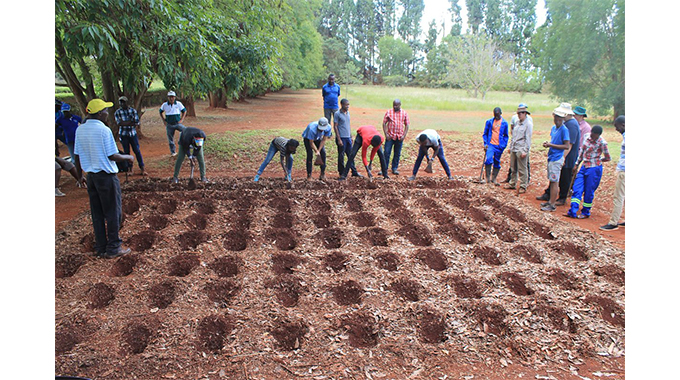
One of the key transformations that have led to increased yields particularly at communal level is the Pfumvudza/Intwasa programme. Highlighting some of the key performance highlights by the sector this week, Permanent Secretary Dr John Bhasera said: “The Climate Proofed (Pfumvudza/Intwasa) Presidential Input Programme for the vulnerable farming households targeting maize, traditional grains and cotton was executed well, with farmers adopting the Conservation Agriculture principles, countrywide.
“The countrywide adoption of Pfumvudza/Intwasa concept which entails adoption of Conservation Agriculture techniques from 2020/21 season has seen maize productivity levels increasing by over 280 percent to national average of 1,4 metric tons per hectare from 0,5 metric tons per hectare prior,” said Dr Bhasera.
He said the Pfumvudza model has earned Africa-wide recognition at Dakar 2 Feed Africa Summit held in January, as a home-made solution to climate-proof food production at household level and attain food self-sufficiency to be replicated across Africa.
This was after the successful implementation of this game changing innovation in Zimbabwe from 2020/21 season to date. However, while this programme was the brainchild of the authorities, omlimisi/vanamadumeni were tasked to spearhead the programme and they successfully did.

Of interest is that although the media spaces and other social corridors might have given little praise to extension workers, Government has put them at the centre of the transformation. This has seen them being capacitated both physically and mentally.
“At the centre of all these successes and the Agriculture Transformation journey in general, there is a motivated and capacitated team, especially the over 7 000 frontline Extension Officers who are the real transformation agents.
“The ministry took a deliberate stance to capacitate and motorise all extension officers at two levels: physical motorisation and mindset motorisation.
This is an important part of the Agricultural Extension Capacitation Thrust and the above successes could not have been achieved had this aspect not been addressed. All Agricultural Extension Officers now have motorbikes and are undergoing online refresher courses every six months,” said Dr Bhasera in his key performance highlights released recently.
Agricultural Advisory and Rural Development Services (AARDS) chief director Professor Obert Jiri who heads the department, in which vanamadumeni/omlimisi fall under, spoke to Sunday News on the role played by these transformation agents in the agriculture sector.

“An agriculture extension officer should have good leadership qualities so that he can impact and bring positive changes in attitudes, skills and knowledge of the villagers.
“A good agriculture extension officer has a comprehensive knowledge bank to convince farmers in adopting new technology. For this, the research base of extension officers should be strong. He/she should have optimum know-how of the agricultural conditions prevailing in progressive and especially in neighbouring countries for convincing the farmers,” said Prof Jiri.
He said farmers can only be motivated if they are assured that their income will increase by following new and innovative technology in farming. Thus an extension officer should be motivational and have good communication qualities.
“Extension officers should perform the role of a bridge between farmers and scientific and research institutes. He/she should have good networking and working linkages with top scientific national and international institutes where he can take the problems of a farming community to get scientific and logical solutions. Last but not the least, without feeling the problems of farmers and a farming community, a village extension officer can’t bring desired change in attitude as well as the farming practices of the farmers,” said Prof Jiri.
Meanwhile, as part of commercialising the agriculture sector, Government has renamed Agritex extension workers to Agriculture Business Advisors and will be expected to steer the communal communities into making money from agriculture. – @nyeve14



 Bongani Ndlovu
 Online Reporter