Online Reporter
Joseph Madzimure-Zimpapers Politics Hub
ZANU PF has described the Common Market for Eastern and Southern Africa as a critical platform for economic integration that will enable Zimbabwe to leverage the bloc’s vast market while showcasing the economic achievements of President Mnangagwa’s Second Republic.
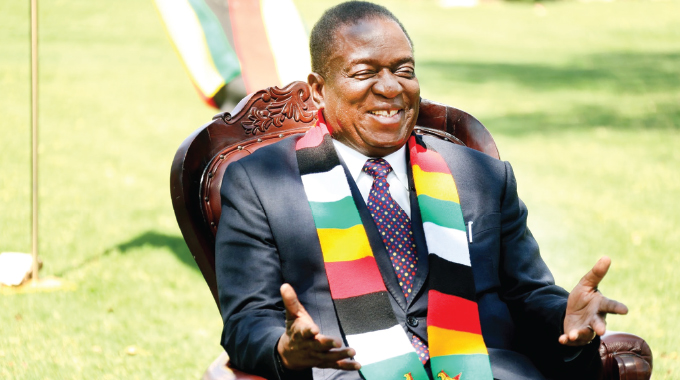
The development comes as Zimbabwe is set to make history next month when it assumes the chairmanship of COMESA, with President Mnangagwa taking over the reins of one of Africa’s largest and most influential economic blocs.
The handover, scheduled for next month, will see President Mnangagwa succeed his Kenyan counterpart, President William Ruto, at a time when regional integration, economic self-sufficiency and intra-African trade have become increasingly important priorities for the continent.
ZANU PF Secretary for Information and Publicity Ambassador Christopher Mutsvangwa said the development deserved recognition, coming soon after Zimbabwe’s chairmanship of the Southern African Development Community (SADC).
“Both instances are testament to the growing stature of President Mnangagwa as a statesman of high calibre.
“Mother Africa, the cradle of humanity, is intensely and extensively pursuing a Renaissance Agenda that harks back to the future while drawing from the glories of its past as the cradle of human civilisation,” said Ambassador Mutsvangwa.
He said the COMESA chairmanship was being assumed by an ardent Pan-Africanist whose political journey was rooted in the liberation struggle.
“The 1960s saw a qualitative leap in the aspirations of resurgent African nationalism.
“The defiant apartheid and racist settler minorities of Southern Africa dug in, riding on the military supremacy bestowed by the European-favoured gun cartel as enshrined in the salient clauses of the 1884 Berlin Conference on the Partition of Africa,” he said.
Ambassador Mutsvangwa said President Mnangagwa had demonstrated extraordinary commitment to the liberation and advancement of Africa.
“As a youthful comrade, he manifested an extraordinary leap of faith by abandoning family comforts and entrusting his fate to the cause of restoring African military prowess.
“He is today a fortunate survivor among the pioneer military recruits of the fledgling guerrilla armies of the emerging African National Liberation Movement,” he said.
Ambassador Mutsvangwa said the COMESA chairmanship was fitting recognition of President Mnangagwa’s contribution to the continent.
“The COMESA chairmanship accords due and deserving recognition to a statesman who has excelled in every sphere that embodies the most sublime African virtues.
“Delivering prosperity and engendering sustained progress is the only price that can atone for the supreme self-sacrifice of the Samora Machel-Soweto ’76 generation of militant revolutionary fighters,” he said.
President Mnangagwa and the Second Republic, he said, had responded to that call for progress and prosperity through strong performance across various economic sectors.
He described the country’s economic performance as an impressive comeback for Zimbabwe.
On agriculture, Ambassador Mutsvangwa said the country had made significant strides towards food security, with the production of key staples generating surpluses.
“The burden of begging for food aid year after year has been done away with. Record winter wheat harvests have eliminated the need for imports, with Zimbabwe among the few African countries to achieve that milestone,” he said.
He said the establishment of Village Business Units was also helping to ensure that the benefits of economic development reached communities across the country.
“The inspired establishment of Village Business Units is ensuring a trickle-down of prosperity, with no one and no place being left behind,” he said.
Turning to horticulture, Ambassador Mutsvangwa said the sector was recording significant growth, with Zimbabwean produce increasingly penetrating international markets.
“Zimbabwe’s blueberries have taken global supermarkets by storm, not to mention avocados, macadamia nuts and other products,” he said.
He said the mining sector was also experiencing a major revival, with gold remaining the country’s leading mineral export.
“Mining is also registering dramatic revival and expansion. Gold is king, with small-scale and artisanal miners delivering a whopping 70 percent of the precious metal,” he said.
Ambassador Mutsvangwa said coal production at Hwange had helped restore economic activity in the mining town, while platinum group metals continued to contribute significantly to the country’s foreign currency earnings.
Lithium, he said, had also emerged as an important contributor to Zimbabwe’s export earnings.
“To the delight of industry, smelting and local processing are being vigorously promoted,” he said.
The Second Republic’s ‘Zimbabwe is Open for Business’ mantra, Ambassador Mutsvangwa said, had attracted international investors and positioned the country to participate more effectively in global value chains.
“The mantra, ‘Zimbabwe is Open for Business’, has attracted global investors seeking opportunities in processed minerals and integration into global value chains, particularly at a time of transition from fossil fuels to electric mobility and energy storage technologies,” he said.
He said the Manhize Carbon Steel Ecosystem had also emerged as a potential game-changer for Zimbabwe’s industrialisation ambitions and the production of an essential commodity for modern economic development.
Ambassador Mutsvangwa reiterated that the achievements recorded under the Second Republic had opened new opportunities for Zimbabwe to play a more prominent role in African economic development.