admin
admin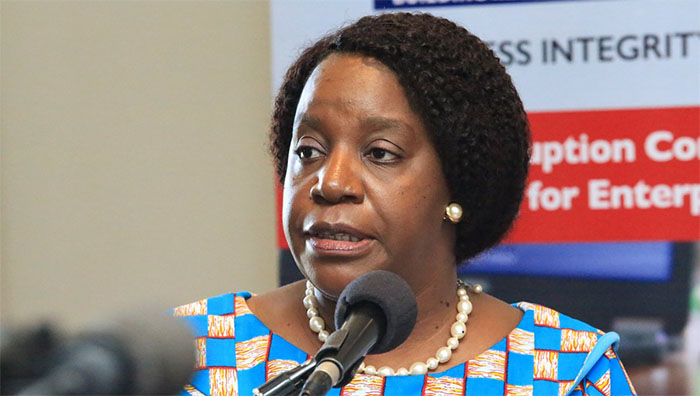
Elita Chikwati Herald Reporter
COMESA has called for increased investment in strengthening research, capacity building, documentation and communicating gender statistics to enhance the quality and effectiveness of the organisation’s responses to challenges affecting gender equality and empowerment of disadvantaged groups.
This comes as studies have revealed that more women are socially and economically affected by disasters as compared to men.
Most women in COMESA member states lost their jobs as a result of the Covid-19 pandemic as some sectors were shut down to prevent the spread of the disease.
This came out of the recent 12th meeting of the COMESA Ministers responsible for Gender and Women’s Affairs held in Zambia to address pertinent issues of gender equality, women in business and social development in the region.
Addressing delegates, COMESA secretary general, Ms Chileshe Mpundu Kapwepwe said Covid-19 had pushed more women including cross-border traders out of employment.
An International Labour Organisation 2021 survey states that only 43.2 percent of the world’s working-age women were likely to be employed post-Covid-19, compared to 68.6 per cent of working-age men. Women were also more likely to lose their jobs permanently compared to men.
According to UNESCO, of the estimated 24 million primary to university level learners who were expected not to return to school post-Covid-19, half were found in Sub-Saharan Africa, the region where most of COMESA member states belong.
According to a study on Gender Impact of Covid-19 on COMESA Member States, cross border traders, especially women, have been particularly affected by the pandemic.
“It deepened and compounded their socio-economic vulnerability. Most women traders are characterised by a lack of or marginal savings which do not preposition them to survive shocks, such as those associated with the Covid-19 pandemic.
“Even in the best of times, gender inequality is a problem that we continue to see, in the worst of times especially during disasters and epidemics, these inequalities only get reinforced and amplified,” she said.
Mrs Kapwepwe said COMESA Member States were making efforts at regional continental and global levels to ensure equality for all and work towards uplifting the disadvantaged in society especially women and girls.
“COMESA regional integration agenda recognises that gender mainstreaming remains the most viable means of advancing the goal of gender equality. The Secretariat embarked on a vigorous sensitisation drive in the Member States to disseminate the COMESA Gender
Policy, Gender Policy Implementation Plan, Gender Planning Guidelines, Checklists, and Indicators which were adopted during the last ministerial meeting on gender and women affairs in 2021.
The meetings which brought together more than 493 officers working under different thematic areas at member state level led to increased engagement of stakeholders including civil society and private sector and enriched their gender resource base and ability to infuse gender-sensitivity into their decision-making processes.
Mrs Kapwepwe said the absence of statistics and lack of gender disaggregated data were hampering efforts towards gender-responsive planning at national and regional levels.
“The Secretariat embarked on an exercise to enhance the capacity of Member States to generate timely, accurate and gender responsive data by providing training in Gender Statistics.
“The Secretariat also undertook research and produced the second edition of the Gender Statistics Bulletin focusing on key thematic areas including the Demographic characteristics of the COMESA Region, Economic Empowerment of Women and Youth, Maternal, Child, and Adolescent Health, HIV and AIDS, Education, Training, Science and Technology, Human Rights, and Leadership and Decision-Making.
“This information is important for decision-making and programme development to ensure gender responsive and equitable services, opportunities and participation of women and men, girls and boys in our socioeconomic development agenda of our region,” she said.


 Online Reporter