Online Reporter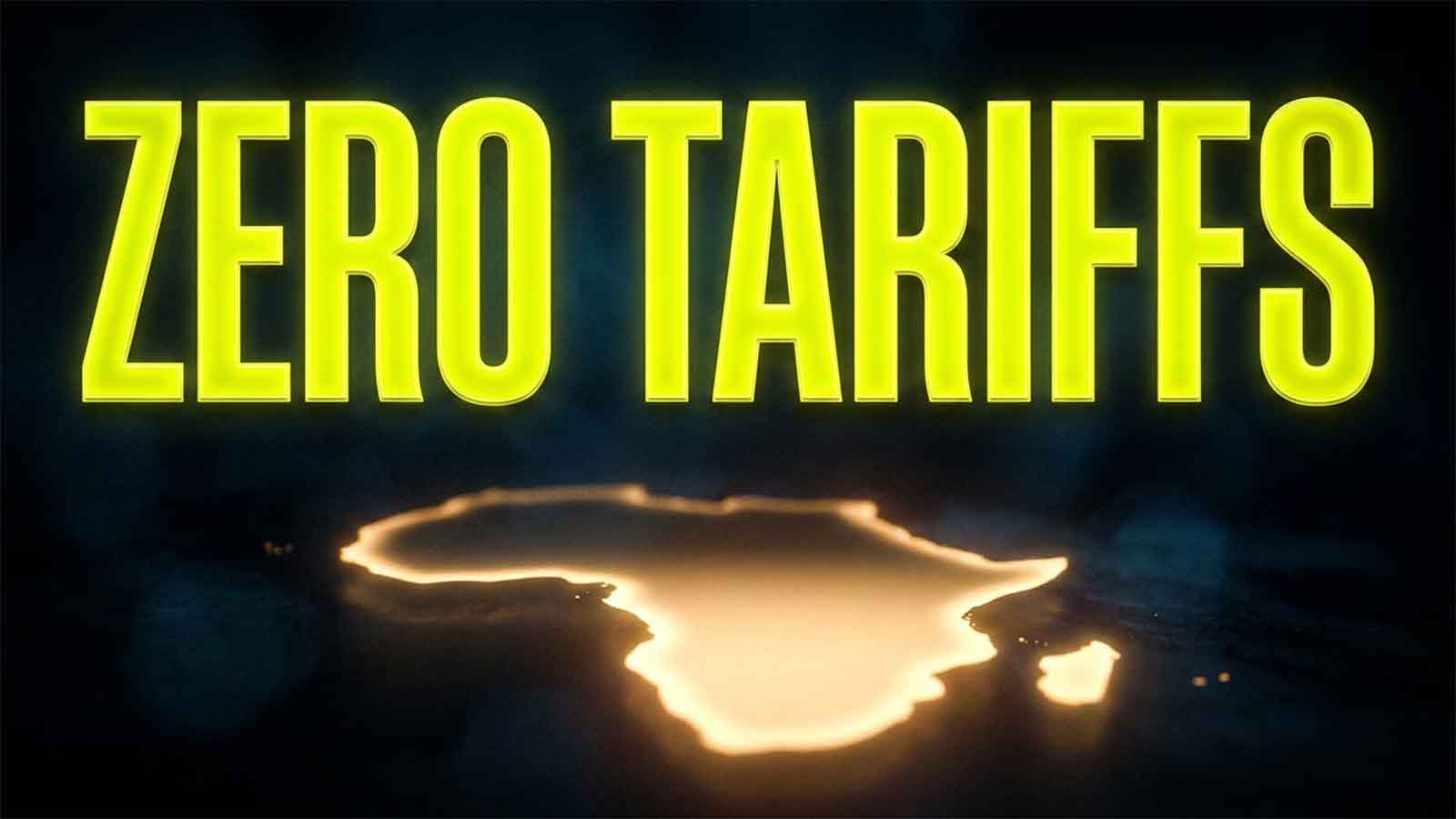
Gibson Nyikadzino-Zimpapers Politics Hub
The most instructive trade signal of this year has not come from Geneva or Washington, but from Beijing.
China’s decision to implement a zero-tariff policy for 53 African countries is a masterclass in confidence.
Beijing is betting that by opening its vast market, it will expand, rather than diminish, its economic power. It is a pragmatic calculation: create bigger markets, enable higher-quality exports and build deeper partnerships.
There must be a strategic advantage that Beijing sees in opening its enormous market to African exports that Africans are yet to fully appreciate. It reflects the confidence China has in its systems, industrial efficiency and ability to create opportunities that expand rather than restrict its economic power.
China is pragmatic.
The motivation that African countries now have following China’s zero-tariff policy is not simply to export more to China, but to export better and higher-quality products into the Chinese market.
While China has removed tariffs, COMESA member states continue to grapple with tariffs, customs charges and other barriers to trade, posing a significant challenge to the bloc’s efforts to achieve its objectives.
Statistically, at a time when intra-African trade should be the cornerstone of the continent’s development, exports among COMESA member states stood at US$14 billion in 2024, against total exports of US$202 billion during the same period.
During the same year, COMESA member states imported goods and services worth US$277 billion.
Significantly, among COMESA’s 21 member states, trade among themselves remains only a small fraction of their overall trade with the outside world.
These figures tell a multidimensional story that requires thorough examination of the factors responsible for this situation.
While it is important to acknowledge that COMESA member states are aware of the importance of trading as a bloc, it must also be recognised that differences in national systems, regulatory frameworks and priorities create impediments that hinder the full realisation of the organisation’s objectives.
COMESA should therefore, not be viewed as an institution sustained by rhetoric alone, the mere use of words without translating commitments into practical action.
When rhetoric becomes the basis for communicating what needs to be done without corresponding action, this year’s theme, “One Market, One Future: Advancing Inclusive Industrialisation, Investment and Regional Integration in COMESA”, could prove difficult to realise.
For COMESA to fulfil its objective of creating a smooth and functional single market, administrative bottlenecks must be addressed.
In practical terms, when trade among member states amounts to only US$14 billion, the systems put in place by the bloc are not yet providing sufficient incentives to significantly boost intra-COMESA trade.
A learning point
Last year, the Democratic Republic of Congo and Zambia, both COMESA member states, faced challenges at the Kasumbalesa Border Post between the two countries, including congestion, trade facilitation constraints, infrastructure shortcomings and rising security concerns.
Despite tariff reductions between the two countries under regional trade agreements, non-tariff barriers (NTBs) have emerged as a major hindrance to efficient trade, not only between the two countries but across the region.
Kasumbalesa is one of the continent’s busiest land border posts and serves as a vital gateway for copper, cobalt, agricultural products, manufactured goods and mining inputs moving between Southern, Central and Eastern Africa.
However, reports indicate that clearance times at Kasumbalesa can range from 72 to 120 hours, compared with a target of six hours in some other jurisdictions.
One of the major disadvantages arising from such delays is that traders and exporters may resort to informal channels to move their goods, creating an informal market economy and depriving member states of revenue that would otherwise contribute to formal economic activity.
These challenges are among the reasons why intra-African trade in general, and intra-COMESA trade in particular, remain stubbornly low, accounting for between 12 and 18 percent of total trade.
Need for pragmatic actors
Some political actors and business leaders in the post-millennium era have become highly skilled in the use of rhetoric.
They have mastered the art of presenting persuasive and eloquent arguments that encourage people to embrace particular values or agreed principles.
However, beyond the rhetoric, little practical value has sometimes emerged.
There is therefore, a need for COMESA to embrace a pragmatic paradigm that fulfils its mandate of making the bloc a truly functional common market, where member states continue to pursue their national interests while also giving greater priority to continental interests within a Pan-African framework.
Whenever COMESA member states trade more with non-African countries than with one another, they risk missing opportunities to deepen value chains within Africa and strengthen the continent’s economic self-reliance.
Walter Rodney, in How Europe Underdeveloped Africa, argued that the historical pattern of international trade between developed and developing economies was structured in ways that transferred wealth from Africa and other developing regions to more powerful economies.
That historical argument remains relevant to the broader question of how African countries structure their trading relationships and whether they are able to retain greater value from their own resources and markets.
The COMESA ship needs pragmatic navigation.
Zimbabwe’s assumption of the bloc’s chairmanship next month is an important development and reflects the confidence member states have placed in the country to contribute ideas and proposals aimed at strengthening regional integration and trade.
Under President Mnangagwa, Zimbabwe has pursued a pragmatic approach to economic transformation, seeking to move the economy away from prolonged stagnation through policies such as “Nyika Inovakwa Nevene Vayo/Ilizwe Lakhiwa Ngabantwana Balo.”
The philosophy is anchored on the principle that Zimbabweans should take ownership of the country’s development while working with external partners on mutually beneficial terms.
That philosophy mirrors COMESA’s own journey: ownership of our market, building from within and engaging the world from a position of strength.
China has shown that zero tariffs can be an act of strategic strength, not weakness.
For COMESA, a common market with zero internal tariffs is the ultimate expression of “One Market, One Future.”
The foundations are solid. The institutions are proven.
The time has come to complete the journey from a Free Trade Area to a true Common Market, where pragmatism, not paperwork, drives trade.
This approach also fits into the broader objectives of COMESA, where regional integration requires member states to take ownership of their economic development while building stronger markets across national borders.
At national and regional levels, a pragmatic approach requires identifying practical problems, developing workable solutions and putting in place structures capable of implementing them.
This is particularly important for COMESA because many of the bloc’s challenges cannot be resolved through declarations and bureaucratic processes alone.
To overcome these challenges, COMESA needs practical interventions that can be measured through shorter clearance times, lower transaction costs, improved infrastructure, harmonised customs procedures and increased trade among member states.
Pragmatism delivers measurable results, while rhetoric alone cannot overcome the bloc’s structural and institutional challenges.
The solution to COMESA’s trade deficit is therefore, not another declaration of intent, but a determined effort to identify what works and implement it.
China’s approach offers one example of how opening markets and creating opportunities can stimulate stronger commercial relationships.